Skip to content
grammwise.com
  • Home
  • Blogs
  • Contact Us
  • About Us

James Carter

James Carter is a content writer based in Seattle, Washington, who specializes in English grammar, vocabulary, and effective communication. Through engaging articles and practical examples, he helps readers strengthen their writing skills while avoiding common language mistakes.

Analysis or Analyses: What’s the Difference and When Should You Use Each?

July 28, 2026 by James Carter
Analysis or Analyses feature

Many English learners get confused about analysis or analyses because the two words look almost the same. The only visible difference is the ending. Because of this, many people wonder which word is correct and when to use each one. The good news is that the answer is very simple. The difference is not about … Read more

Categories Grammar Differences Leave a comment

Among vs Amongst: What’s the Difference and Which One Should You Use?

July 28, 2026 by James Carter
Among vs Amongst feature

Many English learners get confused about among vs amongst because both words have the same meaning. They are used in similar situations, and you will often hear both in books, conversations, and movies. This makes many people ask, “What is the difference between among vs amongst?” or “Which one is correct?” The good news is … Read more

Categories Grammar Differences Leave a comment

Little vs A Little: What’s the Difference and When Should You Use Them?

July 28, 2026 by James Carter
Little vs A Little feature

Many English learners get confused about little vs a little because the two expressions look almost the same. The only difference is the small word “a.” However, that one letter changes the meaning. If you understand this simple rule, you will know exactly when to use little and a little in everyday English. The good … Read more

Categories Grammar Differences Leave a comment

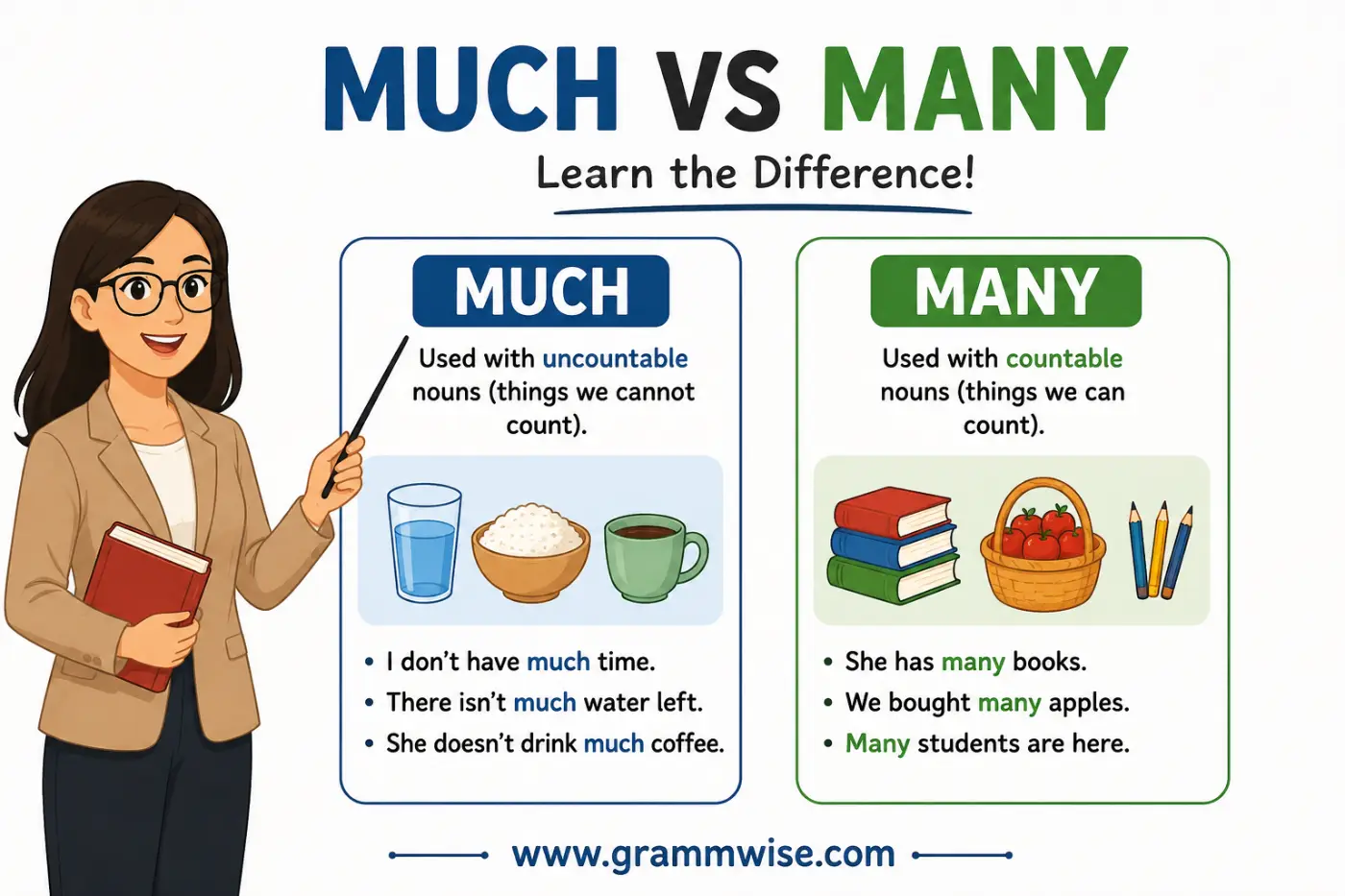
Much vs Many: Learn the Difference with Easy Examples

July 27, 2026 by James Carter
Much vs Many feature

Many English learners get confused about much vs many because both words talk about quantity. They both mean “a large amount” or “a large number,” but they are not used in the same way. Choosing the wrong one can make your sentence sound unnatural, even if people still understand you. The good news is that … Read more

Categories Grammar Differences Leave a comment

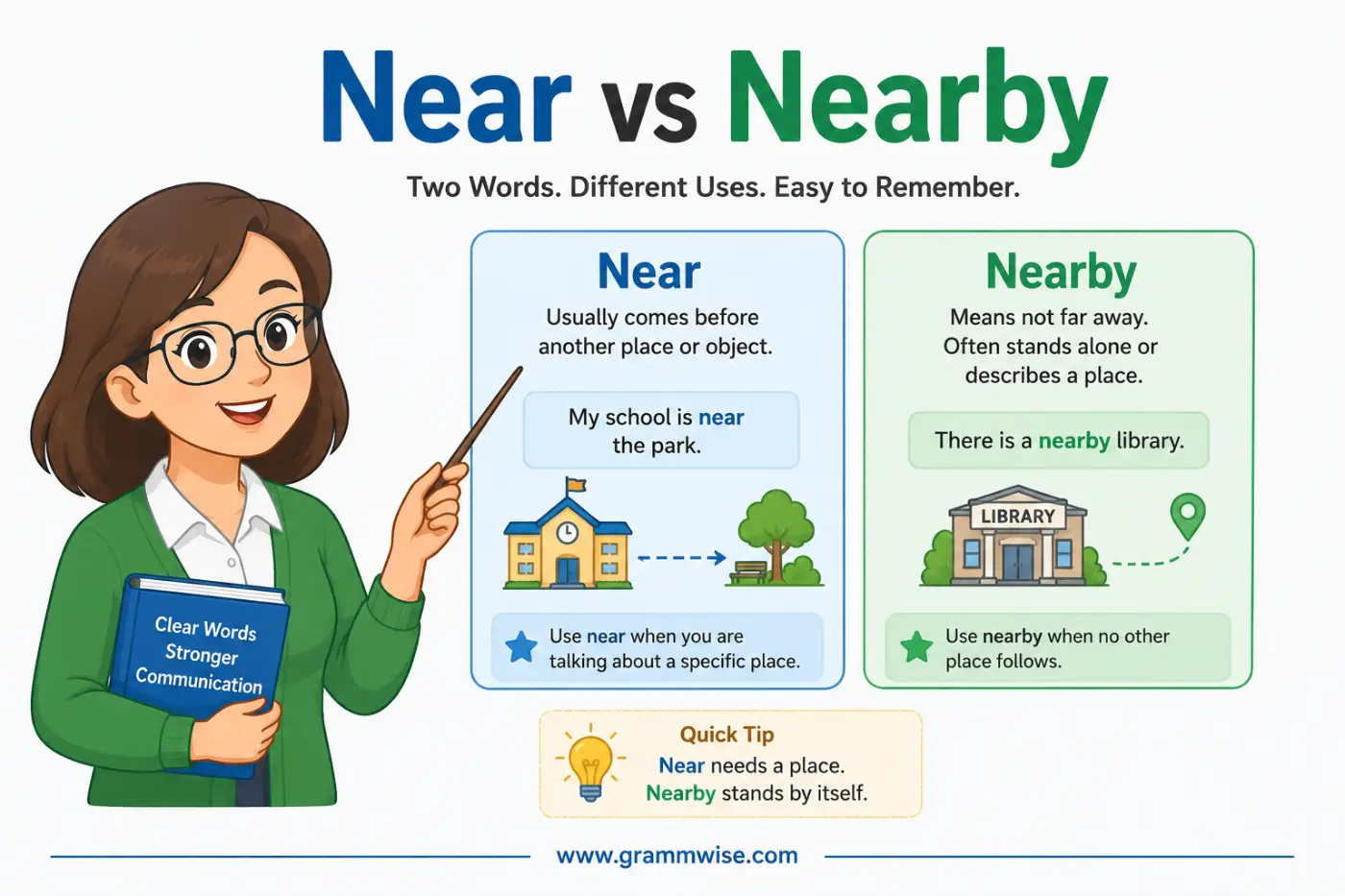
Near vs Nearby: What Is the Difference?

July 27, 2026 by James Carter
Near vs Nearby feature

Many English learners get confused about near vs nearby because both words talk about distance. They both mean that something is not far away. Since they have similar meanings, people often wonder if they can use them in the same way. The simple answer is this: near can be a preposition, an adjective, an adverb, … Read more

Categories Grammar Differences Leave a comment

Adapt vs Adopt: What Is the Difference?

July 27, 2026 by James Carter
Adapt vs Adopt feature

Many English learners get confused about adapt vs adopt because these two words look and sound alike. They are also used in similar situations, which makes them easy to mix up. However, they have different meanings, and knowing the difference will make your English much clearer. The simple answer is this: adapt means to change … Read more

Categories Commonly Confused Words Leave a comment

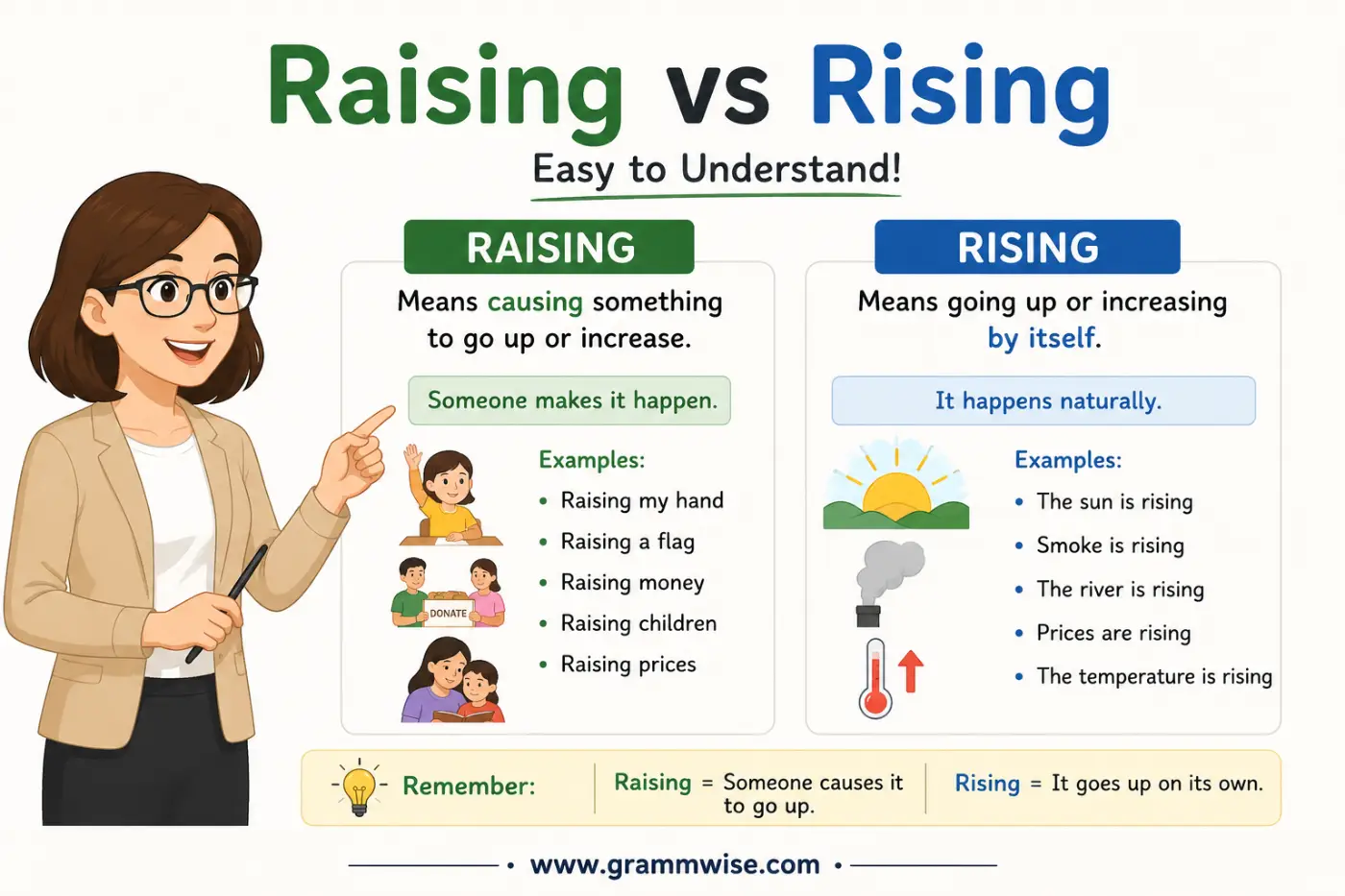
Raising vs Rising: What’s the Difference and When Should You Use Each?

July 26, 2026 by James Carter
Raising vs Rising feature

Many English learners get confused about raising vs rising because the words look and sound very similar. You may hear people say, “The sun is rising,” but “She is raising her hand.” Both words talk about something moving up, yet they are not used in the same way. The good news is that the difference … Read more

Categories Commonly Confused Words Leave a comment

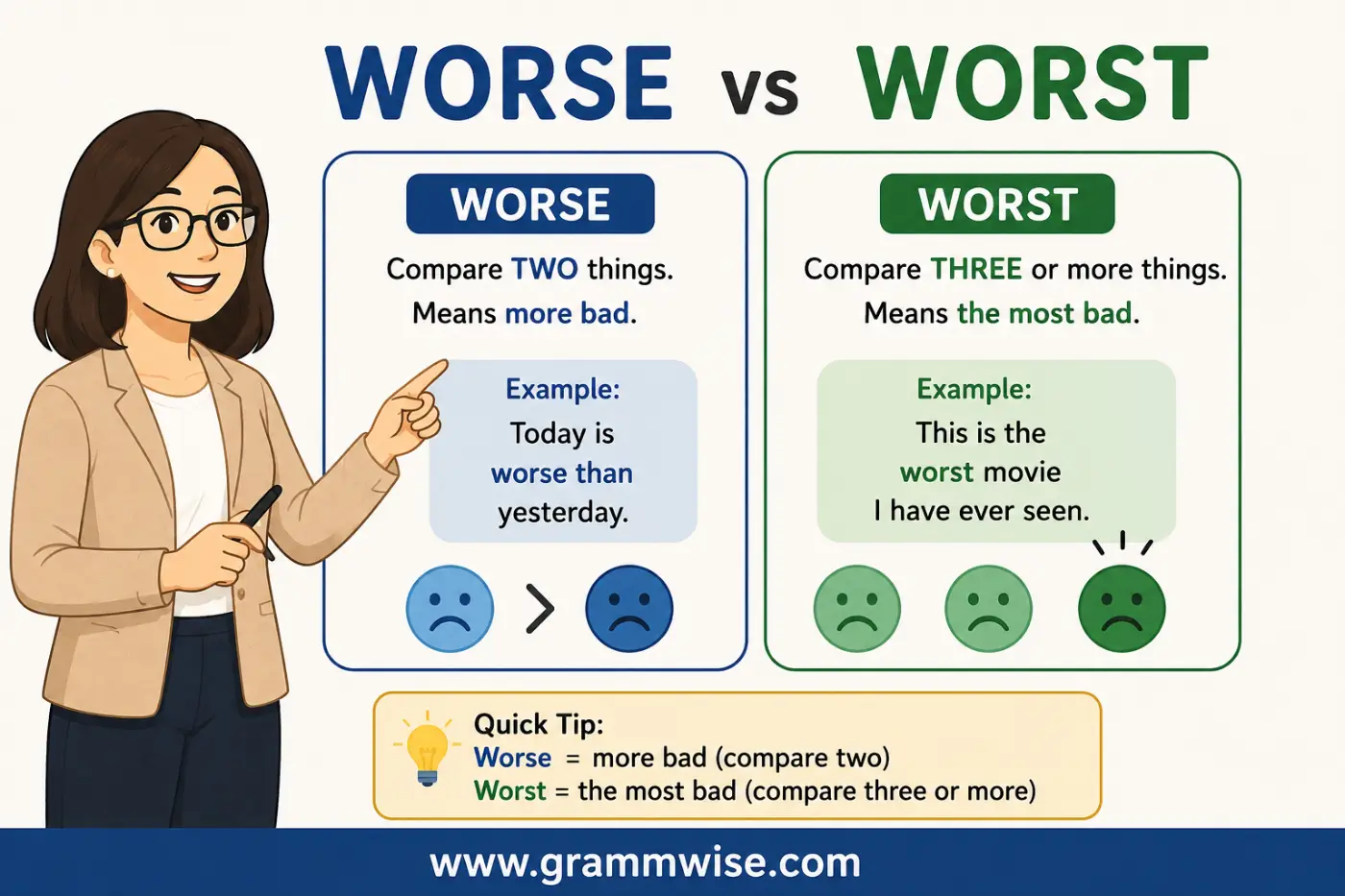
Worse vs Worst: What’s the Difference and When Should You Use Each?

July 26, 2026 by James Carter
Worse vs Worst feature

Many English learners get confused about worse vs worst because both words talk about something that is bad. They look similar, sound similar, and are often used in the same kinds of sentences. This makes it easy to choose the wrong one. The good news is that the difference between worse vs worst is simple. … Read more

Categories Commonly Confused Words Leave a comment

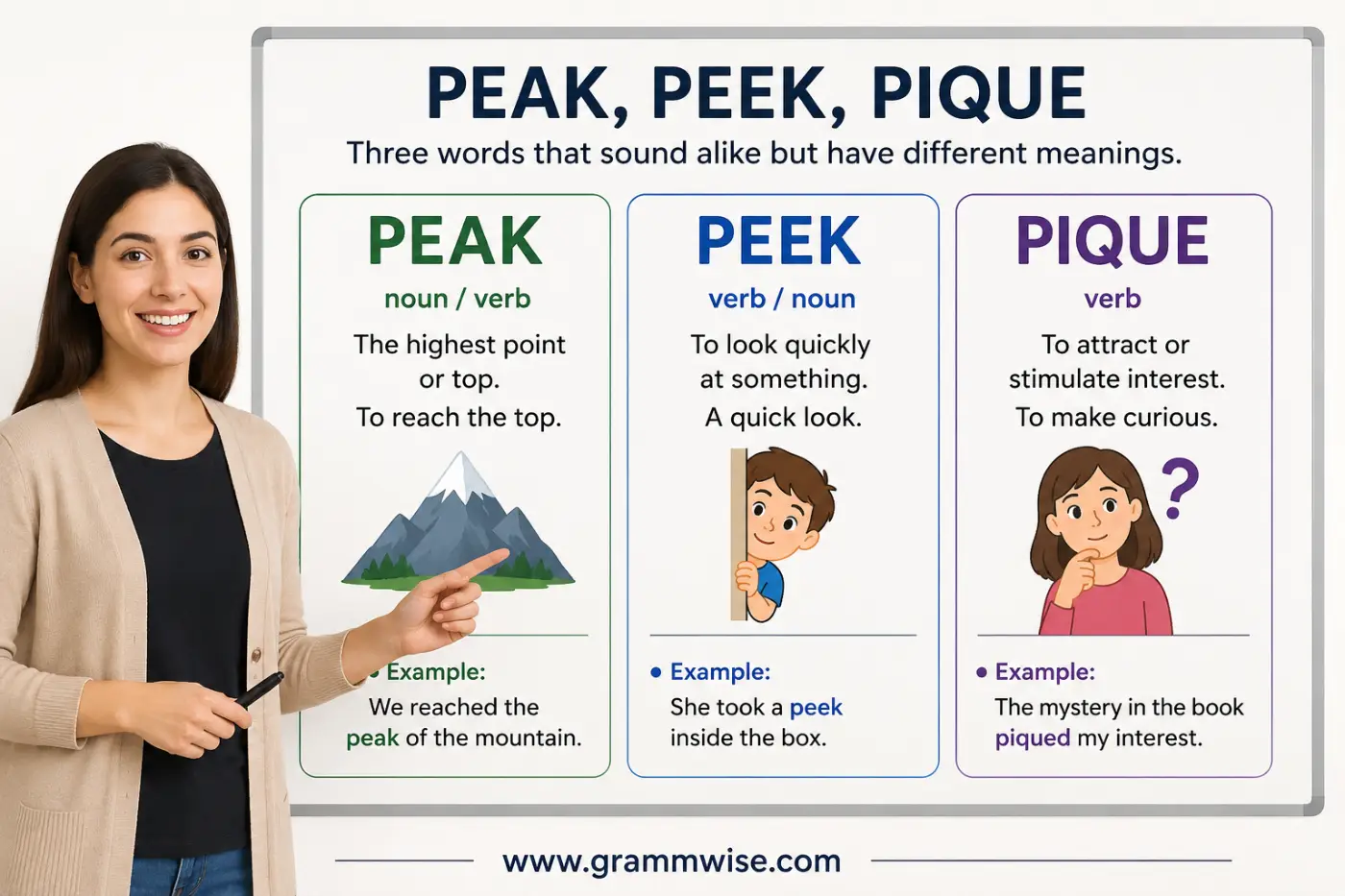
Peak, Peek, Pique: Learn the Difference with Easy Examples

July 26, 2026 by James Carter
Peak, Peek, Pique feature

Many English learners get confused about peak, peek, pique because these three words sound exactly the same. They are homophones, which means they have the same pronunciation but different meanings and spellings. If you use the wrong one, your sentence can quickly become confusing. The good news is that learning peak, peek, pique is easier … Read more

Categories Homophones Leave a comment

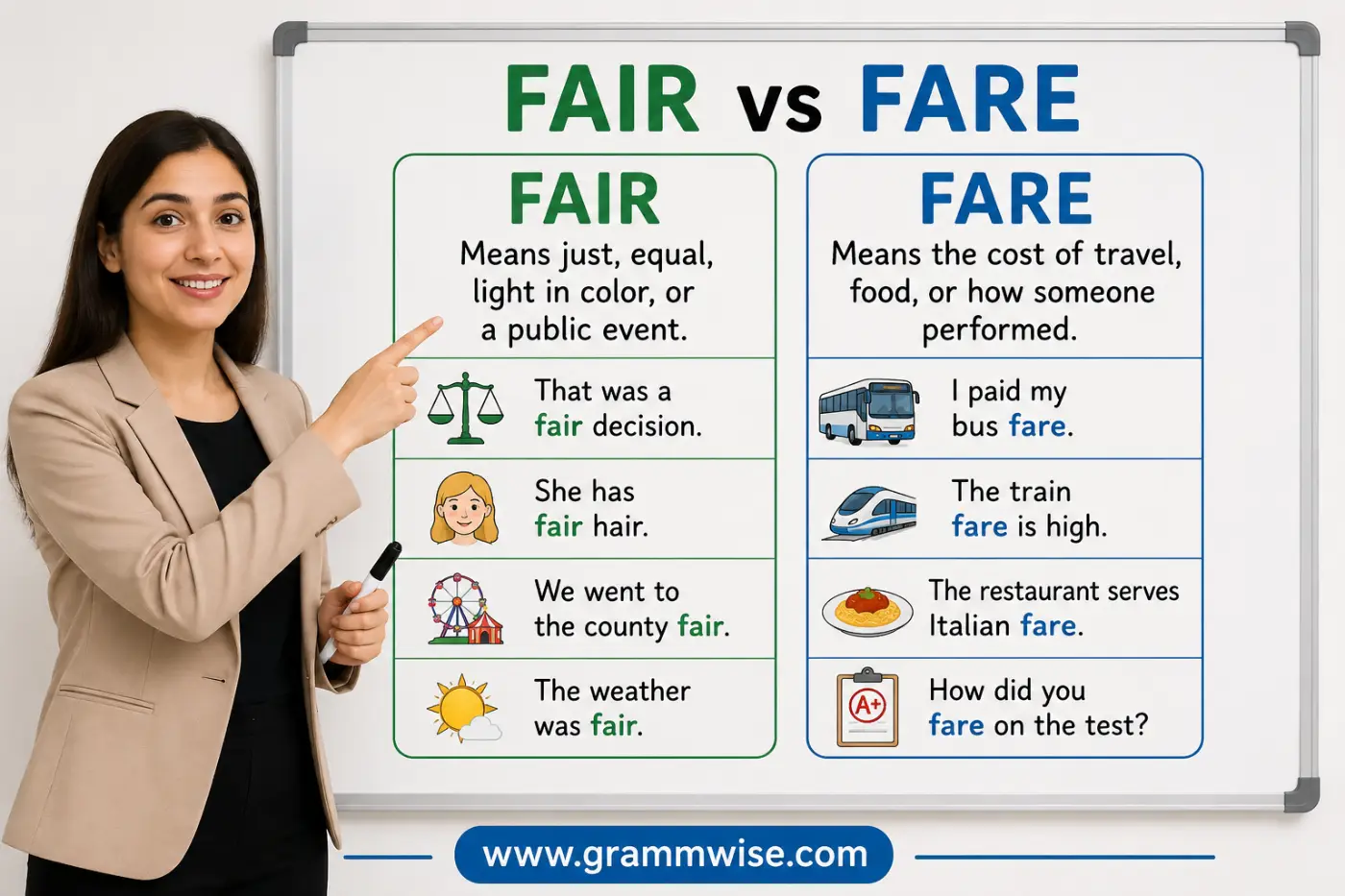
Fair vs Fare: What’s the Difference and Which One Should You Use?

July 25, 2026 by James Carter
Fair vs Fare feature

Many English learners get confused about fair vs fare because the two words sound exactly the same. They are homophones, which means they have the same pronunciation but different meanings and spellings. If you have ever stopped while writing and wondered which one is correct, you are not alone. The good news is that the … Read more

Categories Homophones Leave a comment
Older posts
Newer posts
← Previous Page1 … Page5 Page6 Page7 … Page15 Next →
© 2026 grammwise.com • Built with GeneratePress