Skip to content
grammwise.com
  • Home
  • Blogs
  • Contact Us
  • About Us

James Carter

James Carter is a content writer based in Seattle, Washington, who specializes in English grammar, vocabulary, and effective communication. Through engaging articles and practical examples, he helps readers strengthen their writing skills while avoiding common language mistakes.

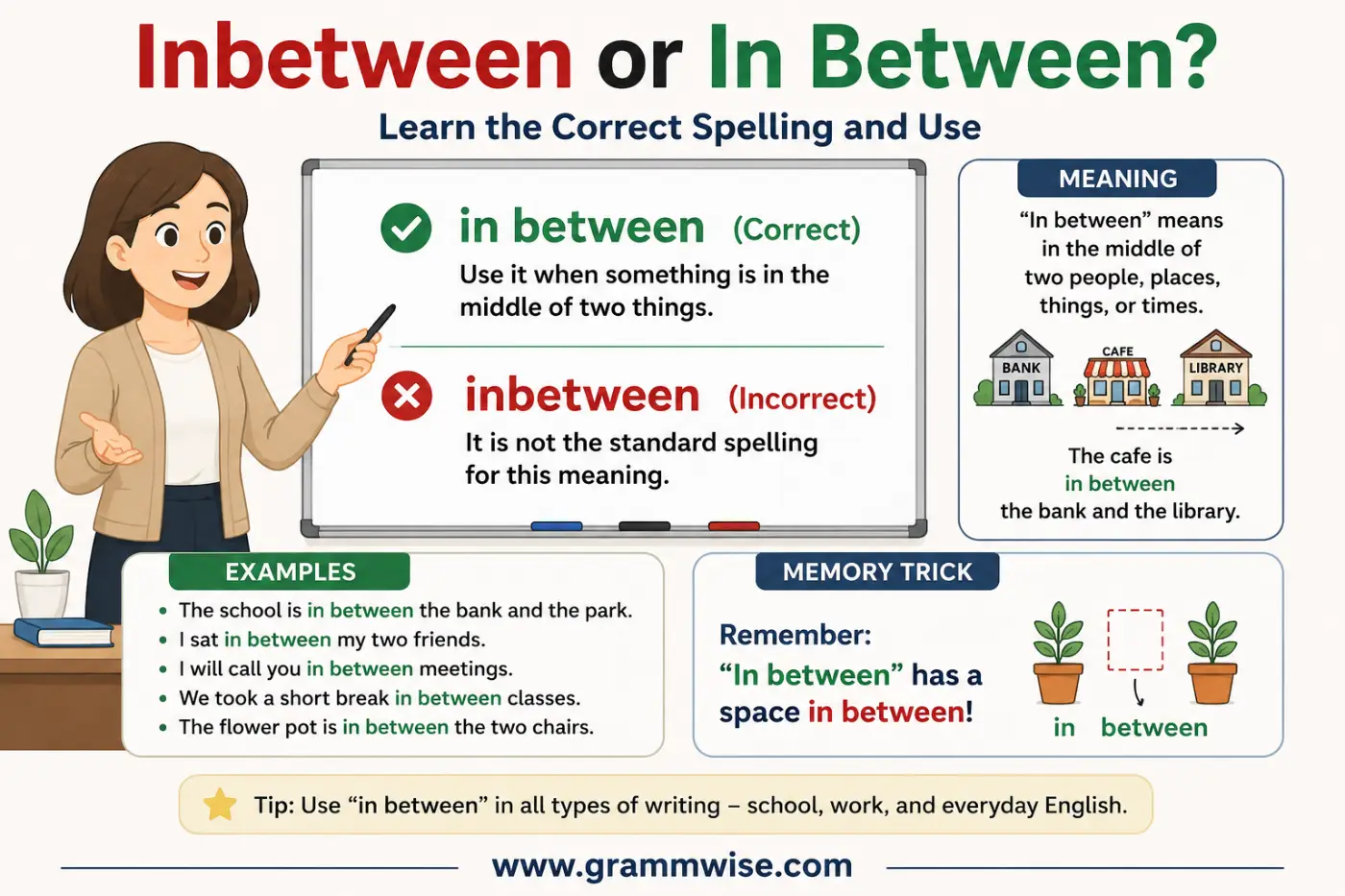
Inbetween or In Between: Learn the Correct Spelling
August 24, 2026 by James Carter
Inbetween or In Between feature

Many English learners wonder whether inbetween or in between is the correct form. The simple answer is clear: in between is the standard and correct spelling when you mean “in the space separating two things” or “between two points, people, places, or times.” The two words should normally be written separately. For example, you can … Read more
Categories Correct Spelling Leave a comment

Verbage or Verbiage: Which Word Is Correct?

August 24, 2026 by James Carter
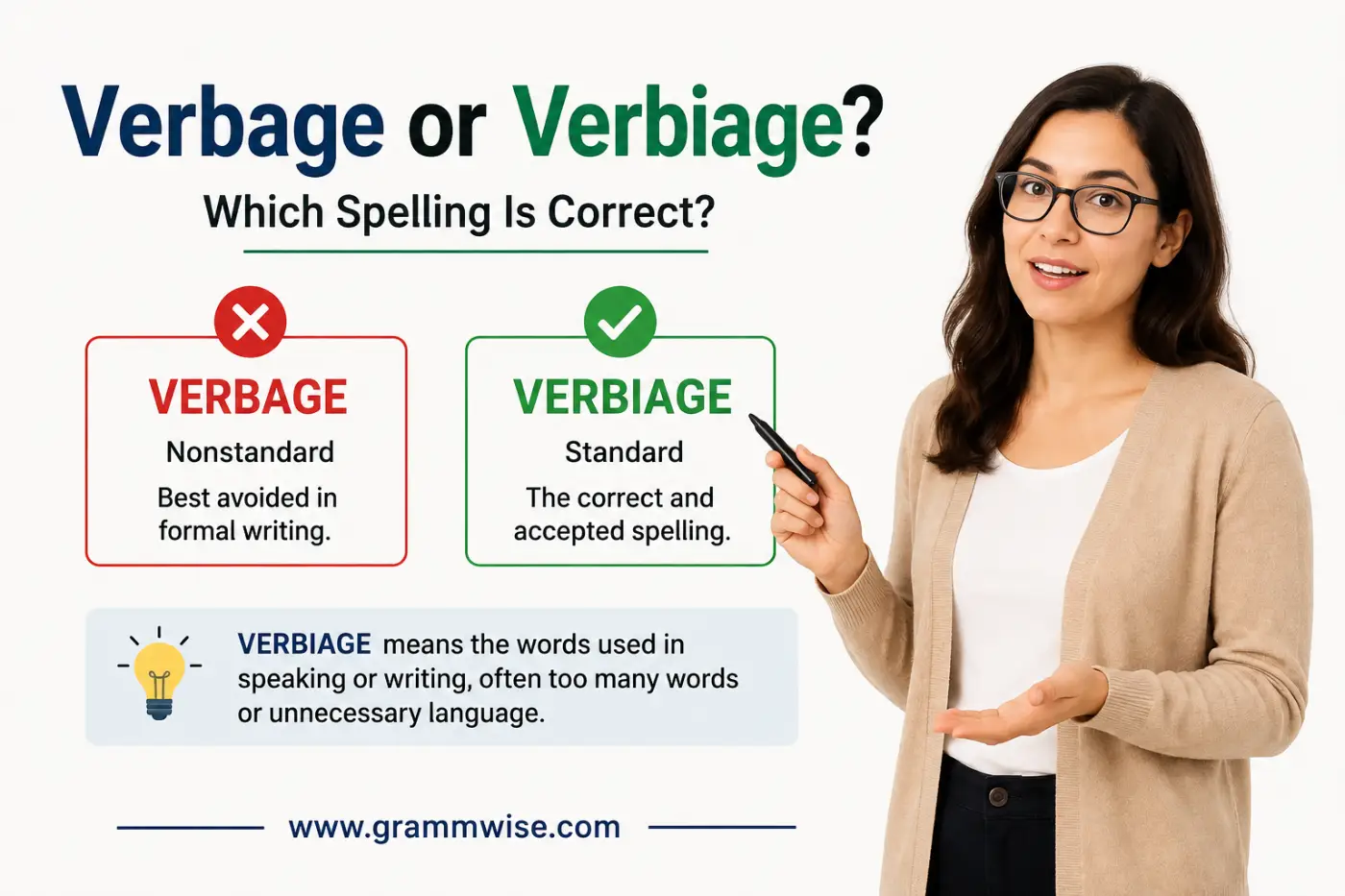
Verbage or Verbiage feature

If you are confused about verbage or verbiage, the simple answer is this: verbiage is the standard word in English. Verbage is sometimes used, but it is generally considered nonstandard and should be avoided in formal writing. The two words look and sound very similar. That is why many people mix them up. This guide … Read more

Categories Correct Spelling Leave a comment

Calfs or Calves: Which Spelling Is Correct?

August 21, 2026 by James Carter
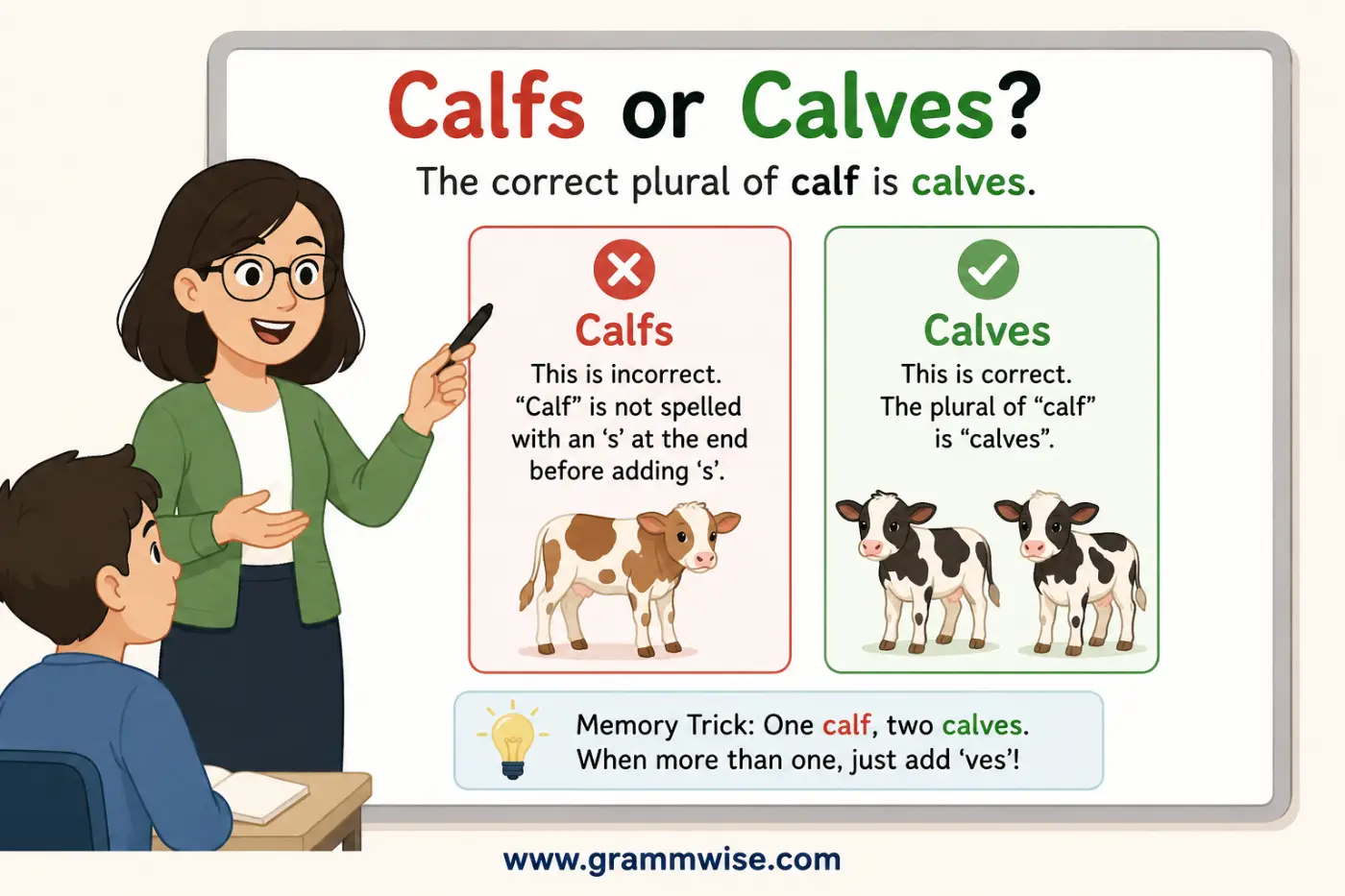
Calfs or Calves feature

Many people wonder whether the correct plural is calfs or calves. The answer is simple: calves is the correct spelling. The word calfs is generally incorrect when you mean more than one calf. This small spelling change can confuse English learners because most English nouns simply add -s to become plural. The word calf can … Read more

Categories Correct Spelling Leave a comment

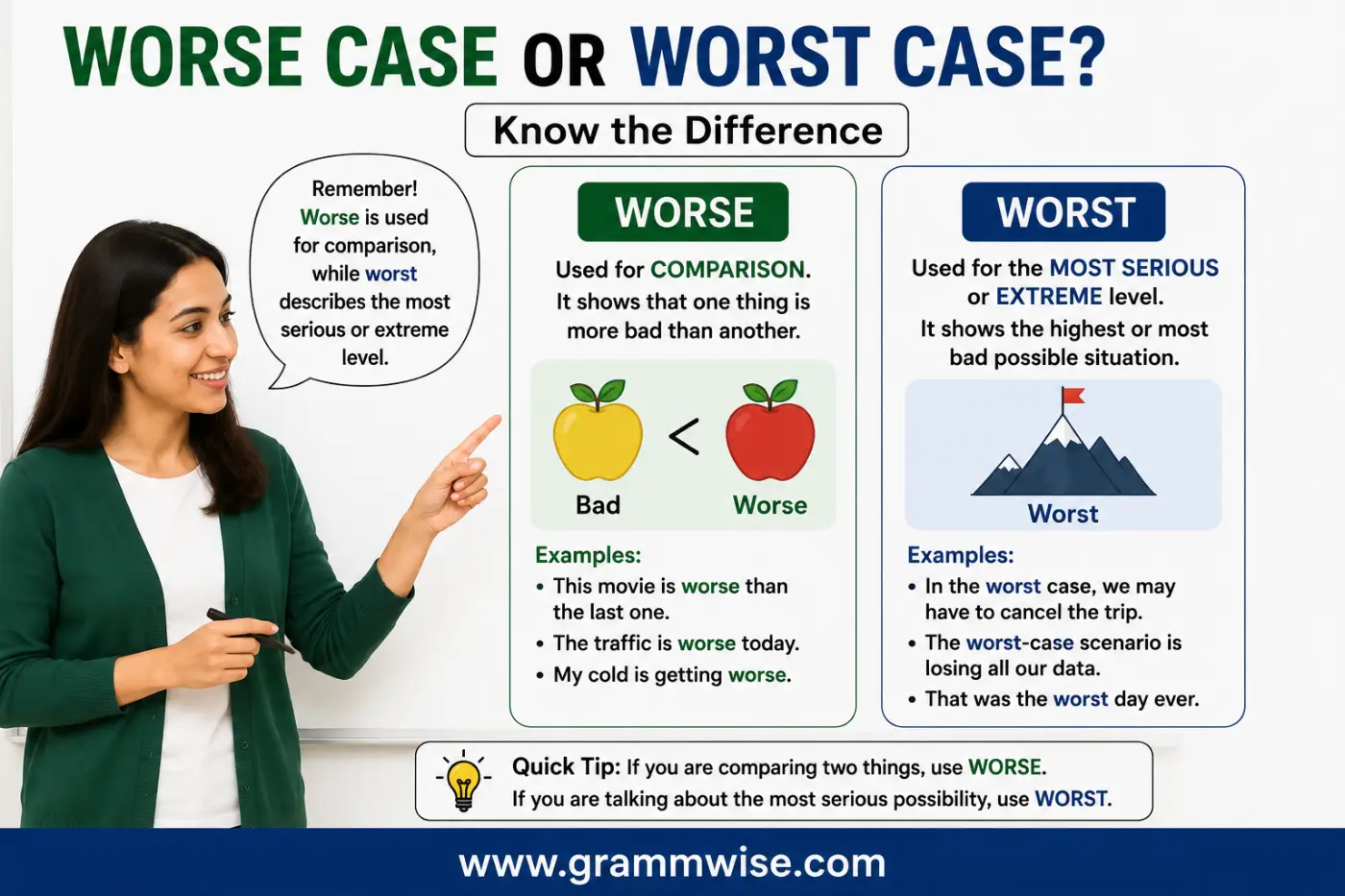
Worse Case or Worst Case: What Is the Difference? Easy Guide

August 21, 2026 by James Carter
Worse Case or Worst Case

Many English learners confuse worse case or worst case because the words worse and worst are very similar. They both come from the word bad, but they are used in different ways. This is why people sometimes write worse case when they actually mean worst case. The simple answer is: “Worst case” is the correct … Read more

Categories Commonly Confused Words Leave a comment

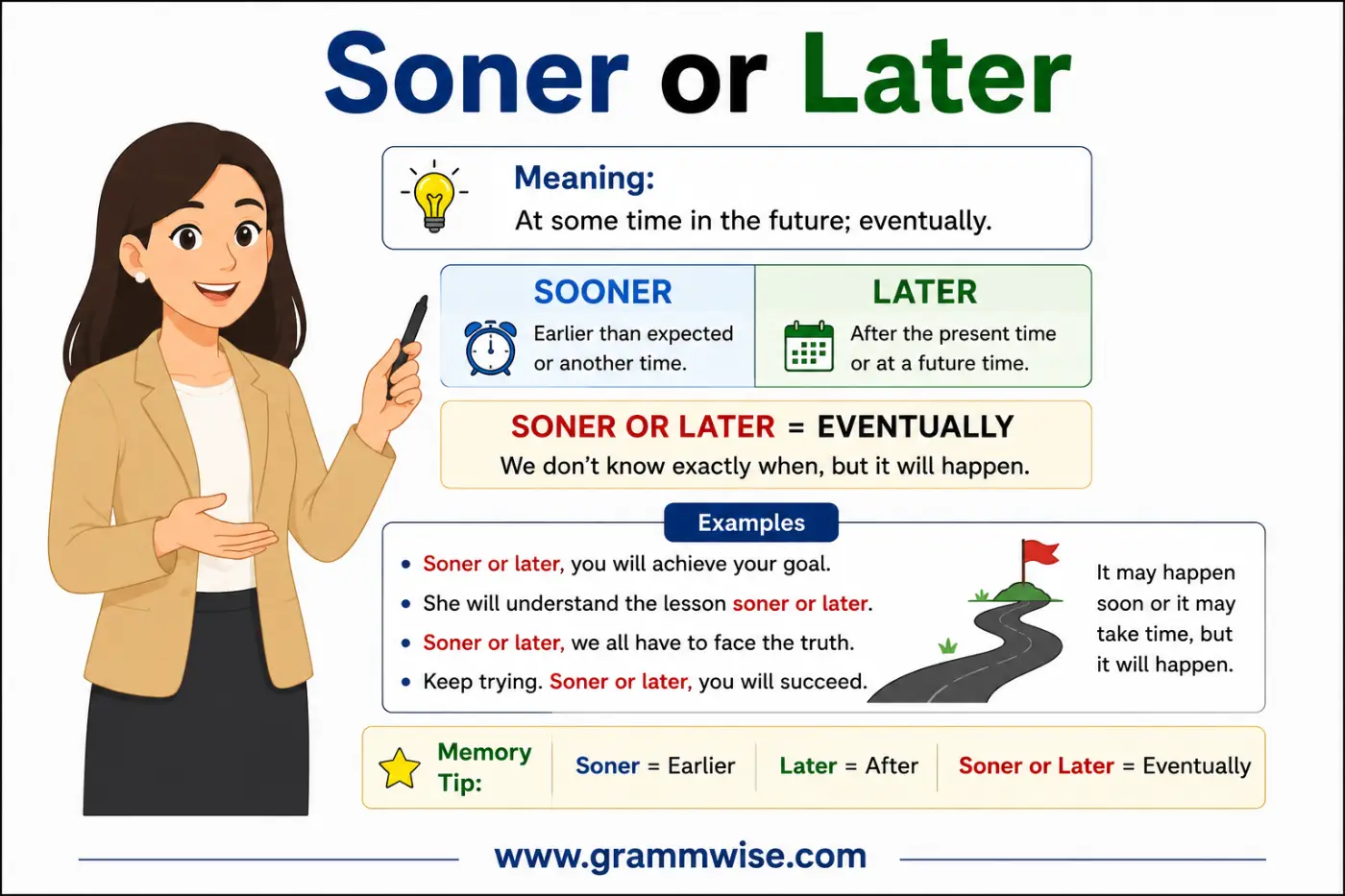
Sooner vs Later: Meaning, Difference, and How to Use It

August 16, 2026 by James Carter
sooner vs later feature

The phrase sooner vs later is a common English expression. It means that something will happen at some time in the future, even if we do not know exactly when. For example, if you keep practicing English, you will sooner or later become more confident. The words sooner and later talk about time. Sooner means … Read more

Categories Word Differences Leave a comment

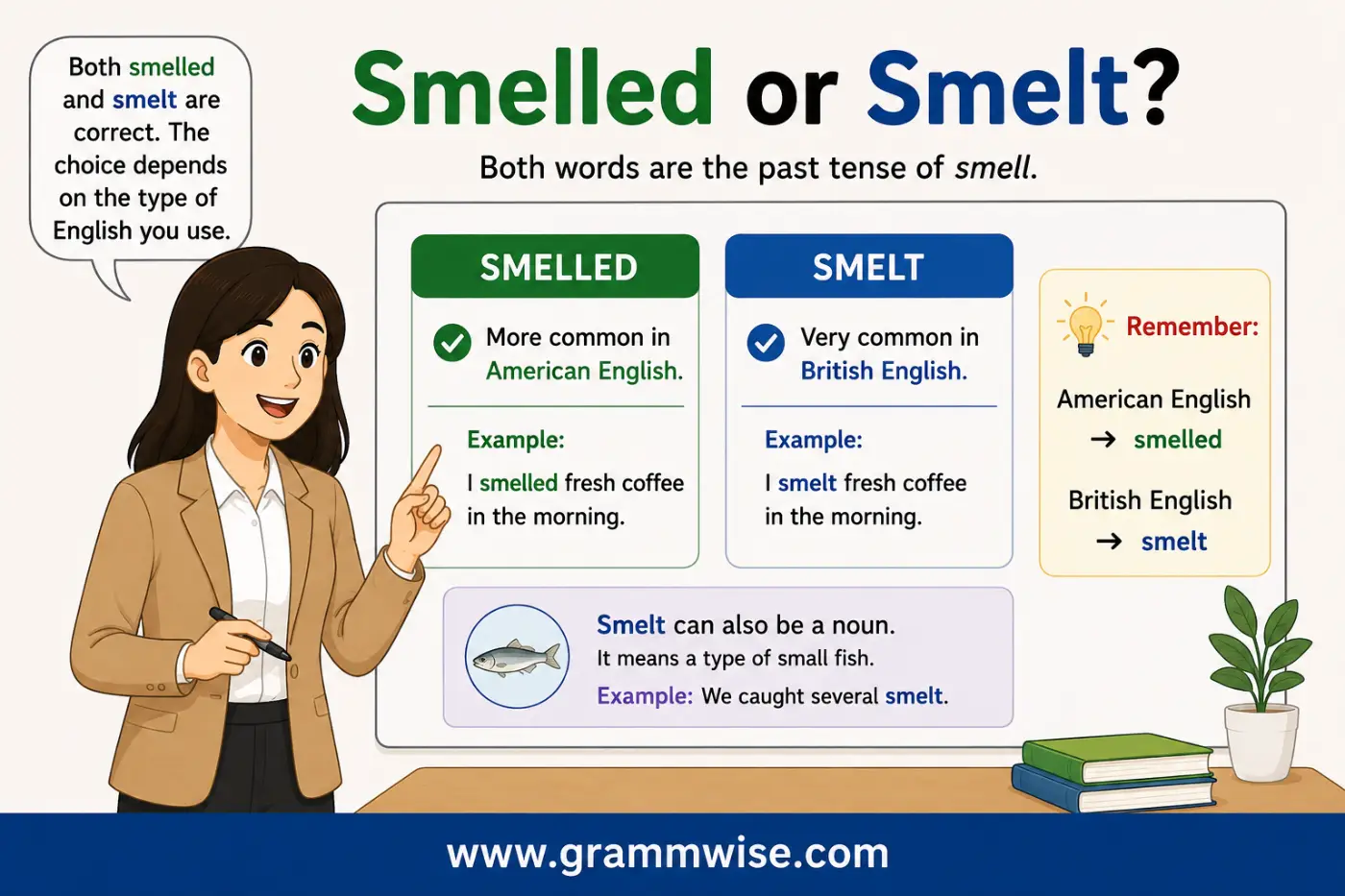
Smelled or Smelt: Which One Is Correct?

August 16, 2026 by James Carter
Smelled or Smelt feature

Many English learners wonder whether smelled or smelt is the correct word. The good news is that both are correct. The main difference is where they are used and which form of English a speaker follows. Smelled is more common in American English. Smelt is very common in British English and is also used in … Read more

Categories Regional English Difference Leave a comment

Woah or Whoa: Which Spelling Is Correct?

August 15, 2026 by James Carter
Woah or Whoa feature

Many English learners get confused about woah or whoa because both spellings appear in texts, social media posts, movies, and online conversations. When people want to show surprise, excitement, or shock, they may write either whoa or woah. The simple answer is that whoa is the traditional and more widely accepted spelling. Woah is also … Read more

Categories Commonly Confused Words Leave a comment

Pricy or Pricey: Which Spelling Is Correct?

August 15, 2026 by James Carter
Pricy or Pricey feature

Many English learners get confused about pricy or pricey because both spellings are used to describe something that costs a lot of money. You may see pricey in one article and pricy in another. This can make you wonder which spelling is correct. The simple answer is that both pricy and pricey are correct. However, … Read more

Categories Word Differences Leave a comment

It’s Now or Never: Meaning, Usage, and Easy Examples

August 14, 2026 by James Carter
It’s Now or Never: Meaning, Usage, and Easy Examples

Many English learners hear the phrase it’s now or never in movies, songs, books, and everyday conversations. The expression sounds simple, but some people are not sure what it really means or how to use it correctly. The phrase it’s now or never means that this is the best or last chance to do something. … Read more

Categories Word Differences Leave a comment

Suppose to or Supposed to: Which Is Correct?

August 14, 2026 by James Carter
Suppose to or Supposed to feature

Many English learners confuse suppose to or supposed to because the two forms sound very similar in fast speech. You may hear someone say, “You’re suppose to do that,” but that does not make suppose to correct in standard English. The correct form is usually supposed to when you mean that someone is expected, required, … Read more

Categories Commonly Confused Words Leave a comment
Older posts
Newer posts
← Previous Page1 Page2 Page3 … Page15 Next →
© 2026 grammwise.com • Built with GeneratePress