
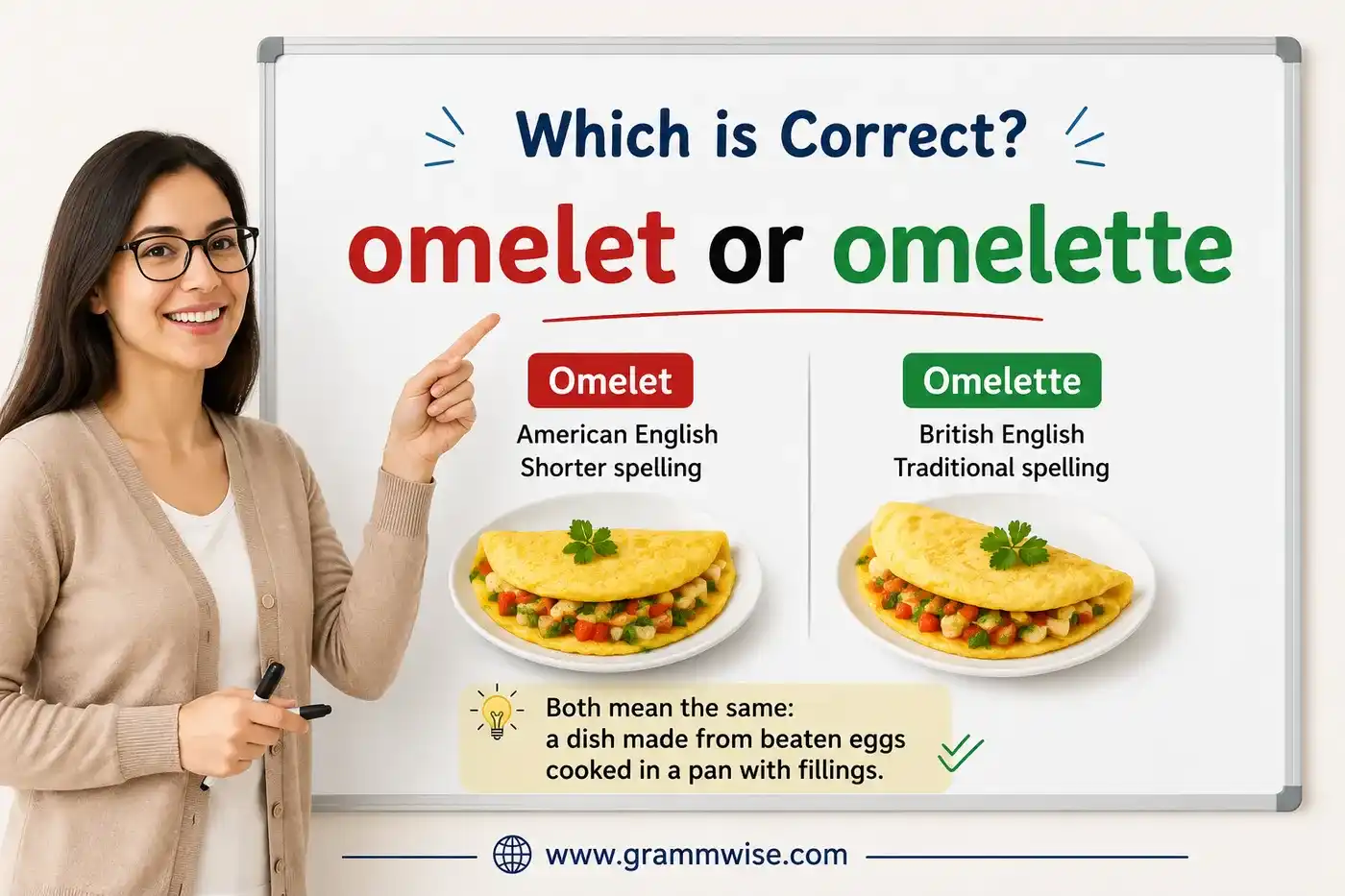
Many English learners get confused about omelet or omelette. Both words refer to the same egg dish, but the spelling is different. This can make people wonder which one is correct and when they should use each form.
The good news is simple. Both omelet and omelette are correct words. The difference is mostly based on the type of English being used. One spelling is more common in American English, while the other is often seen in British English and French-influenced writing.
If you have ever asked yourself whether to write omelet or omelette, this guide will give you a clear answer in simple English.
Confused by similar words? Our grammar guides explain them clearly.
Simple Answer in One Look Omelet or Omelette
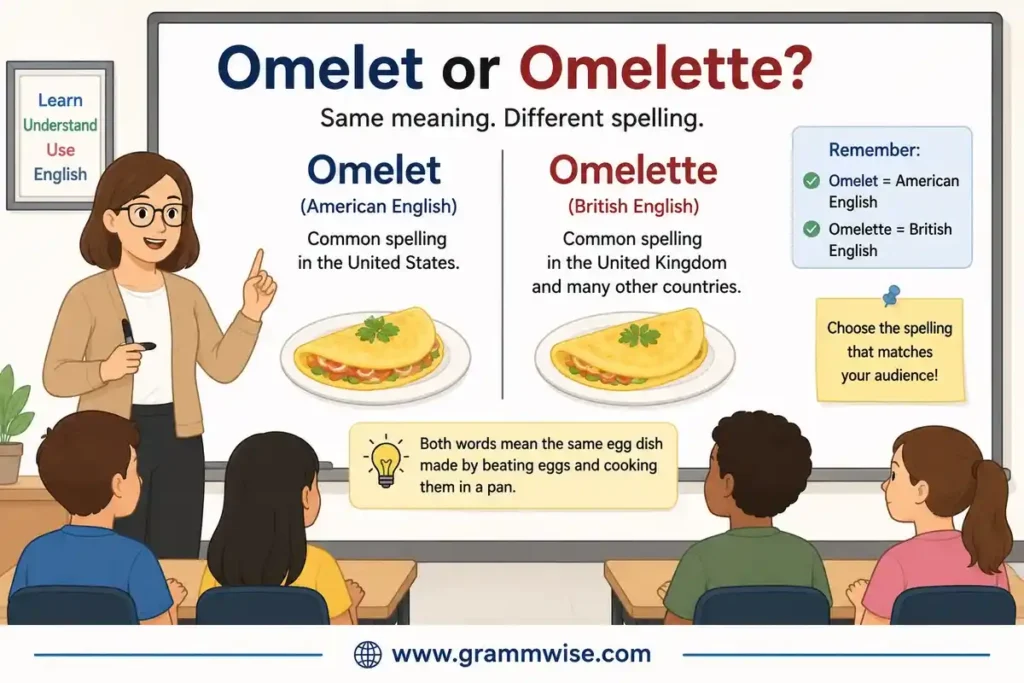
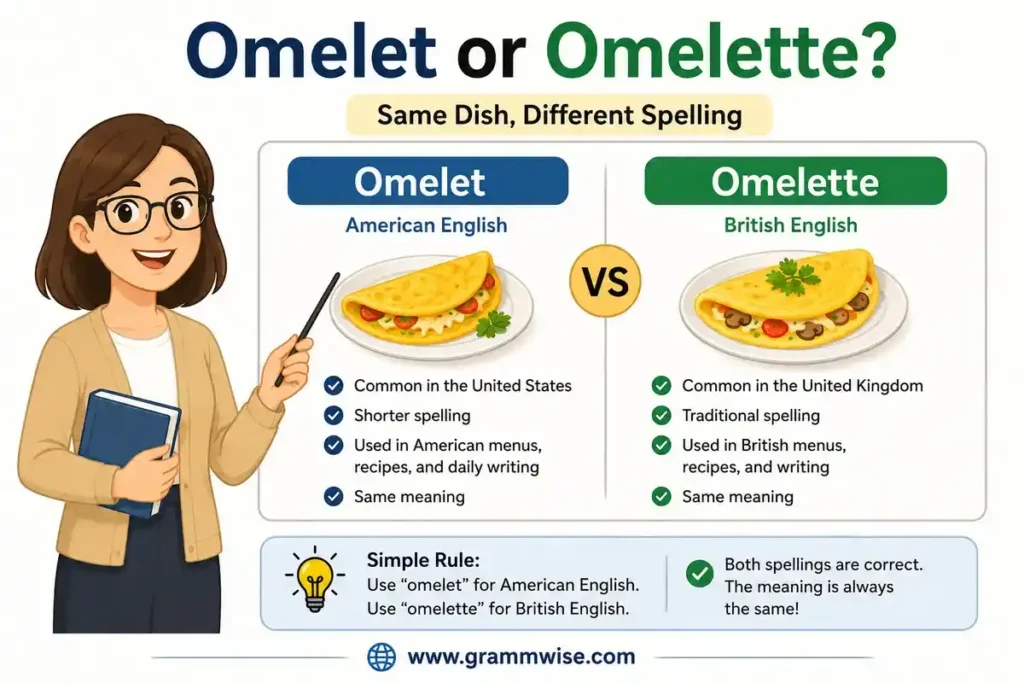
- Omelet is the preferred spelling in American English.
- Omelette is common in British English and comes from the original French spelling.
Both words mean the same thing.
Means of Omelet or Omelette in Simple English
An omelet is a dish made from beaten eggs cooked in a pan. People often fold the eggs over ingredients such as:
- Cheese
- Onions
- Tomatoes
- Mushrooms
- Ham
- Peppers
Whether you write omelet or omelette, you are talking about the same food.
Think of it this way:
- Same food
- Same meaning
- Different spelling
Many English words have more than one accepted spelling. This is one of those cases. For example, a person in the United States may order an “omelet” at breakfast. A person in the United Kingdom may see “omelette” on a restaurant menu. Both are correct.
Why People Mix These Words Omelet or Omelette?
People mix these words because they look very similar. The only difference is the ending.
- omelet
- omelette
When learners see both spellings online, in books, or on menus, they may think one is wrong. That is not true.
Another reason for confusion is that many websites use both spellings. Some recipe writers follow American English. Others follow British English.
A traveler may also notice different spellings in different countries.
For example:
In an American restaurant menu:
Cheese Omelet
In a British café menu:
Cheese Omelette
The food arriving at the table will be almost exactly the same. Because both forms are widely used, people often wonder which spelling they should choose in school, work, or daily writing.
Clear Difference of Omelet or Omelette Explained Simply
Here is the easiest way to understand the difference between omelet or omelette.
| Omelet | Omelette |
|---|---|
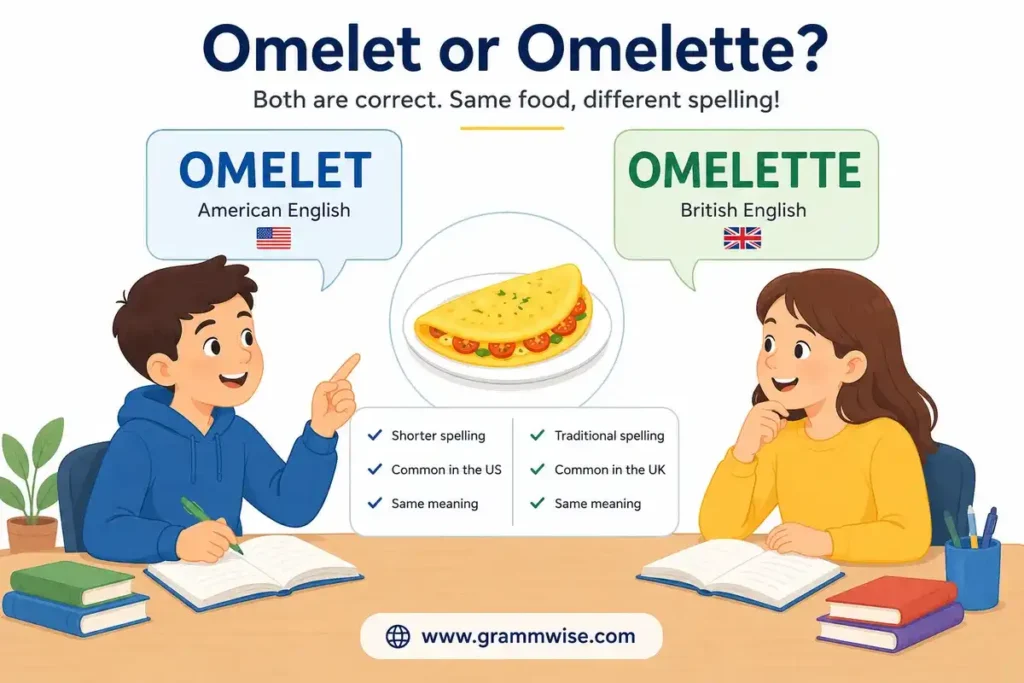
| Common in American English | Common in British English |
| Shorter spelling | Longer spelling |
| Often used in US menus and recipes | Often used in UK menus and recipes |
| Same meaning | Same meaning |
Notice something important. The meaning never changes. Only the spelling changes. You can compare it to other spelling differences in English.
For example:
- Color → Colour
- Flavor → Flavour
- Favorite → Favourite
In the same way:
- Omelet → American style
- Omelette → British style
Which Form Should You Use Omelet or Omelette?
The best choice depends on your audience.
Use “omelet” if:
- You are writing for Americans.
- You follow American English.
- Your school uses US spelling rules.
- Your website targets US readers.
Use “omelette” if:
- You are writing for British readers.
- You follow British English.
- You are using a French-style menu.
- Your audience expects UK spelling.
If you are unsure, choose the style used by your school, company, website, or publisher.
The most important thing is consistency. Do not switch back and forth between the two spellings in the same piece of writing.
For example:
✅ Today’s special is a vegetable omelet and cheese omelet.
✅ Today’s special is a vegetable omelette and cheese omelette.
❌ Today’s special is a vegetable omelet and cheese omelette.
Using one style throughout your writing looks cleaner and more professional.
Easy Real-Life Sentences on Omelet or Omelette You Can Use
Here are some simple examples.
Using “omelet”
- I ate a cheese omelet for breakfast.
- My dad makes a great mushroom omelet.
- The café serves a vegetable omelet every morning.
- She ordered a ham omelet.
- I learned how to cook an omelet today.
Using “omelette”
- He ordered a cheese omelette.
- The hotel serves a fresh omelette every day.
- She made a spinach omelette for lunch.
- We shared a large omelette.
- The menu offers a French omelette.
Each sentence is correct.
The spelling simply follows a different English style.
Origin Of This Word Omelet or Omelette
The story behind omelet or omelette is quite interesting. The word originally came from French. For many years, the French spelling was closer to omelette. As English borrowed the word, different spellings appeared.
Over time, American English started favoring shorter spellings for some words. That is why omelet became popular in the United States.
Meanwhile, omelette stayed common in Britain and in places that followed traditional French influence. Even today, both forms remain accepted. Language changes over time, and spelling often changes with it.
This is one reason English contains many words with more than one correct spelling.
A Quick Timeline
- French word develops: omelette
- English adopts the word
- American English shortens it to omelet
- British English continues using omelette
- Both spellings remain correct today
The history explains why both versions still exist.
How This Word Is Understood in Culture and Stories
Food is more than something we eat. Food often becomes part of family traditions, celebrations, and memories. This is also true for an omelet or omelette.
Around the world, people eat eggs in many ways. An omelet is one of the most common egg dishes. Because of this, many people connect it with comfort, family meals, and simple cooking.
In the United States, an omelet is often linked to breakfast. Many families enjoy omelets on weekends when they have more time to cook together.
In the United Kingdom and some other countries, an omelette may appear on breakfast, lunch, or dinner menus. It is often seen as a quick and tasty meal.
In stories, movies, and television shows, omelets sometimes appear during family breakfasts. A character may cook an omelet to show care for someone else.
For example:
- A parent makes an omelet for a child before school.
- Friends share an omelet at a café.
- A chef prepares a special omelette in a restaurant scene.
The spelling may change, but the idea stays the same. People see it as a simple, warm, and familiar food. Because eggs are common in many countries, the word is easy for people from different cultures to understand.
Biblical and Mythological Meaning Omelet or Omelette
There is no direct biblical meaning for the words omelet or omelette. The Bible does mention food, meals, bread, fish, and other foods, but it does not give any special meaning to omelets.
The same is true for mythology. Ancient myths do not usually focus on omelets themselves.
However, eggs often appear in stories and traditions around the world. Many cultures see eggs as symbols of;
- New life
- Growth
- New beginnings
- Possibility
Since an omelet is made from eggs, some people connect it with these positive ideas. This connection comes from culture and tradition, not from a specific biblical teaching.
Symbolism of Omelet or Omelette Explained in Simple Words
People do not usually think deeply about the spelling of omelet or omelette. Still, some people connect different feelings or ideas with each version.
What One Version Represents?
Omelet often represents:
- American English
- Simplicity
- Modern spelling
- Everyday writing
- Short and practical language
Many people see it as the straightforward version. Because it is shorter, some writers feel it looks cleaner and easier to read.
What the Other Version Represents?
Omelette often represents:
- British English
- French influence
- Traditional spelling
- Restaurant menus
- Classic cooking style
Some people feel the extra letters make it look more elegant or formal. This does not make it better. It is simply a different style.
Simple Comparison Omelet or Omelette
| Omelet | Omelette |
|---|---|
| American style | British style |
| Shorter spelling | Traditional spelling |
| Common in the US | Common in the UK |
| Simple appearance | French-influenced appearance |
| Same meaning | Same meaning |
The most important thing to remember is that neither spelling changes the food itself.
Related Words to Omelet or Omelette You Should Know
Here are some related words that often appear with omelet or omelette.
Eggs
The main ingredient in an omelet. Eggs are beaten and cooked in a pan.
Breakfast
The first meal of the day. Many people eat omelets for breakfast.
Scrambled Eggs
Eggs cooked while being stirred. They are different from an omelet because they are not folded.
Frittata
An egg dish that is usually thicker than an omelet and often finished in the oven.
Quiche
A baked dish made with eggs, cream, and a crust.
Filling
The ingredients placed inside an omelet, such as cheese or vegetables.
Cheese Omelet
An omelet filled with cheese.
Vegetable Omelette
An omelette filled with vegetables such as peppers, onions, or mushrooms.
Recipe
A set of instructions for cooking a dish.
Brunch
A meal between breakfast and lunch. Omelets are often served at brunch.
Knowing these words can help you understand menus, recipes, and food conversations more easily.
Usage Of Omelet or Omelette in Daily English
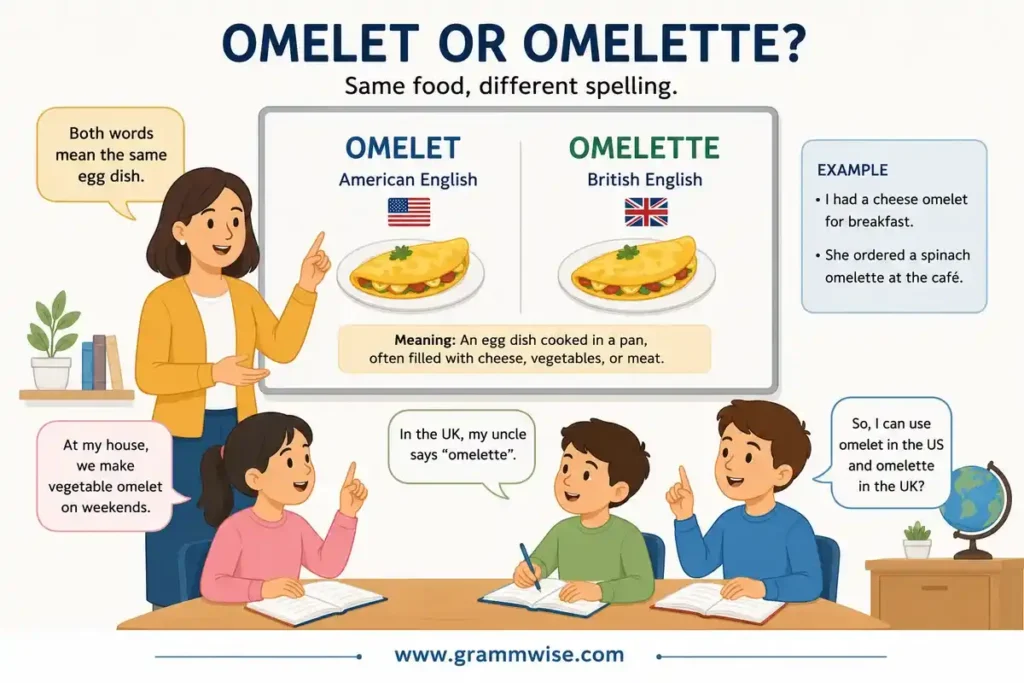
Native speakers use both spellings naturally depending on where they live. Here are real-life examples;
At Home
“Can you make me a cheese omelet?”
“I had an omelet for breakfast.”
At a Restaurant
“I’ll have the vegetable omelette, please.”
“The mushroom omelette looks good.”
Talking About Cooking
“My grandmother taught me how to make an omelet.”
“This recipe makes a fluffy omelette.”
Talking With Friends
“I ate the biggest omelet this morning.”
“That omelette was delicious.”
Online Reviews
“The café serves a great omelet.”
“Their Spanish omelette is amazing.”
School Writing
“My favorite breakfast food is an omelet.”
Travel Situations
“In London, I noticed many menus used omelette.”
“In New York, most menus used omelet.”
These examples show how both spellings appear naturally in everyday English.
Common Mistakes People Make About Omelet or Omelette
Many learners make small mistakes when using omelet or omelette. Here are the most common ones;
Mistake 1: Thinking One Spelling Is Wrong
❌ Omelette is wrong.
✅ Omelette is correct in British English.
❌ Omelet is wrong.
✅ Omelet is correct in American English.
Both spellings are accepted.
Mistake 2: Mixing Styles
❌ The menu offers a cheese omelet and a vegetable omelette.
✅ The menu offers a cheese omelet and a vegetable omelet.
OR
✅ The menu offers a cheese omelette and a vegetable omelette.
Choose one style and keep it consistent.
Mistake 3: Assuming the Meaning Changes
❌ Omelet and omelette are different foods.
✅ They are the same food.
The spelling changes, not the meaning.
Mistake 4: Using the Wrong Style for Your Audience
- If your readers use American English, omelet may feel more natural.
- If your readers use British English, omelette may feel more familiar.
Always think about who will read your writing.
Mistake 5: Worrying Too Much About It
Many learners spend too much time worrying about which spelling is correct. The truth is simple. Both are correct. Most readers will understand either one.
Final Teacher Explanation Omelet or Omelette
Imagine you are sitting in my classroom and asking:
“Teacher, should I write omelet or omelette?”
My answer would be simple.
Both words are correct. They mean exactly the same thing. The difference is not about grammar. or about meaning. The difference is mainly about spelling style.
- If you use American English, write omelet.
- If you use British English, write omelette.
That is really all you need to remember. Many English words have different spellings in different countries. This is normal. Do not panic when you see both forms. Do not assume one is wrong. Look at your audience and choose the spelling that matches the style you are using.
Most importantly, stay consistent. Once you choose a spelling, keep using the same one throughout your writing. That simple habit will make your English look clear and professional.
Quick Recap Omelet or Omelette
When comparing omelet or omelette, both spellings are correct.
- Omelet is the preferred American English spelling.
- Omelette is the preferred British English spelling.
The meaning never changes. Only the spelling style changes.
Conclusion
When choosing between omelet or omelette, remember that both spellings are correct and have the same meaning. Omelet is the preferred spelling in American English, while omelette is more common in British English. The choice depends on your audience and writing style.
The easiest rule is to stay consistent. Pick the spelling that matches your readers and use it throughout your writing. Once you know the difference, you can use either form confidently in recipes, menus, school work, and everyday English.
Frequently Asked Questions (FAQs)
Is omelet or omelette correct?
Both are correct. Omelet is common in American English, while omelette is common in British English.
What does omelet mean in simple words?
An omelet is a dish made from beaten eggs cooked in a pan, often with fillings like cheese or vegetables.
Is omelette a different food from an omelet?
No. They are the same food. Only the spelling is different.
Why do people get confused between omelet and omelette?
People see both spellings online, in books, and on menus. This makes them wonder which one is correct.
Which spelling should I use in the United States?
Use omelet because it is the standard American English spelling.
Which spelling should I use in the United Kingdom?
Use omelette because it is the standard British English spelling.
Can I use both forms in writing?
Yes, but do not mix them in the same article or document. Choose one style and stay consistent.
How do restaurants usually spell it?
American restaurants often use omelet. British restaurants often use omelette.