
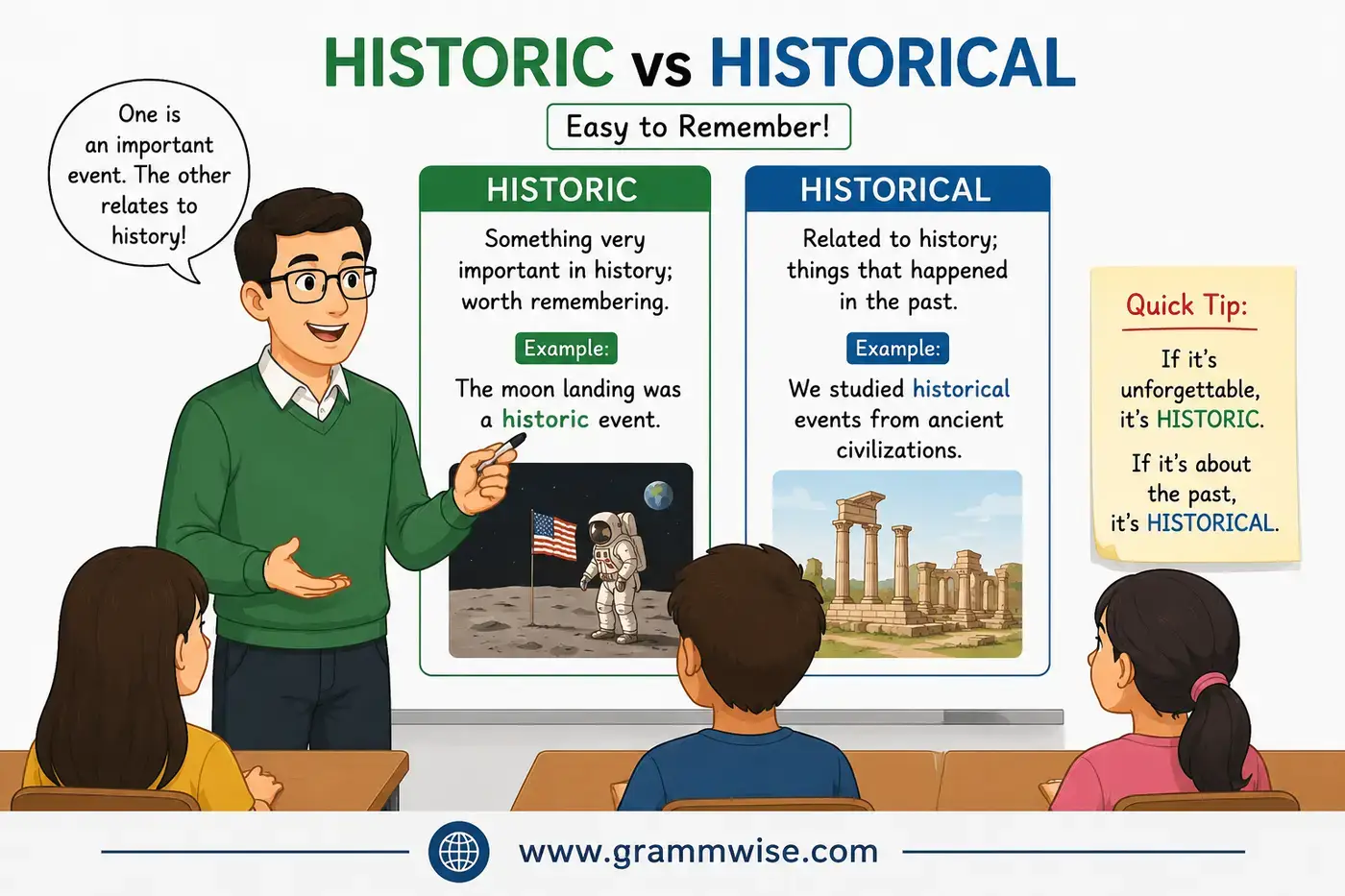
Many English learners confuse historic vs historical because the two words look almost the same. They are both correct English words, but they have different meanings. Once you know the simple difference, choosing the right one becomes easy.
The easiest way to remember historic vs historical is this: historic describes something that is very important in history, while historical describes anything that is related to history. Not every historical event is historic, but every historic event is historical.
This guide explains historic vs historical in very simple English. You will learn what each word means, why people mix them up, when to use each one, and how to remember the difference with clear examples from everyday life.
English has many word pairs with subtle differences in meaning and usage such as Envy vs Jealousy.
Simple Answer in One Look
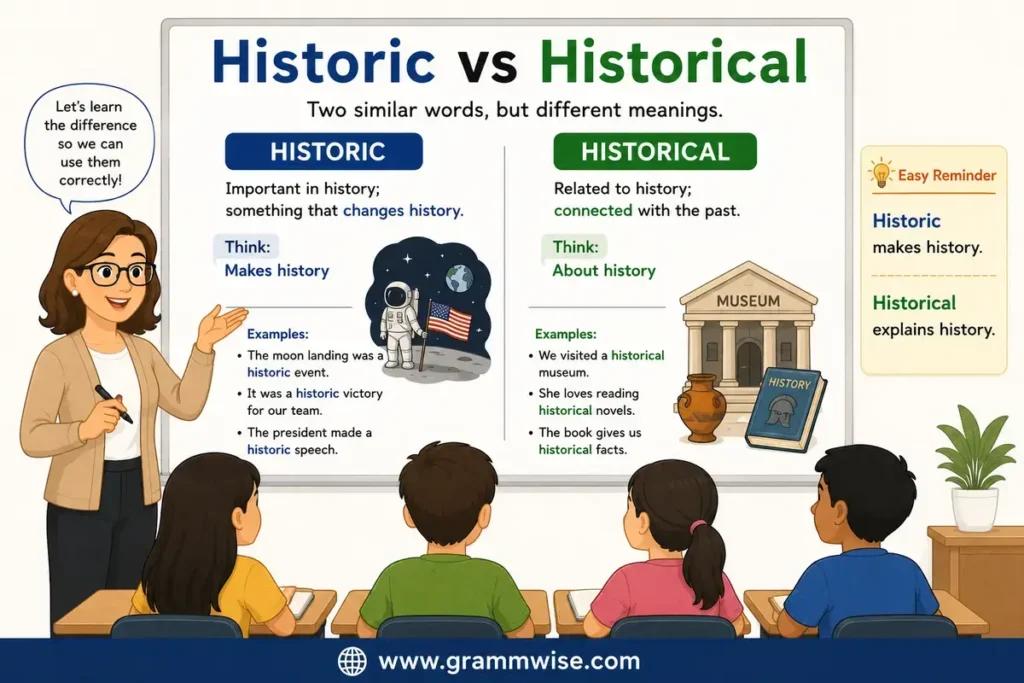
Historic means important in history.
Historical means connected with history.
That is the biggest difference.
What does “Historic vs Historical” Mean in Simple English?
Imagine two old buildings.
The first building is over 200 years old. It has been there for a long time, but nothing special happened there.
The second building is where an important peace agreement was signed. That event changed the country’s future.
The first building is historical because it is connected with history.
The second building is historic because it became an important part of history.
Here is another easy way to think about it.
- Historic = Made history
- Historical = Related to history
This small difference helps you choose the correct word.
Easy Example
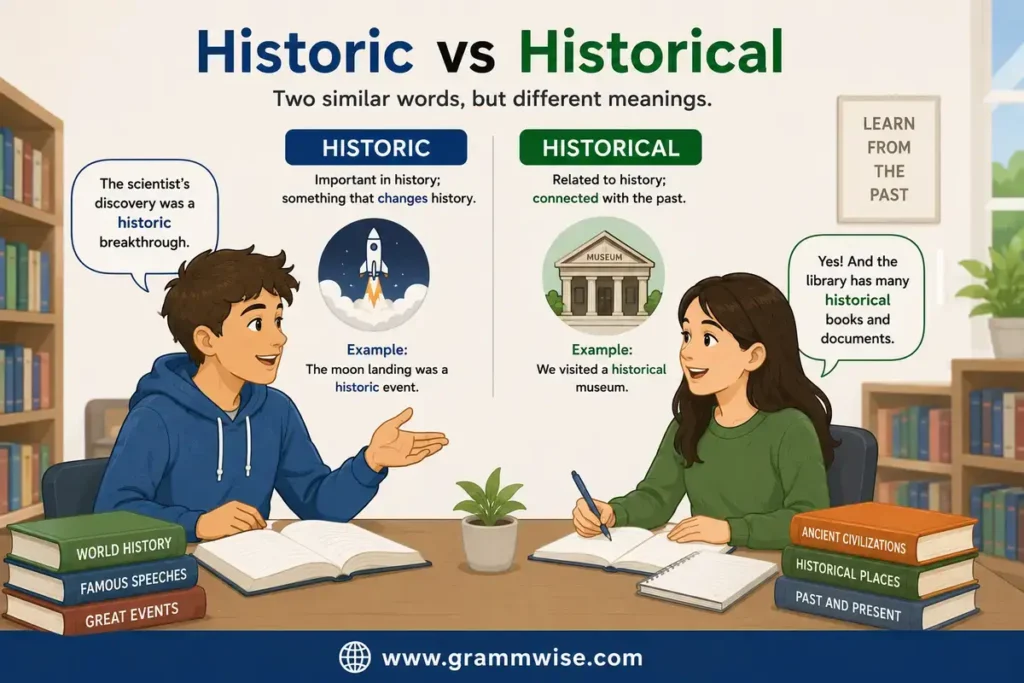
- The moon landing was a historic event.
- The museum has many historical books.
The moon landing changed history.
The books are simply about history.
Why People Mix These Words “Historic vs Historical”?
Many people use these words as if they mean the same thing.
Here are the main reasons why.
They Look Almost the Same
Only a few letters are different.
Because they are spelled so similarly, many people believe they have the same meaning.
Both Talk About History
Both words are connected with the past.
That makes the difference harder to notice.
Both Describe Nouns
Historic and historical are adjectives.
They both describe people, places, objects, and events.
For example:
- historic building
- historical building
Both phrases are correct.
However, they do not mean exactly the same thing.
Many People Use Them Incorrectly
Sometimes newspapers, websites, and even speakers use the wrong word.
When people hear the mistake often, they begin repeating it.
That is why learning the real meaning is helpful.
Clear Difference Between “Historic vs Historical” Explained Simply
The easiest way to compare historic vs historical is with a simple chart.
| Historic | Historical |
|---|---|
| Very important in history | Connected with history |
| Changed history | About history |
| Special and memorable | Old or related to the past |
| Often describes famous events | Often describes facts, books, places, or records |
Think About a School
Imagine your school is 100 years old. That makes it historical because it has a long history.
Now imagine a famous leader gave a speech there that changed the country. That speech becomes historic because it was an important moment in history.
Another Simple Comparison
A history textbook is historical because it teaches history.
A famous battle that changed a nation is historic because it became part of history in a very important way.
Quick Memory Trick
Remember this sentence:
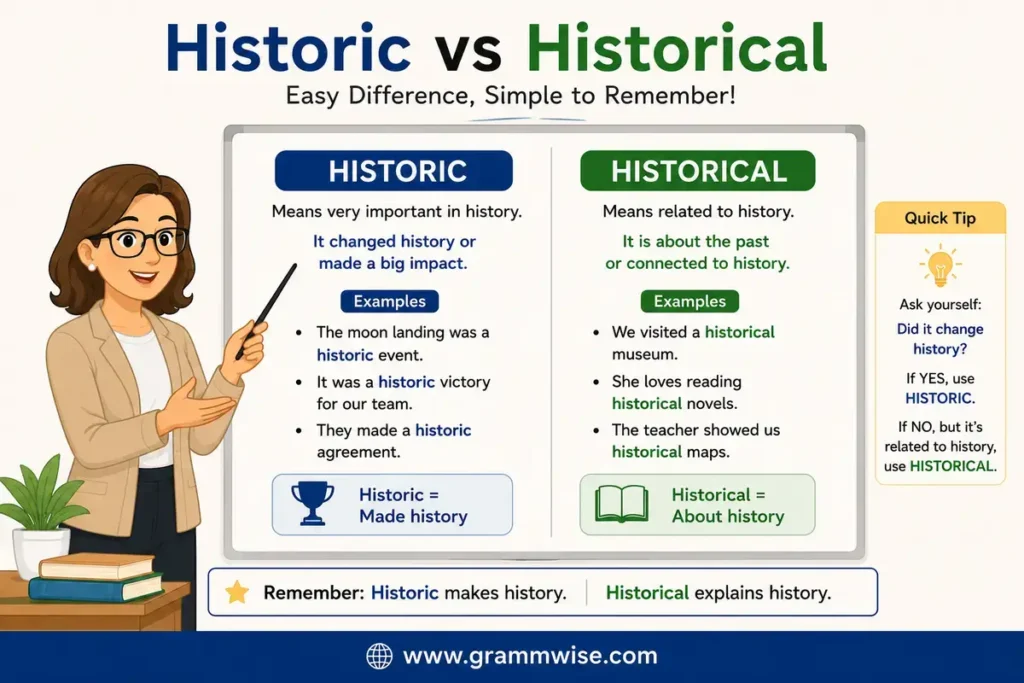
Historic makes history. Historical tells history.
If you remember these five words, you can usually choose the correct word.
Which Form Should You Use “Historic vs Historical”?
Choose historic when something is important enough to be remembered in history.
Use historic for:
- Great achievements
- Major discoveries
- Important speeches
- Big victories
- Famous moments
- Events that changed the future
Examples:
- It was a historic election.
- They reached a historic agreement.
- The team earned a historic victory.
- Scientists made a historic discovery.
Choose historical when talking about anything related to history.
Use historical for:
- Books
- Movies
- Documents
- Museums
- Research
- Records
- Old buildings
- Time periods
Examples:
- I enjoy reading historical novels.
- We visited a historical museum.
- The teacher showed us historical maps.
- She studies historical events.
Ask Yourself One Question
Before choosing the word, ask:
Did this thing change history?
If the answer is yes, use historic.
If the answer is no, but it is connected to history, use historical.
This simple question works most of the time.
Easy Real-Life Sentences on Historic vs Historical
Here are some natural examples you may hear every day.
Historic
- The country celebrated a historic victory.
- Today was a historic day for our school.
- The president made a historic announcement.
- It was a historic moment for science.
- The team achieved a historic win.
- The agreement was historic because it ended the war.
- The astronaut’s journey became a historic achievement.
Historical
- I enjoy watching historical movies.
- The museum has many historical objects.
- She loves reading historical fiction.
- We learned about historical events in class.
- The guide explained the historical background.
- This city has many historical buildings.
- The library keeps historical records.
Compare These Two
- The castle is a historical building.
- The peace meeting inside the castle was a historic event.
The building is connected with history.
The meeting changed history.
Where These Words Historic vs Historical Come From?
Both historic and historical come from the word history.
The word history comes from an old Greek word that meant learning through investigation or finding out what happened. Over time, English created two different adjectives from the same word.
Historical became the general word for anything connected with history.
Later, historic was used for things that were especially important or had a lasting effect on history.
That is why both words come from the same root but have different meanings today. Modern English keeps this difference clear.
- A museum can be historical.
- An event that changes the world can be historic.
How These Words Are Understood in Culture and Stories
The words historic and historical are used in many books, movies, news stories, and everyday conversations. They help people talk about the past, but they do not mean the same thing.
When people hear the word historic, they often think of a moment that changed the world. It may be a great victory, a new invention, or an important speech. These are the moments people remember for many years.
For example:
- The first person walking on the Moon was a historic event.
- The signing of an important peace agreement was a historic moment.
- Winning the country’s first Olympic gold medal can be a historic achievement.
These events stand out because they changed history or became part of history in a special way.
The word historical is much broader.
It simply describes something that belongs to history or helps us learn about the past.
For example:
- A historical museum teaches visitors about earlier times.
- A historical novel tells a story that happens in the past.
- A historical map shows what places looked like many years ago.
Stories often use historical settings. A writer may create fictional characters but place them in a real historical period.
For example, a movie about ancient Rome may tell an imaginary story. It is still a historical movie because it is connected with history.
Culture also keeps many historical traditions alive.
People visit old castles, famous battlefields, and museums to learn about the past. These places are historical because they help us understand history.
Sometimes a place becomes both historical and historic.
An old building may simply be historical because it is very old. If something important happened there that changed history, it also becomes historic.
This is why context matters when choosing the correct word.
Biblical and Mythological Meaning of Historic vs Historical
The Bible does not use the English words historic or historical in the way we use them today, but both ideas can still be understood.
Many events in the Bible are described as historic because they had a great impact on people and faith.
For example:
- The Exodus from Egypt is often seen as a historic event.
- The birth of Jesus is considered a historic event by Christians.
- The resurrection of Jesus is viewed as a historic moment in Christian belief.
These events are called historic because they are believed to have changed history.
The Bible itself is also studied as a historical book.
People study:
- Historical places
- Historical timelines
- Historical rulers
- Historical customs
These topics help readers understand life during biblical times.
In mythology, many stories are not treated as proven history. However, they are still part of historical studies because they teach us about ancient cultures and beliefs.
For example:
- Greek mythology is part of historical studies.
- Egyptian mythology helps people understand ancient civilizations.
- Norse mythology is often included in historical research about early Europe.
These stories may not always describe real events, but they remain important parts of history and culture.
Symbolism of Historic vs Historical in Simple Words
What Historic Represents?
The word historic often symbolizes:
- Great achievement
- Success
- Change
- Progress
- Courage
- A turning point
- A moment people will remember
When people hear “historic,” they usually think of something that changed the future.
For example:
- A historic election
- A historic discovery
- A historic victory
These moments become symbols of progress and hope.
Historic reminds us that one important action can affect many people.
What Historical Represents?
The word historical often symbolizes:
- Learning
- Knowledge
- Memory
- Tradition
- Heritage
- Culture
- Understanding the past
Historical reminds us to remember where we came from.
It helps people learn from earlier generations.
Historical objects, books, and museums connect us with people who lived long ago.
Simple Comparison
Think of these two ideas.
Historic says:
“This changed history.”
Historical says:
“This helps us understand history.”
That is one of the easiest ways to remember the difference.
Related Words You Should Know
Learning these words will help you better understand historic vs historical.
History: History is the study of past events and people. Everything begins with history.
Heritage: Heritage means the traditions, culture, and valuable things passed from one generation to another.
Tradition: A tradition is something people continue doing over many years.
Ancient: Ancient describes something that is very old, usually from thousands of years ago.
Museum: A museum is a place where historical objects are collected and displayed.
Monument: A monument is a structure built to remember an important person or event. Some monuments are both historical and historic.
Archive: An archive is a place where important historical records are safely stored.
Landmark: A landmark is a famous place that people easily recognize. Some landmarks become historic because important events happened there.
How People Actually Use Historic vs Historical in Daily English?
Native English speakers use historic and historical in many everyday situations.
Here are some natural examples.
- “That was a historic win for our team.”
- “Today is a historic day for our country.”
- “The president made a historic announcement.”
- “She enjoys reading historical fiction.”
- “We visited a historical museum during our trip.”
- “The teacher showed us historical photographs.”
- “This documentary explains historical events.”
- “The city is famous for its historical buildings.”
- “Scientists made a historic breakthrough.”
- “The guide shared interesting historical facts.”
You will often hear these phrases:
- Historic agreement
- Historic speech
- Historic moment
- Historic victory
- Historical research
- Historical records
- Historical drama
- Historical site
- Historical document
- Historical society
These combinations are very common in English.
Common Mistakes People Make About Historic vs Historical
Many learners make the same mistakes when using historic vs historical.
Here are the most common ones.
Mistake 1: Using Historic for Every Old Thing
❌ We visited a historic museum because it has old objects.
✅ We visited a historical museum because it is about history.
The museum teaches history.
It did not necessarily change history.
Mistake 2: Calling Every Historical Event Historic
Not every event from the past is historic.
❌ Every event in my history book is historic.
✅ Every event in my history book is historical.
Only the events that changed history should be called historic.
Mistake 3: Thinking the Words Mean Exactly the Same
Although they are closely related, they have different meanings.
Remember:
Historic = Important in history.
Historical = Connected with history.
Mistake 4: Forgetting the Memory Rule
Many students forget the easiest trick.
Ask yourself:
Did it change history?
If yes, choose historic.
If no, but it relates to history, choose historical.
Mistake 5: Guessing Instead of Thinking About Context
Sometimes both words seem possible.
Think about what the sentence is really saying.
If the writer is talking about importance, use historic.
If the writer is simply talking about the past, use historical.
Final Teacher Explanation
Imagine I am standing in front of our classroom with two pictures.
The first picture shows an old castle. The castle has been standing for hundreds of years. It is a historical building because it belongs to history.
Now imagine something amazing happened inside that castle. A peace treaty was signed there, ending a long war. That meeting became a historic event because it changed history.
So remember this classroom rule:
Historical tells us about the past.
Historic changes the past forever.
Here is one final memory trick.
Historical describes history.
Historic creates history.
If you remember those two short sentences, you will almost always choose the correct word.
Quick Recap Historic vs Historical
The difference between historic vs historical is simple.
- Historic describes something that is important enough to change or shape history.
- Historical describes anything related to history, if it is important or not.
Just remember:
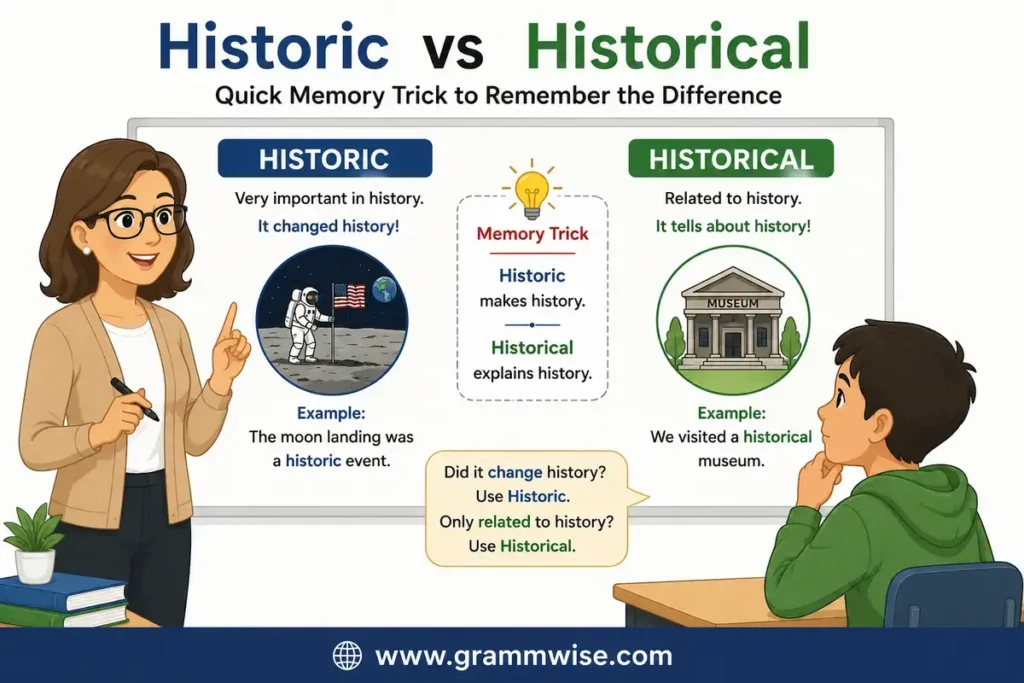
Historic makes history. Historical explains history.
Conclusion
Understanding historic vs historical is simple once you know the main difference. Historic describes something that changed or shaped history, while historical describes anything related to history. Remember this easy rule: historic makes history, and historical explains history.
As you read, write, and speak English, think about whether something is important in history or simply connected with history. With a little practice and these easy examples, you will confidently choose the correct word every time.
Frequently Asked Questions (FAQs)
What is the difference between historic and historical?
Historic means important in history. Historical means related to history.
Which is correct, historic vs historical?
Both are correct. Choose historic for important events and historical for things connected with history.
Is every historical event historic?
No. Every historic event is historical, but not every historical event is historic.
When should I use historic?
Use historic for events, discoveries, speeches, or achievements that changed history.
When should I use historical?
Use historical for books, museums, documents, places, research, and anything connected with the past.
Can a building be both historic and historical?
Yes. An old building is historical, and if an important event happened there, it can also be historic.
Why do people confuse historic vs historical?
They look almost the same, come from the same root word, and both relate to history.
How can I remember the difference easily?
Use this simple trick:
Historic makes history. Historical explains history.