
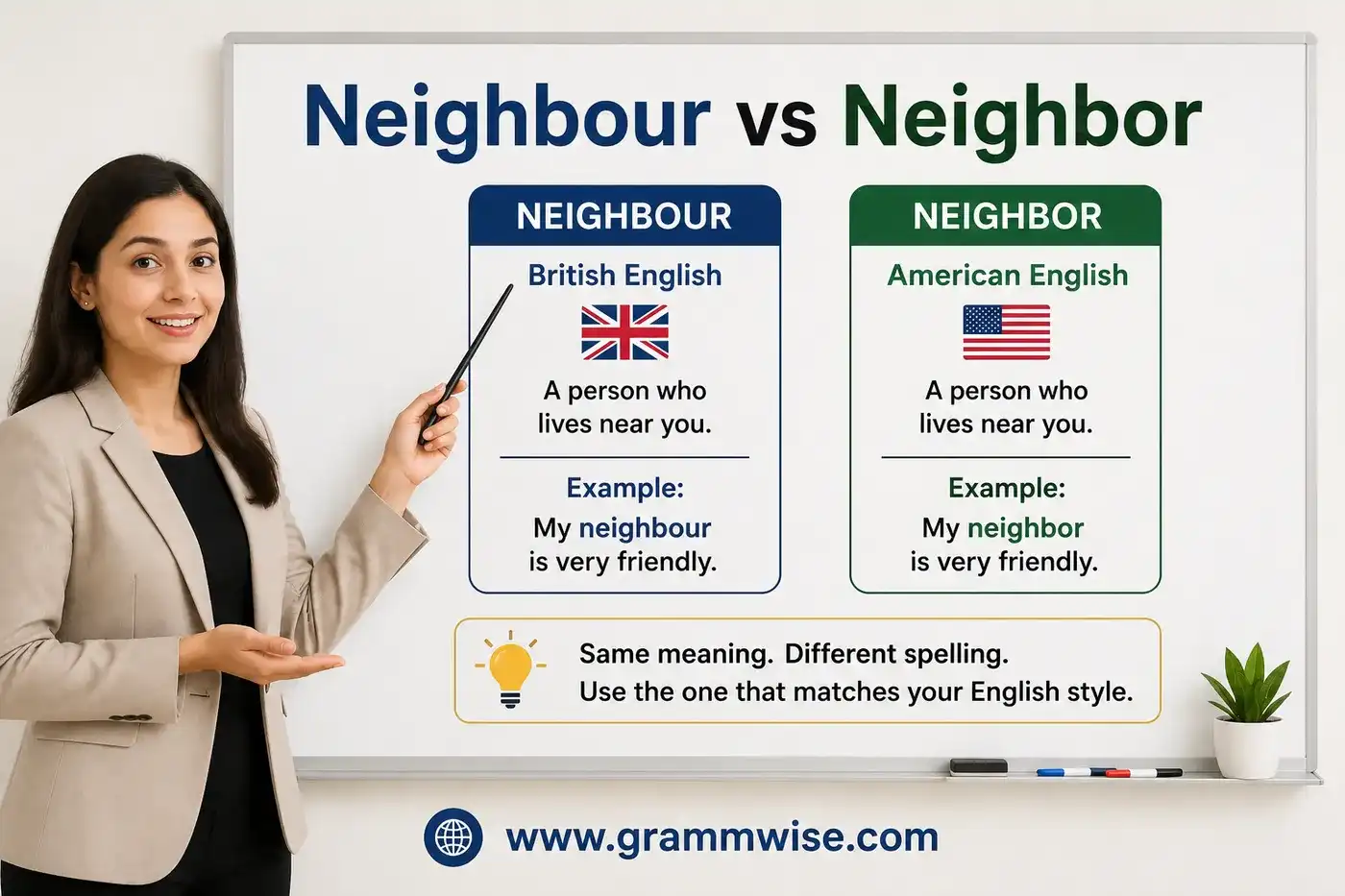
Many English learners get confused about neighbour vs neighbor because both words have the same meaning. The only difference is the spelling. Neighbour is the British English spelling, while neighbor is the American English spelling.
Both spellings are correct. You only need to choose the one that matches the type of English you are writing. The meaning does not change, whether you write neighbour or neighbor.
In this guide, you will learn the difference between neighbour vs neighbor, when to use each spelling, simple examples, and an easy trick to remember the correct form.
Check related grammar articles to strengthen your English writing skills.
Simple Answer in One Look
The difference between neighbour vs neighbor is very simple.
- Neighbour is the British English spelling.
- Neighbor is the American English spelling.
- Both words mean a person who lives near you.
Example:
- British English: My neighbour is very friendly.
- American English: My neighbor is very friendly.
Both sentences are correct. The spelling changes, but the meaning stays the same.
Meaning of “Neighbour vs Neighbor” in Simple English
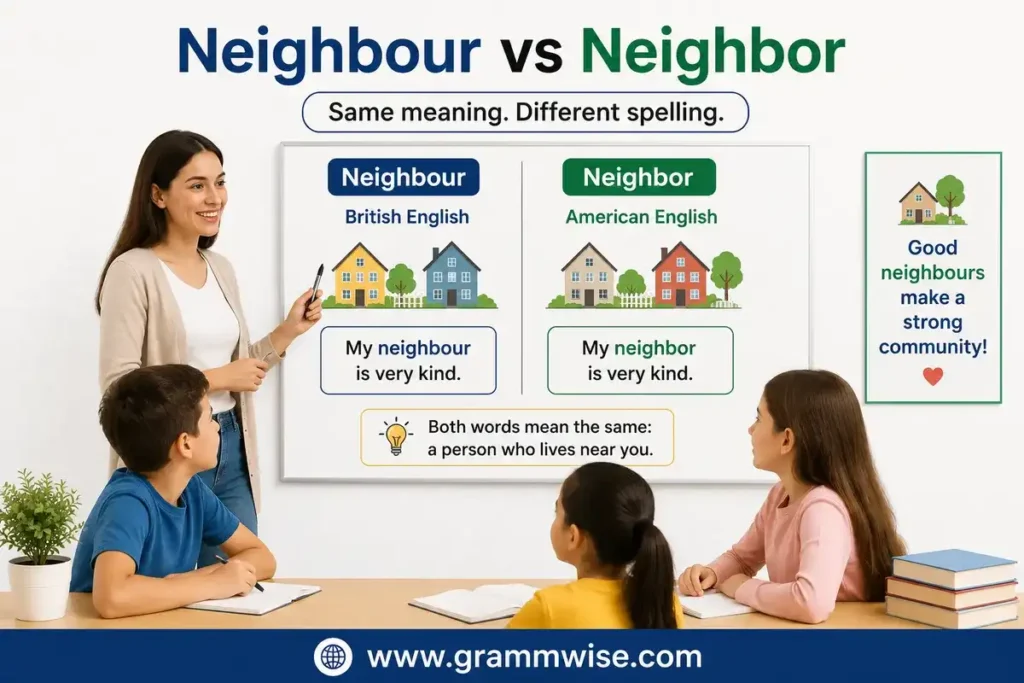
A neighbour or neighbor is someone who lives close to your home.
They may live:
- Next door
- Across the street
- In the same building
- In the same neighborhood
For example, if the family next door helps you carry your groceries, they are your neighbour or neighbor.
In simple words:
- Neighbour = British spelling
- Neighbor = American spelling
- Meaning = a person who lives nearby
The meaning never changes. Only the spelling changes depending on the type of English.
Neighbour vs Neighbor: Why People Mix These Words?
People often get confused about neighbour vs neighbor because they see both spellings on the internet, in books, on TV, and in social media.
For example:
- British websites usually write neighbour.
- American websites usually write neighbor.
- UK newspapers use neighbour.
- US newspapers use neighbor.
Many learners think one spelling is wrong because they are different.
That is not true.
Both spellings are correct.
The important thing is to use one spelling style consistently.
If you are writing in British English, use neighbour.
If you are writing in American English, use neighbor.
Clear Difference Between “Neighbour vs Neighbor”
| Neighbour | Neighbor |
|---|---|
| British English spelling | American English spelling |
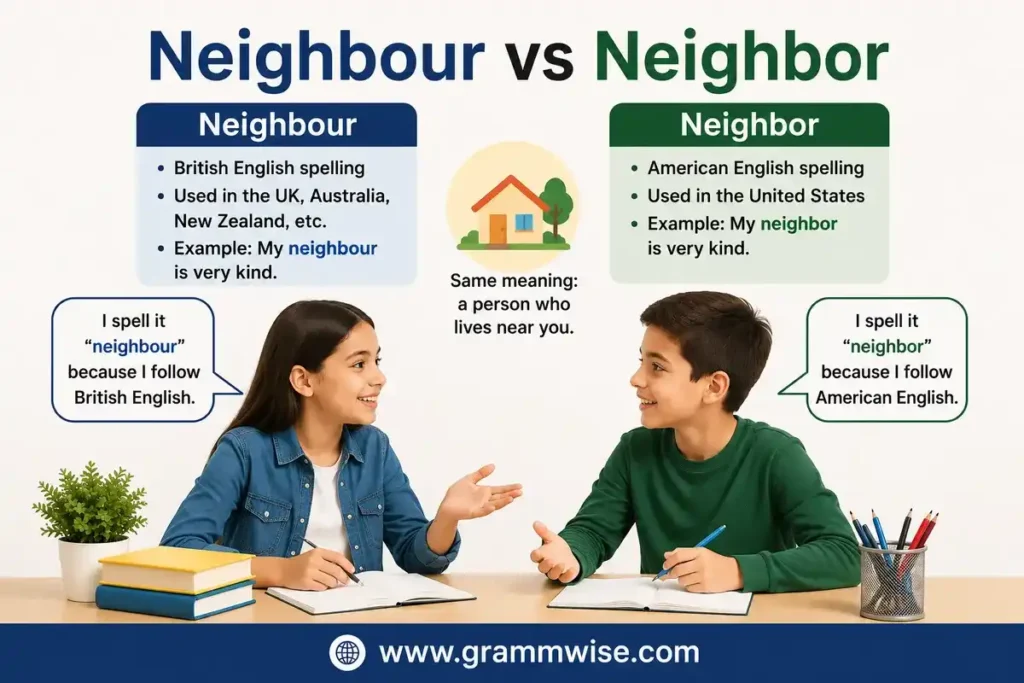
| Used in the UK, Australia, New Zealand, and many other British English regions | Used in the United States |
| Example: My neighbour has a beautiful garden. | Example: My neighbor has a beautiful garden. |
| Meaning: a person who lives nearby | Meaning: a person who lives nearby |
Easy rule:
- Neighbour = British English
- Neighbor = American English
The meaning is always the same.
Neighbour vs Neighbor: Which Form Should You Use?
The spelling you choose depends on your audience.
Use neighbour when:
- You are writing in British English.
- Your readers are in the UK, Australia, New Zealand, or other British English-speaking countries.
- You want to follow British spelling rules that keep the extra u.
Example:
Our neighbour invited us for dinner.
Use neighbor when:
- You are writing in American English.
- Your readers are in the United States.
- You want to follow American spelling rules, which remove the extra u.
Example:
Our neighbor invited us for dinner.
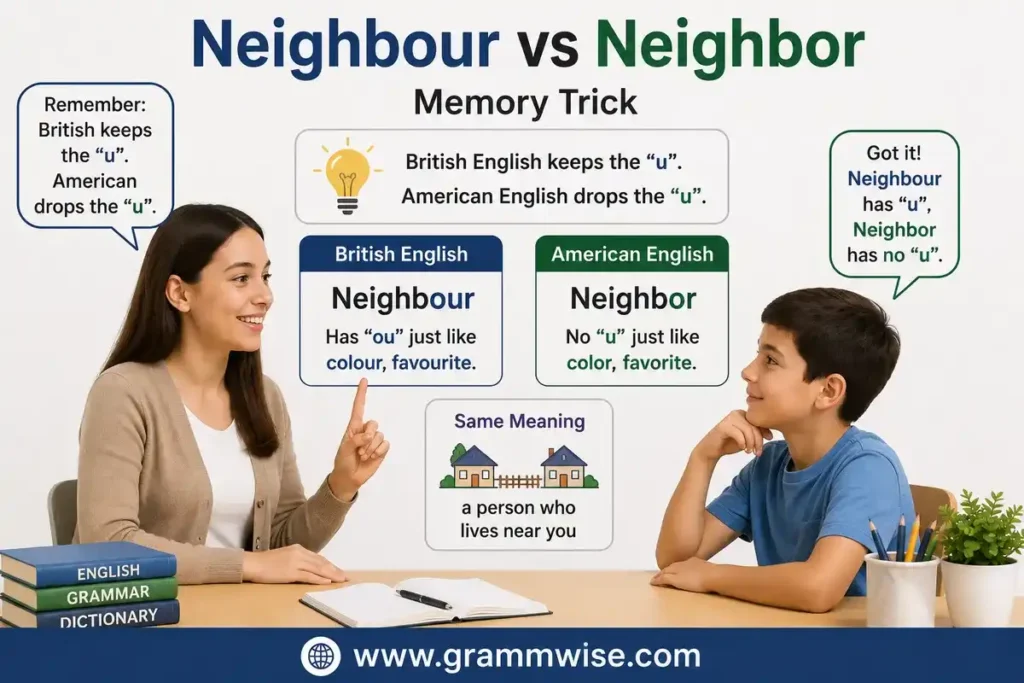
Simple memory trick:
- Neighbour has ou, just like other British spellings such as colour and favourite.
- Neighbor removes the u, just like color and favorite in American English.
Easy Real-Life Sentences on “Neighbour vs Neighbor”
Here are some simple examples of neighbour vs neighbor in everyday English.
British English examples
- My neighbour is very kind.
- Our neighbour waters our plants when we travel.
- I met my new neighbour yesterday.
- Their neighbour has two dogs.
- Every neighbour on our street knows each other.
American English examples
- My neighbor is very kind.
- Our neighbor waters our plants when we travel.
- I met my new neighbor yesterday.
- Their neighbor has two dogs.
- Every neighbor on our street knows each other.
Notice that the meaning stays exactly the same. Only the spelling changes.
Neighbour vs Neighbor: Where This Word Comes From?
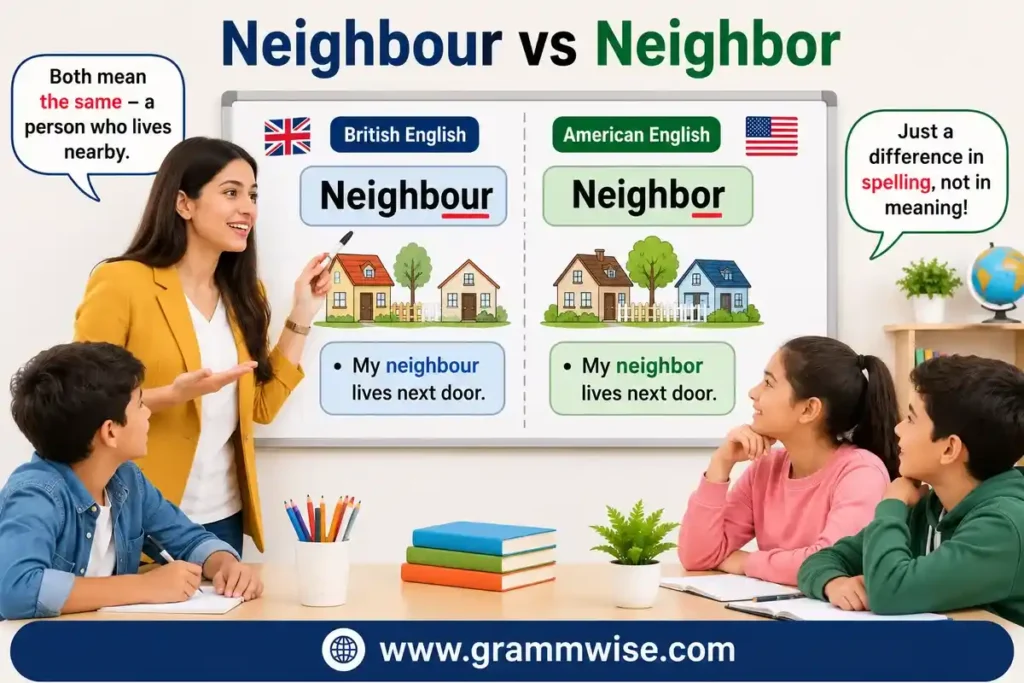
The words neighbour and neighbor come from the same Old English word, nēahgebūr, which meant “someone who lives nearby.”
Over many years, English changed.
British English kept the spelling neighbour, including the extra u.
American English later simplified many spellings by removing the u, creating neighbor.
The same spelling pattern appears in many other English words.
| British English | American English |
|---|---|
| neighbour | neighbor |
| favourite | favorite |
| colour | color |
| honour | honor |
| labour | labor |
These words all have the same meanings. The only difference is the spelling style.
Neighbour vs Neighbor: How This Word Is Understood in Culture and Stories?
The words neighbour and neighbor are often connected with kindness, friendship, and community. No matter which spelling people use, the meaning is the same. A neighbor is someone who lives close to you and is part of your daily life.
Many stories, movies, and children’s books show good neighbors helping each other. They may share food, water plants, watch each other’s homes, or offer help during difficult times.
For example:
“My neighbour brought us soup when we were sick.”
“My neighbor helped me fix my bicycle.”
These simple acts show why neighbors are important in many cultures.
Children also learn about neighbors at school. They are taught to be polite, respect others, and help the people who live nearby.
In many countries, people celebrate with their neighbors during festivals and holidays. They visit each other’s homes, exchange gifts, and spend time together.
Whether someone says neighbour or neighbor, the word usually brings a positive feeling. It reminds people of friendship, trust, and helping others.
Biblical and Mythological Meaning of “Neighbour vs Neighbor”
The word neighbour has a special place in the Bible because it teaches people to care for others.
One well-known teaching is:
“Love your neighbour as yourself.”
This message encourages people to be kind, caring, and respectful to everyone, not only the person living next door.
The American spelling neighbor has the same meaning. Only the spelling is different.
There is no special mythological meaning for neighbour or neighbor, but many old stories show neighbors helping each other during hard times.
The lesson is simple.
A good neighbor is someone who cares about others.
Symbolism of “Neighbour vs Neighbor”
Although neighbour and neighbor are spelling variations, they often represent positive values.
What Neighbour Represents?
The British spelling neighbour often represents:
- Friendship
- Community
- Kindness
- Trust
- Helping people nearby
When someone says,
“My neighbour is always willing to help,”
it shows a friendly relationship.
What Neighbor Represents?
The American spelling neighbor represents the same ideas.
People often use it when talking about:
- Friendly communities
- Helpful families
- Good relationships
- Sharing and caring
The spelling changes, but the message stays the same.
A good memory trick is:
- Neighbour = British spelling with ou
- Neighbor = American spelling without u
Related Words You Should Know
Learning these related words will help you understand neighbour vs neighbor even better.
Neighborhood
The area where people live.
Example:
Our neighborhood is very peaceful.
Community
A group of people living in the same area.
Example:
Everyone in our community helps each other.
Nearby
Close to your location.
Example:
There is a grocery store nearby.
Local
Something close to where you live.
Example:
We support our local businesses.
Resident
A person who lives in a place.
Example:
Every resident received a welcome letter.
Friendship
A close and caring relationship.
Example:
Their friendship began when they became neighbors.
Next Door
The house or apartment beside yours.
Example:
My neighbor lives next door.
Surroundings
The places around you.
Example:
We should keep our surroundings clean.
How People Actually Use “Neighbour vs Neighbor” in Daily English?
Native speakers use neighbour and neighbor in everyday conversations.
Here are some natural examples.
- “My neighbour always smiles when we meet.”
- “Our neighbor helped us move into our new house.”
- “I baked cookies for my new neighbour.”
- “My favorite neighbor has lived here for twenty years.”
- “We invited our neighbours to the barbecue.”
- “Our neighbor watches our cat when we travel.”
- “The new neighbour seems very friendly.”
- “My neighbor borrowed my ladder yesterday.”
- “Everyone knows their neighbours on this street.”
- “I enjoy talking with my neighbor every evening.”
These examples show how common the word is in everyday English.
Common Mistakes People Make About “Neighbour vs Neighbor”
Many English learners make small mistakes with neighbour vs neighbor.
Here are the most common ones.
Mistake 1: Thinking One Spelling Is Incorrect
Many people think only one spelling is right.
That is not true.
Both neighbour and neighbor are correct.
The only difference is the type of English.
Mistake 2: Mixing British and American Spelling
Some learners write:
“My neighbour has a red color car.”
This mixes British and American spelling.
Instead write:
“My neighbour has a red colour car.” ✔
or
“My neighbor has a red color car.” ✔
Choose one spelling style and keep it throughout your writing.
Mistake 3: Changing Spellings in the Same Article
For example:
“My neighbour is kind. My neighbor is helpful.”
This looks inconsistent.
Use one spelling style from beginning to end.
Mistake 4: Thinking the Meaning Changes
Some learners believe neighbour and neighbor have different meanings.
They do not.
Both words simply mean a person who lives near you.
Mistake 5: Forgetting Your Audience
Think about who will read your writing.
If your readers are mostly British, use neighbour.
If they are mostly American, use neighbor.
This makes your writing look more natural.
Final Teacher Explanation
Imagine you are sitting in my classroom.
You ask,
“Teacher, should I write neighbour or neighbor?”
My answer is simple.
Both are correct.
The only question is which type of English you are using.
If you are writing in British English, use neighbour.
If you are writing in American English, use neighbor.
The meaning never changes.
Think about words like colour and color, or favourite and favorite.
They all follow the same spelling pattern.
Here is the easiest memory trick.
British English usually keeps the letter “u.”
American English usually removes the letter “u.”
If you remember this simple rule, you will never be confused about neighbour vs neighbor again.
Quick Recap “Neighbour vs Neighbor”
The difference between neighbour vs neighbor is only the spelling. Neighbour is the British English spelling, while neighbor is the American English spelling.
Both words mean a person who lives near you. Choose the spelling that matches your audience and use it consistently throughout your writing.
Conclusion
Understanding neighbour vs neighbor is simple because both words have the same meaning. Neighbour is the British English spelling, while neighbor is the American English spelling. Choose the spelling that matches your audience and use it consistently in your writing.
With regular reading and practice, you will quickly become comfortable using the correct spelling. Whether you are writing for school, work, or everyday communication, choosing the right English style will make your writing clear, natural, and professional.
Frequently Asked Questions (FAQs)
What is the difference between neighbour vs neighbor?
The only difference is spelling. Neighbour is British English, and neighbor is American English.
Which spelling is correct, neighbour or neighbor?
Both spellings are correct. Use neighbour for British English and neighbor for American English.
Do neighbour and neighbor have different meanings?
No. Both words mean a person who lives close to your home.
Why does British English use neighbour?
British English keeps the extra u in many words, such as colour, favourite, honour, and neighbour.
Why does American English use neighbor?
American English removes the extra u from many words, so it uses neighbor, color, favorite, and honor.
Can I use both spellings in one article?
It is better to choose one spelling style and use it consistently throughout your writing.
Which spelling should I use for my website?
Use the spelling that matches your target audience. If your readers mainly use American English, write neighbor. If they follow British English, write neighbour.
Is neighbour vs neighbor a grammar difference?
No. Neighbour vs neighbor is a spelling difference, not a grammar difference. The meaning and usage are exactly the same.