
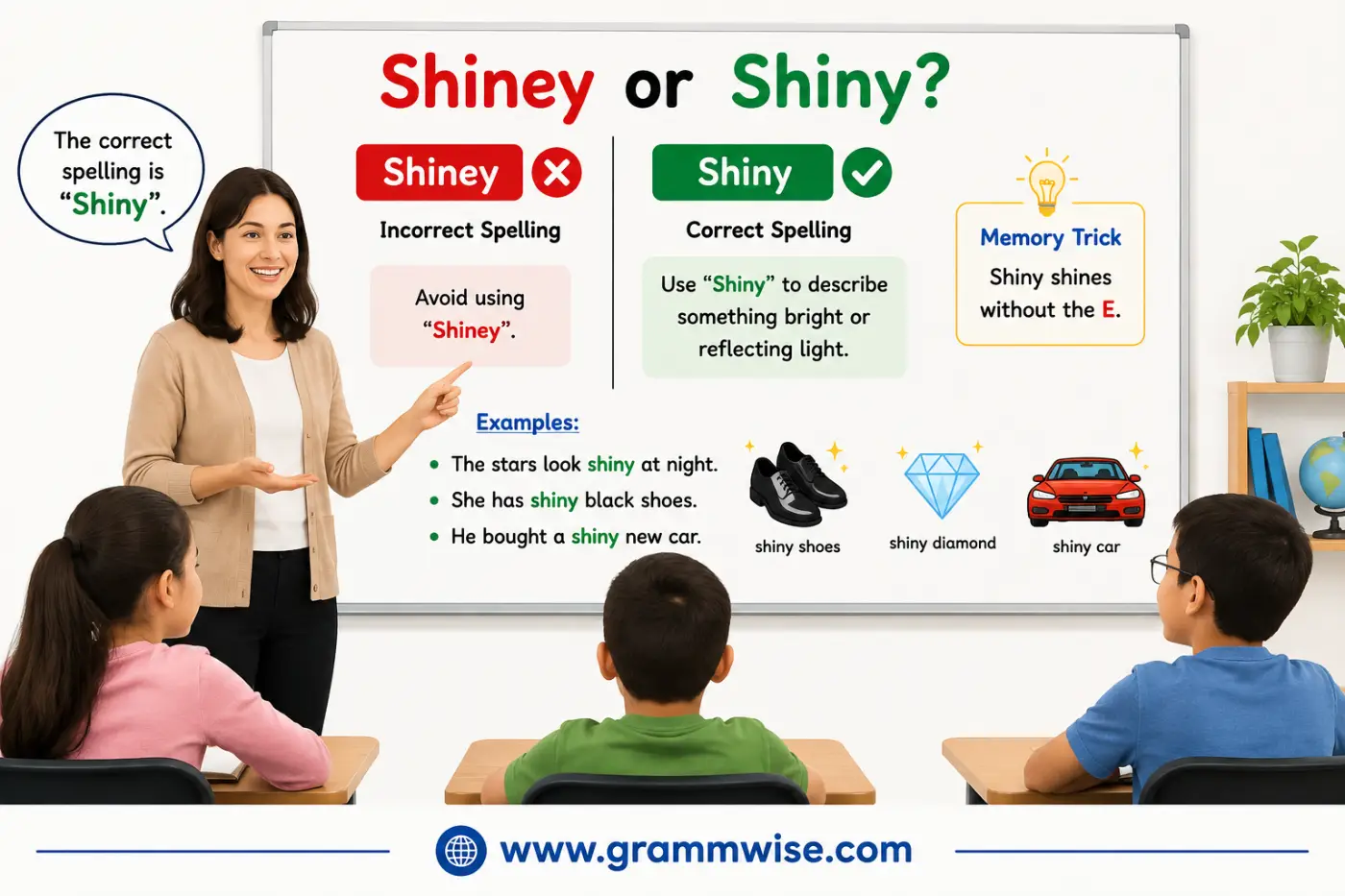
Many English learners wonder if they should write shiney or shiny. These two spellings look very similar, so the confusion is understandable. You may even see shiney in social media posts, messages, or informal writing. However, only one spelling is correct in standard English.
The correct spelling is shiny. The spelling shiney is generally considered incorrect. Shiny describes something that reflects light or has a bright, smooth appearance. It can also describe something new, attractive, or exciting.
If you have been confused about shiney or shiny, this guide will give you a simple answer. You will learn the correct spelling, meaning, examples, common mistakes, related words, and an easy memory trick to help you remember shiny every time.
Not sure where the comma goes with however? Learn the punctuation rule with clear examples.
Simple Answer in One Look
Shiny is the correct spelling.
Shiney is incorrect in standard English.
Easy answer:
- Shiny = correct
- Shiney = incorrect spelling
Example:
She wore shiny shoes. ✅
She wore shiney shoes. ❌
The easiest rule is simple:
Use shiny, without the letter e.

What Does Shiny Mean in Simple English?
The word shiny describes something that has a bright surface and reflects light.
For example:
The sun made the water shiny.
The water reflects the sunlight, so it looks bright.
Another example is:
He cleaned his shiny car.
The car looks bright and polished.
You can use shiny to describe many things:
- shiny shoes
- shiny hair
- shiny coins
- shiny jewelry
- shiny floors
- shiny metal
- shiny eyes
- shiny stars
Shiny can also mean new or attractive
Sometimes shiny does not only mean that something reflects light.
People can also use it to describe something that looks new, exciting, or attractive.
For example:
She bought a shiny new bicycle.
The bicycle may look bright and new.
You may also hear:
He always wants the newest shiny gadget.
Here, shiny suggests something new and attractive that catches people’s attention.
Why Do People Mix Up Shiney or Shiny?
The main reason is the word shine.
People see the word:
shine
Then they think:
shine + y = shiney
This looks reasonable at first.
But English spelling does not work that way with this word.
The final e in shine changes when we make the describing word shiny.
So:
shine → shiny
Not:
shine → shiney
This spelling pattern is similar to some other English words where the spelling changes before adding -y.
For example:
- ice → icy
- spice → spicy
- shine → shiny
The final e does not stay in the new word.
That is why the correct spelling is shiny.
Clear Difference Between Shiney or Shiny
The difference is very simple.
| Word | Correct? | Meaning |
|---|---|---|
| Shiny | ✅ Yes | Bright, smooth, or reflecting light |
| Shiney | ❌ No | Incorrect spelling in standard English |
You should always use shiny in:
- schoolwork
- exams
- articles
- emails
- books
- websites
- professional writing
Easy example
❌ I bought shiney shoes.
✅ I bought shiny shoes.
The meaning stays the same in your mind, but only shiny is the correct spelling.
Shiney or Shiny: Which Form Should You Use?
Always use shiny when you mean something bright, polished, smooth, or attractive.
Use shiny for objects
The child found a shiny coin.
She has shiny black shoes.
The table has a shiny surface.
Use shiny for appearance
Her shiny hair looked beautiful.
The dog had a shiny coat.
Use shiny for something new or attractive
He showed everyone his shiny new phone.
In all of these examples, shiny is correct.
You should not replace it with shiney.
Why Is Shiny Spelled Without an E?
This is where many learners need a little help.
The base word is:
shine
But the describing word is:
shiny
The spelling changes when -y is added.
The final e disappears.
Look at the pattern:
shine → shiny
The same kind of change happens in:
ice → icy
spice → spicy
You do not write:
- ❌ icey
- ❌ spicey
- ❌ shiney
Instead, write:
- ✅ icy
- ✅ spicy
- ✅ shiny
The best way to learn this is not to overthink every spelling rule. Just remember the correct word as a complete word:
S-H-I-N-Y
Easy Rule to Remember
Here is a simple rule:
Shine loses the E and gets a Y.
So:
SHINE – E + Y = SHINY
There is no e before the y.
A simple memory trick
Imagine the word shine looking in a mirror.
Before becoming shiny, the final e says:
“I am leaving now.”
Then y takes its place.
So you get:
shine → shiny
Remember this short sentence:
Shiny shines without the E.
This is an easy way to remember the correct spelling.
What Things Can Be Shiny?
Many things can be shiny.
Metal
Metal can reflect light.
The shiny silver spoon was on the table.
Jewelry
Jewelry often looks bright.
She wore a shiny gold necklace.
Water
Water can look shiny when sunlight touches it.
The lake looked shiny in the morning sun.
Hair
Healthy or well-groomed hair can look shiny.
Her shiny hair moved in the wind.
Shoes
Polished shoes can be shiny.
He cleaned his shiny shoes.
Floors
A clean and polished floor may look shiny.
The workers made the floor shiny.
Eyes
People sometimes describe bright eyes as shiny.
The child’s eyes were shiny with excitement.
In each example, shiny describes the appearance of something.
Shiny as a Positive Description
People often connect shiny with positive ideas.
A shiny object may look:
- clean
- new
- beautiful
- valuable
- attractive
- well cared for
For example:
The shiny bicycle looked brand new.
The word shiny helps create a positive picture.
However, the word is not always about something expensive.
A simple object can also be shiny.
The child found a shiny button.
The button may not be valuable, but its bright surface catches attention.
Shiny and New
The words shiny and new often appear together.
You may hear:
- a shiny new car
- a shiny new phone
- a shiny new bicycle
This phrase gives the idea that something is fresh, attractive, and recently bought.
For example:
Tom could not stop looking at his shiny new bike.
The bike may actually reflect light, but the phrase also suggests excitement about owning something new.
This is a common use of shiny in everyday English.

Shiny in Everyday Conversations
Here are some natural examples.
“Wow, your shoes are so shiny!”
“I cleaned the table, and now it looks shiny.”
“Look at that shiny coin!”
“She bought a shiny new car.”
“Your hair looks shiny today.”
“The children were excited by the shiny decorations.”
“This metal needs polishing to make it shiny.”
“The sun made the ocean look shiny.”
These examples show how easy it is to use shiny in normal conversation.
Common Phrases With Shiny
Here are some phrases you may hear.
Shiny new
Used for something new and attractive.
He showed us his shiny new watch.
Shiny object
An object that reflects light.
The bird picked up a shiny object.
Bright and shiny
Used to describe something that looks very clean or attractive.
The kitchen was bright and shiny after cleaning.
Shiny surface
A smooth surface that reflects light.
Be careful because the shiny surface is slippery.
Shiny hair
Hair that looks smooth and reflects light.
She wanted her hair to look shiny and healthy.
These phrases can help you understand how shiny works in everyday English.
Synonyms of Shiny
Several words can have a similar meaning to shiny.
Bright
Something that gives off or reflects a lot of light.
The bright surface reflected the sun.
Glossy
Smooth and shiny.
The magazine has a glossy cover.
Polished
Made smooth and shiny by cleaning.
The polished shoes looked shiny.
Sparkling
Shining with small flashes of light.
The water was sparkling in the sunlight.
Gleaming
Shining brightly.
The clean windows were gleaming.
Lustrous
A more formal word for something with a soft shine.
The fabric had a lustrous appearance.
For simple everyday English, bright, glossy, polished, and sparkling are easier alternatives.
Opposites of Shiny
The opposite of shiny can change depending on the situation.
Common opposites include:
- dull
- matte
- dirty
- faded
- rough
For example:
The old coin looked dull.
The opposite idea is:
The new coin looked shiny.
Another example:
The dirty window looked dull.
After cleaning:
The window looked shiny.
Is Shiny a Formal Word?
No. Shiny is a normal everyday English word.
You can use it in:
- conversations
- schoolwork
- stories
- product descriptions
- articles
- advertisements
- children’s books
For example:
The company showed a shiny new product.
This sounds natural.
You can also say:
The child found a shiny stone.
This is simple and correct.
Is Shiney Ever Correct?
In standard English, shiney is not the accepted spelling when you mean bright or reflecting light.
Sometimes people use shiney because they think it comes directly from:
shine + y
However, standard spelling is:
shiny
So, if you are writing for school, work, a website, or any professional purpose, use:
✅ shiny
Avoid:
❌ shiney
A good spell-checker will usually suggest shiny when you type shiney.
Common Mistakes People Make
Mistake 1: Writing shiney
❌ She has shiney hair.
✅ She has shiny hair.
The correct word is shiny.
Mistake 2: Keeping the E from shine
Some learners think:
shine + y = shiney
But the correct spelling is:
shine → shiny
The e does not stay.
Mistake 3: Mixing up shine and shiny
These words are related, but they do different jobs.
Shine is usually an action word.
The sun shines brightly.
Shiny describes something.
The sun made the car shiny.
So:
- shine = give off or reflect light
- shiny = having a bright appearance
Mistake 4: Using shiny when you mean shining
These words are also different.
The sun is shining.
This describes an action happening now.
The sun is shiny.
This describes the sun as bright or reflecting light.
Both may be possible in some situations, but they do not mean exactly the same thing.
Mistake 5: Thinking shiny always means expensive
Something does not need to be expensive to be shiny.
A small coin can be shiny.
A plastic toy can be shiny.
A clean floor can be shiny.
The word describes appearance, not price.
Shine, Shining, and Shiny: What Is the Difference?
These words are closely related, so they can cause confusion.
| Word | Simple meaning | Example |
|---|---|---|
| Shine | To give off or reflect light | The stars shine. |
| Shining | Giving off light now | The sun is shining. |
| Shiny | Bright or reflecting light | She has shiny shoes. |
Easy way to remember
Shine = action
Shining = action happening now
Shiny = description
Look at these examples:
The sun shines.
The sun is shining.
The shiny sun appeared in the sky.
The words are related, but they have different uses.
Shiny in Product Descriptions
The word shiny is often used to describe products.
For example:
- shiny jewelry
- shiny shoes
- shiny furniture
- shiny packaging
- shiny phones
- shiny cars
Companies may use the word because shiny things often look new and attractive.
Example:
The store displayed a shiny new bicycle.
The word creates a clear picture in the reader’s mind.
Shiny in Stories and Children’s Books
Writers often use shiny because it is easy to understand and creates a strong image.
For example:
The princess found a shiny key.
Readers may wonder why the key is special.
Or:
A shiny star appeared above the mountain.
The word helps readers picture the scene.
Children’s stories often use shiny objects because they can suggest:
- beauty
- magic
- hope
- treasure
- discovery
The word itself is simple, but it can make a description more colorful.
Where Does the Word Shiny Come From?
The word shiny is connected to the older English word shine.
The basic idea has always been connected with light, brightness, and reflection.
Over time, English developed shiny as a word used to describe something that has a bright appearance.
Today, the spelling is fixed as:
shiny
not:
shiney
You do not need to memorize the full history of the word. The most useful thing to remember is that shiny comes from the idea of shine, but its spelling changes when it becomes the describing word.
Word Family
Learning related words can help you remember the spelling.
| Word | Meaning |
|---|---|
| shine | To give off or reflect light |
| shines | Gives off or reflects light |
| shone | Past form of shine in many uses |
| shining | Giving off light now |
| shiny | Bright or reflecting light |
Examples
The stars shine at night.
The moon shines above us.
The sun shone through the window.
The stars are shining tonight.
The stars look shiny.
Notice that shiny is the word that describes how something looks.
Related Words You Should Know
Here are some useful words connected with shiny.
Polish
To make something smooth or shiny.
He polished his shoes.
Glow
To give off a soft light.
The lamp gave the room a warm glow.
Sparkle
To shine with small flashes of light.
The water began to sparkle.
Reflect
To send light back from a surface.
The mirror reflects light.
Gloss
A smooth, shiny appearance.
The paint gave the table a glossy finish.
Glitter
To shine with many small flashes.
The decorations glittered in the light.
Dull
Not bright or shiny.
The old metal looked dull.
Learning these words can help you describe objects in more interesting ways.
How Shiny Is Used in Culture and Stories?
The idea of something shiny often catches people’s attention. A person naturally notice things that reflect light. That is why shiny objects are often used in stories, movies, advertisements, and art.
A shiny object may represent something special.
For example:
- a shiny crown may suggest power
- a shiny medal may suggest success
- a shiny star may suggest hope
- a shiny treasure may suggest value
These meanings come from the situation, not from the spelling of the word itself.
The basic meaning of shiny remains the same:
bright and reflecting light.
Shiny Objects in Everyday Life
People often notice shiny things quickly.
Think about these examples:
A child sees a shiny coin on the ground.
A customer notices a shiny new car in a store.
A person sees shiny jewelry in a window.
A bird may even notice a shiny object.
Because shiny surfaces reflect light, they can stand out from their surroundings.
That is why shiny is often connected with attention.

Symbolism Explained in Simple Words
What Shiny Can Represent
In stories and everyday language, shiny things can sometimes represent:
- something new
- beauty
- hope
- success
- wealth
- excitement
- attention
For example:
- A shiny trophy may represent success.
- A shiny star may represent hope.
- A shiny new object may represent excitement about getting something new.
What Shiney Represents
The spelling shiney does not have its own standard meaning as a separate English word in this comparison.
When someone writes shiney instead of shiny, it usually shows a spelling mistake or confusion about the word shine.
So the comparison is simple:
| Shiny | Shiney |
|---|---|
| Correct standard spelling | Incorrect spelling |
| Means bright or reflecting light | No accepted meaning in standard English for this use |
| Used in writing and speech | Should be avoided in standard writing |
| Can describe objects and appearance | Usually a spelling error |
How People Actually Use Shiny in Daily English?
Here are more natural examples.
“Your car looks really shiny.”
“I need to clean my shoes so they look shiny.”
“Look at that shiny star!”
“She bought a shiny new laptop.”
“The floor is shiny after we cleaned it.”
“His hair looks shiny in the sunlight.”
“The children found shiny shells on the beach.”
“The metal became shiny after polishing.”
“I like this shiny blue bag.”
“The rain made the road look shiny.”
These examples show how shiny appears naturally in spoken English.
Practice Test
Choose the correct answer.
1. Which spelling is correct?
A. Shiney
B. Shiny
Answer: B. Shiny
2. Which sentence is correct?
A. She bought shiney shoes.
B. She bought shiny shoes.
Answer: B. She bought shiny shoes.
3. What does shiny usually mean?
A. Bright or reflecting light
B. Very loud
Answer: A. Bright or reflecting light
4. Complete the sentence.
The child found a _____ coin.
A. shiney
B. shiny
Answer: B. shiny
5. Which word describes an action?
A. Shine
B. Shiny
Answer: A. Shine
6. Complete the sentence.
The stars are _____ tonight.
A. shining
B. shiney
Answer: A. shining
7. Which sentence is correct?
A. My shoes are shiny.
B. My shoes are shiney.
Answer: A. My shoes are shiny.
Quick Review
If you got the answers right, remember the main rule:
Shiny is correct. Shiney is incorrect.
Teacher’s Easy Memory Trick
Imagine the word SHINE standing beside the letter Y.
The E looks at the Y and says:
“You can take my place.”
So:
SHINE → SHINY
The final e leaves.
The word becomes:
S-H-I-N-Y
Here is an even shorter memory trick:
Shiny shines without E.
Say it aloud:
Shiny shines without E.
This small sentence can help you remember the spelling.
Another good practice is to write:
- One shiny coin.
- One shiny star.
- One shiny car.
The more you see the correct spelling, the more natural it becomes.
Final Teacher Explanation
If a student asks me, “Teacher, should I write shiney or shiny?”, my answer is very simple:
Always write shiny.
The spelling shiney is not correct in standard English when you mean something bright or reflecting light.
The confusion happens because shiny is related to the word shine. Some learners want to keep the final e and write shiney. But English spelling changes the word:
shine → shiny
The final e disappears, and the word ends with y.
Also remember the difference between the related words:
- shine = the action
- shining = the action happening now
- shiny = describes something bright
Once you remember these three words, the spelling becomes much easier.
Quick Recap
If you are choosing between shiney or shiny, always use shiny. It is the correct spelling in standard English and describes something bright, polished, smooth, or reflecting light.
Remember this easy trick: Shiny shines without the E. The word shine loses its final e before becoming shiny.

Conclusion
When choosing between shiney or shiny, always use shiny. It is the correct spelling in standard English and describes something bright, polished, or reflecting light. Remember the simple pattern: shine → shiny.
The spelling shiney should be avoided in school, work, and formal writing. A simple memory trick is: “Shiny shines without the E.” Remember this rule, and the correct spelling will become easy to use.
Frequently Asked Questions
Is shiney or shiny correct?
Shiny is the correct spelling. Shiney is generally incorrect in standard English.
What does shiny mean?
Shiny means bright, smooth, or able to reflect light.
Why is shiny not spelled shiney?
The word comes from shine, but the final e is dropped before -y is added: shine → shiny.
Can I use shiny in formal writing?
Yes. Shiny is a standard English word and can be used in school, work, books, and professional writing.
What is the difference between shine and shiny?
Shine usually describes an action, while shiny describes how something looks.
Is shiny used in American and British English?
Yes. Shiny is the standard spelling in both American and British English.
Can shiny describe something new?
Yes. A phrase like “a shiny new car” can describe something new, attractive, and exciting.
What is an easy way to remember shiny?
Remember: Shiny shines without the E. There is no e before the final y.