
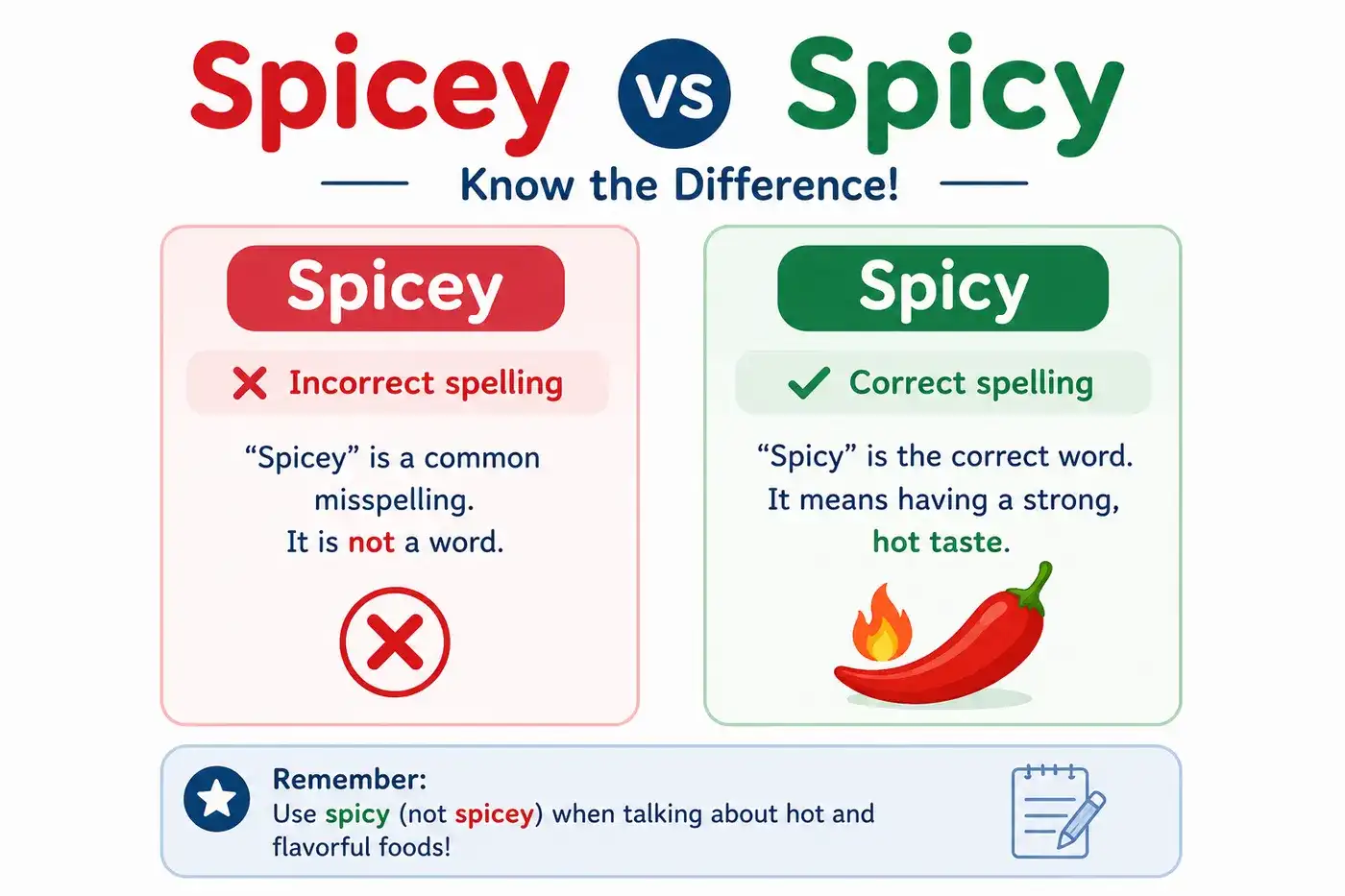
Many English learners search for spicey or spicy because both spellings look possible. You may see “spicy” in recipes, restaurant menus, food blogs, and everyday conversations. At the same time, some people accidentally write “spicey,” which creates confusion.
The simple answer to spicey or spicy is that spicy is the correct spelling in standard English. The word spicey is considered a misspelling and is not accepted in most dictionaries.
If you are wondering which spelling to use, this guide explains the meaning, spelling, usage, examples, and difference between in these words in very simple English.
Another common mistake is Fourth vs Forth, where one missing letter changes the meaning.
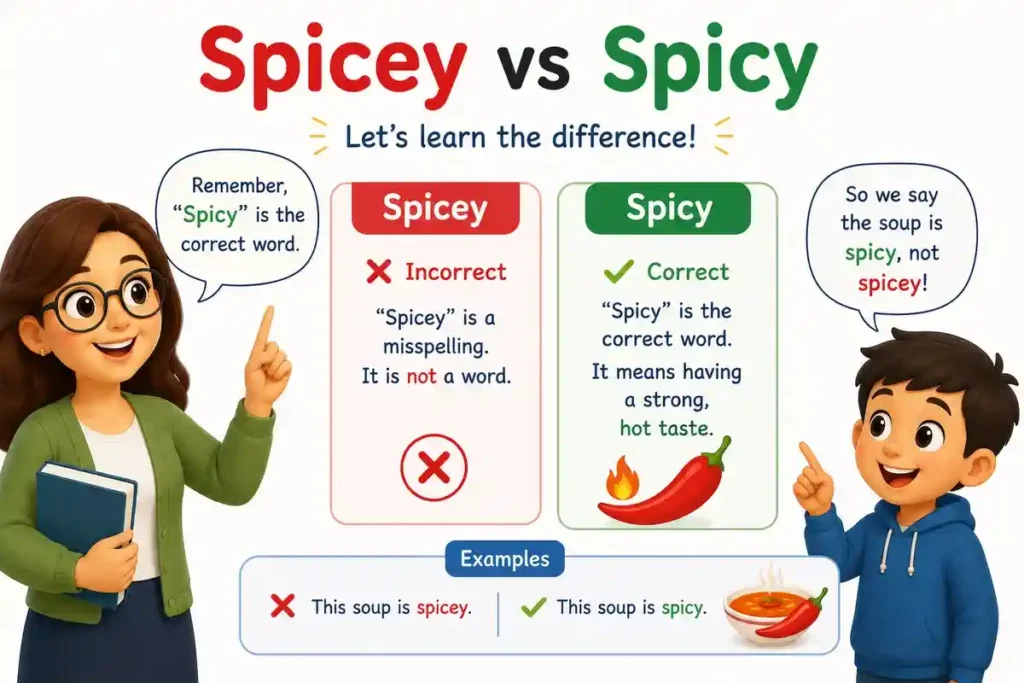
Simple Answer in One Look Spicey or Spicy
Spicy is the correct spelling.
Spicey is a spelling mistake.
Spicey or Spicy Means in Simple English
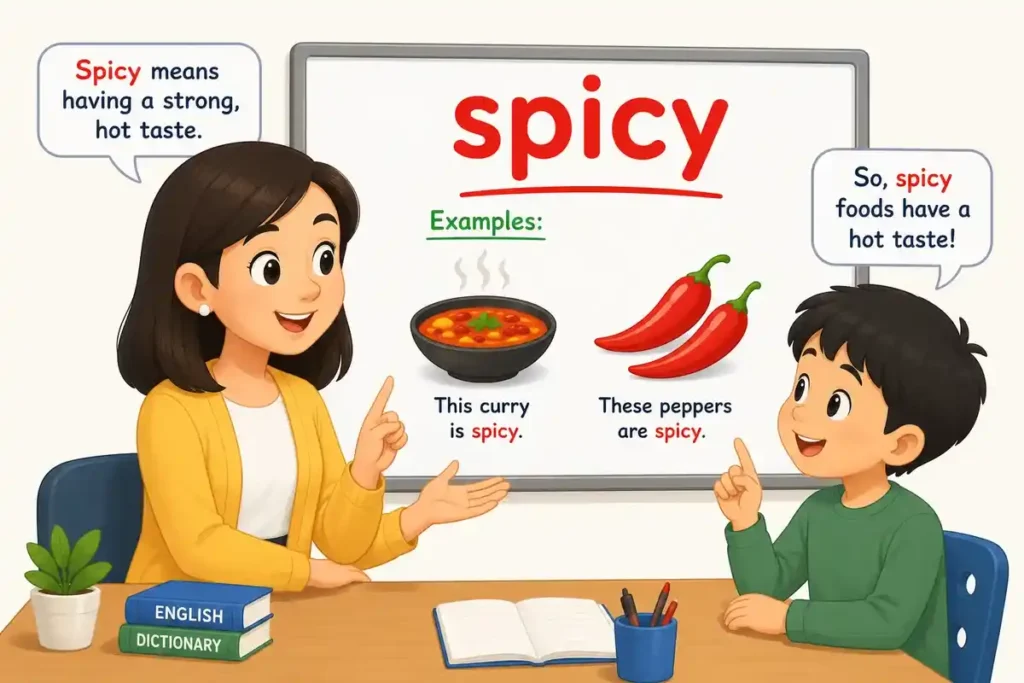
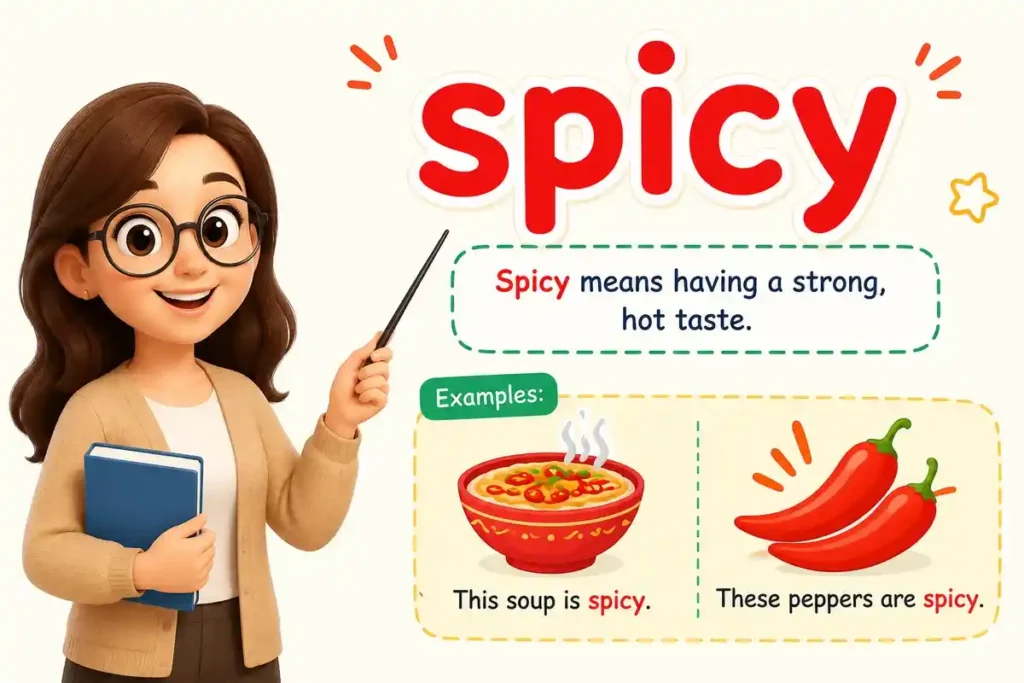
The word spicy describes food that has a strong, hot, or flavorful taste because of spices.
Examples:
- Spicy chicken
- Spicy curry
- Spicy noodles
- Spicy salsa
When people say food is spicy, they usually mean it has heat from ingredients such as:
- Chili peppers
- Black pepper
- Hot sauce
- Curry spices
Simple Meaning of Spicy
Spicy means:
- Hot in taste
- Full of flavor
- Made with spices
Example:
“This soup is spicy.”
This means the soup has a strong or hot flavor.
Simple Meaning of Spicey
The spelling spicey is not the standard English spelling.
Many people write it by mistake because they connect it to the word “spice.”
However, English spelling does not follow that pattern here.
The accepted spelling is:
✅ Spicy
❌ Spicey
Reasons of People Mix These Words Spicey or Spicy
Many English learners wonder about spicey or spicy because the mistake seems logical.
The Word Comes From Spice
The base word is:
Spice
When people add an ending, they often expect:
Spice + y = spicey
But English changes the spelling.
Instead, the correct form becomes:
Spicy
This surprises many learners.
Similar English Patterns Spicey or Spicy
English contains words that change spelling when endings are added.
Examples:
- Ice → icy
- Juice → juicy
- Spice → spicy
Notice that the extra “e” disappears.
This pattern helps explain why spicy is correct.
Online Spelling Mistakes
Many people type quickly online.
Because of this, you may see spicey on:
- Social media
- Comments
- Forums
- Text messages
Seeing the mistake repeatedly can make learners think it is correct.
Clear Difference of Spicey or Spicy Explained Simply
The difference between spicey or spicy is very easy.
Spicy
Correct spelling.
Used in dictionaries and standard English.
Examples:
- spicy food
- spicy sauce
- spicy chicken
Spicey
Incorrect spelling.
Considered a misspelling.
Not accepted in formal writing.
Quick Comparison Table Spicey or Spicy
| Word | Correct? | Meaning |
|---|---|---|
| Spicy | Yes | Hot or flavorful because of spices |
| Spicey | No | Misspelling of spicy |
Easy Memory Trick
Think about these examples:
- Ice → icy
- Juice → juicy
- Spice → spicy
Notice that the “e” disappears.
The same rule helps you remember spicy.
Which Form We Should Use Spicey or Spicy?
Always use spicy.
Correct Examples
- The food is spicy.
- I love spicy tacos.
- This sauce is spicy.
- She enjoys spicy snacks.
- The curry tastes spicy.
Incorrect Examples
- The food is spicey.
- I love spicey tacos.
- This sauce is spicey.
These spellings should be corrected.
In Formal Writing
Always use spicy in:
- School assignments
- Business writing
- Food articles
- Recipes
- Menus
In Casual Writing
Even in text messages and social media, spicy remains the correct spelling.
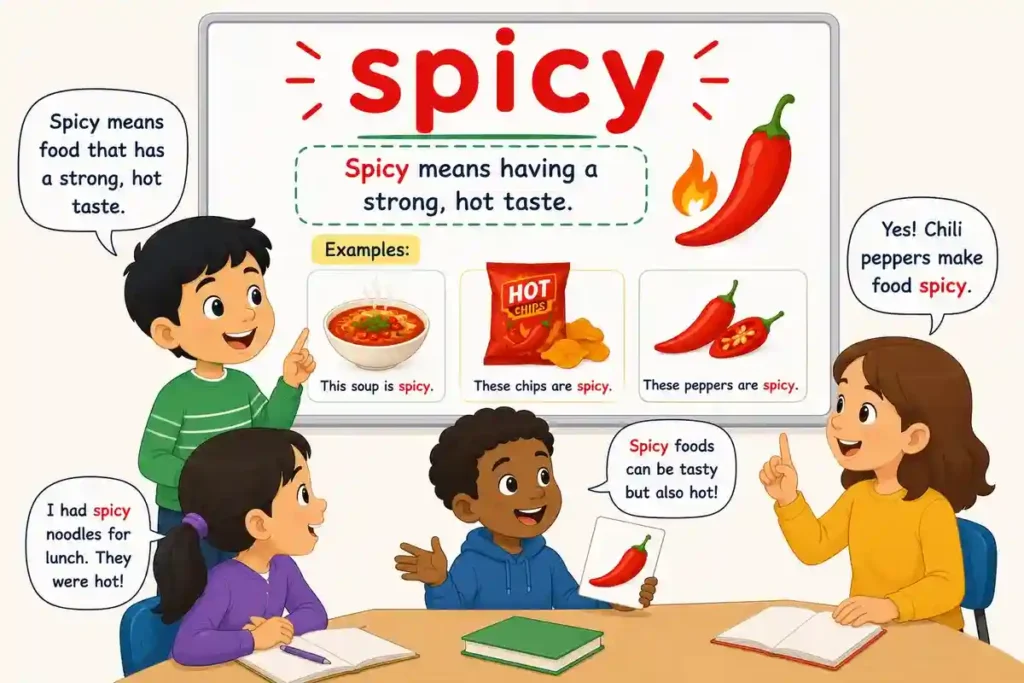
Easy Real-Life Sentences of Spicey or Spicy
Here are common examples with the correct spelling.
- I like spicy food.
- This curry is very spicy.
- The noodles were spicy.
- She ordered spicy chicken.
- That salsa is spicy.
- We enjoy spicy snacks.
- The soup tastes spicy.
- My brother loves spicy wings.
Everyday Conversations
Person A:
“Do you like spicy food?”
Person B:
“Yes, I love spicy dishes.”
Another example:
“Be careful. The sauce is very spicy.”
These examples show how commonly the word appears in daily English.
Different Ways People Use Spicy
The word spicy does not only describe food.
Sometimes it has other meanings.
Spicy Food
This is the most common meaning.
Example:
“The curry is spicy.”
Spicy Conversation
Sometimes people describe a conversation as spicy.
This means it is exciting, bold, or surprising.
Example:
“The interview became spicy.”
Spicy Personality
Some people use spicy to describe a person who is energetic, bold, or playful.
Example:
“She has a spicy personality.”
In these cases, spicy has a figurative meaning rather than a food meaning.
Common Foods Described as Spicy
Many foods around the world are called spicy.
Examples include:
Curry
Many curries contain hot spices.
Tacos
Spicy taco fillings are common.
Salsa
Some salsas contain hot peppers.
Chicken Wings
Buffalo wings are often spicy.
Noodles
Many noodle dishes contain spicy sauces.
Soups
Some soups include chili peppers and spices.
Because spicy food is popular worldwide, the word appears frequently in English.
Origin of The Words Spicey or Spicy
Learning a little history can make spelling easier to remember.
Origin of Spice
The word spice has been part of English for many centuries.
It refers to ingredients used to add flavor to food.
Examples include:
- Cinnamon
- Pepper
- Cloves
- Nutmeg
Development of Spicy
Over time, English created the adjective spicy.
The word came to mean:
“Having the flavor or heat of spices.”
Why the E Disappears
English often removes a final e when certain endings are added.
Examples:
- Ice → icy
- Juice → juicy
- Spice → spicy
This is why spicy became the accepted spelling.
Common Mistakes People Make About Spicey or Spicy
Many English learners make the same mistakes.
Mistake 1: Writing Spicey
This is the most common mistake.
Correct:
Spicy
Incorrect:
Spicey
Mistake 2: Thinking Both Spellings Are Accepted Spicey or Spicy
Only spicy is accepted in standard English.
Mistake 3: Trusting Every Online Example
Some websites and comments contain spelling mistakes.
Always check reliable dictionaries.
Mistake 4: Assuming the Base Word Controls the Spelling Spicey or Spicy
Even though the base word is spice, the correct adjective is spicy.
English spelling does not always follow simple patterns.
Spicy in Food Reviews
You will often see spicy in:
- Restaurant reviews
- Cooking blogs
- Recipe websites
- Food magazines
Examples:
- The tacos were spicy and delicious.
- The sauce was too spicy for me.
- The soup had a spicy flavor.
Because food content is popular online, spicy appears very frequently in modern English.
Quick Practice Spicey or Spicy
Choose the correct spelling.
- The curry is ______.
- I enjoy ______ food.
- The sauce tastes very ______.
- She ordered ______ chicken.
Answers:
- spicy
- spicy
- spicy
- spicy
The answer is always spicy.
Deep Meaning, Culture, and Practical Use of Spicy
The word spicy is used in many cultures around the world. Most people first think about food when they hear this word. However, spicy can also describe people, conversations, stories, and experiences.
Spicy in Food Culture
Many countries are known for spicy food.
Examples include:
- Indian curries
- Mexican salsa
- Thai dishes
- Korean foods
- Cajun cooking
In these cultures, spicy food is often seen as exciting, flavorful, and enjoyable.
Some people love spicy food because it adds extra taste and excitement to a meal.
Spicy in Stories and Entertainment
Writers sometimes use spicy to describe a story, conversation, or event.
Examples:
- A spicy debate
- A spicy interview
- A spicy story
In these cases, spicy means interesting, surprising, bold, or exciting.
The Reason People Like the Word Spicey or Spicy
People like the word spicy because it creates a strong image.
When someone says something is spicy, you immediately imagine energy, flavor, excitement, or heat.
Biblical and Mythological Meaning Spicey or Spicy
The word spicy itself does not have a special biblical meaning.
However, spices are mentioned many times in religious and historical writings.
Spices in Ancient Times
Long ago, spices were valuable.
People used spices for:
- Cooking
- Trade
- Medicine
- Ceremonies
Because spices were rare and valuable, they often symbolized wealth and importance.
Spices in Biblical Stories
Several spices are mentioned in biblical accounts.
Examples include:
- Cinnamon
- Frankincense
- Myrrh
These spices were often connected with gifts, respect, and special occasions.
Mythological Connections Spicey or Spicy
In many ancient cultures, spices were seen as precious treasures brought from distant lands.
Because of this, spices sometimes symbolized adventure, discovery, and luxury.
Symbolism of Spicey or Spicy Explained in Simple Words
Words often carry symbolic meanings beyond their basic definitions.
The word spicy is a good example.
What Spicy Represents?
The correct spelling, spicy, often represents several ideas.
Excitement
Something spicy is rarely boring.
Example:
“A spicy conversation.”
Energy
People sometimes describe energetic personalities as spicy.
Example:
“She has a spicy attitude.”
Boldness
Spicy can suggest confidence and courage.
Flavor
The most common symbol is rich flavor and strong taste.
What Spicey Represents?
The word spicey does not have its own meaning because it is not a correct English spelling.
It usually represents a spelling mistake.
Symbolism Comparison Spicey or Spicy
| Word | Meaning |
|---|---|
| Spicy | Flavor, excitement, boldness, energy |
| Spicey | Misspelling of spicy |
This is another reason why learning the correct spelling matters.
Related Words to Spicey or Spicy You Should Know
Learning related vocabulary helps improve your English.
Spice
A substance used to add flavor to food.
Example:
“Pepper is a common spice.”
Flavorful
Full of taste and flavor.
Example:
“The soup was flavorful.”
Hot
Having heat from peppers or spices.
Example:
“The curry is hot.”
Zesty
Fresh, lively, and full of flavor.
Example:
“The sauce has a zesty taste.”
Tangy
Having a sharp and pleasant taste.
Example:
“The dressing is tangy.”
Savory
Rich and pleasant in flavor.
Example:
“The pie was savory.”
Mild
Not very spicy.
Example:
“I prefer mild food.”
Seasoned
Prepared with spices or flavorings.
Example:
“The chicken was well seasoned.”
These words often appear in recipes, restaurant menus, and food reviews.
Use of Spicey or Spicy in Daily English
Native English speakers use spicy in many different ways.
Food Examples
- I love spicy food.
- This curry is very spicy.
- The salsa is too spicy for me.
- We ordered spicy chicken wings.
- The noodles were spicy and delicious.
Personality Examples
- She has a spicy personality.
- His comments were a little spicy.
Entertainment Examples
- The interview became spicy.
- The discussion got spicy quickly.
- That movie has a spicy storyline.
Social Media Usage
On social media, spicy often means:
- Bold
- Surprising
- Dramatic
- Exciting
Example:
“That was a spicy opinion.”
In this sentence, nobody is talking about food.
Spicy Is Popular in Modern English
The word spicy appears often because people enjoy describing things that are exciting.
Food culture has become more popular around the world.
Cooking shows, food blogs, and restaurant reviews frequently use the word spicy.
At the same time, social media has expanded its meaning.
Today, spicy can describe:
- Food
- Humor
- Opinions
- Personalities
- Stories
This flexibility makes the word very useful.
Final Teacher Explanation About Spicey or Spicy
Imagine a student asks:
“Teacher, should I write spicey or spicy?”
My answer would be simple.
Always write spicy.
The word spicey is a spelling mistake.
Spicy means food that contains strong flavors or heat from spices. It can also describe something exciting, bold, energetic, or interesting.
A helpful memory trick is:
- Ice becomes icy.
- Juice becomes juicy.
- Spice becomes spicy.
The extra “e” disappears.
If you remember that pattern, you will almost always choose the correct spelling.
Quick Recap Spicey or Spicy
When comparing spicey or spicy, the correct spelling is spicy.
Spicy means flavorful, hot, bold, or exciting. Spicey is simply a misspelling and should not be used in formal or everyday writing.
Remember: spice → spicy, just like ice → icy.
Conclusion
When comparing spicey or spicy, the difference is simple: spicy is the correct spelling, while spicey is a common spelling mistake. Understanding the meaning, spelling, usage, and word choice helps improve your vocabulary, writing accuracy, and communication skills in everyday English.
A simple way to remember the rule is that spice becomes spicy, just as ice becomes icy. By learning this spelling pattern and paying attention to context, you can avoid common language mistakes and use the correct word confidently in speaking and writing.
Frequently Asked Questions
Is it spicy or spicey?
Spicy is correct. Spicey is a spelling mistake.
What does spicy mean?
Spicy means having a strong, hot, or flavorful taste because of spices.
Why do people write spicey?
Many people think the spelling should follow the word spice, but English changes the spelling to spicy.
Is spicey in the dictionary?
Most standard dictionaries list spicy as the correct spelling and treat spicey as a misspelling.
Can spicy describe something other than food?
Yes. Spicy can describe a conversation, personality, opinion, or story that is exciting or bold.
How do I remember the correct spelling?
Think of these examples:
Ice → icy
Juice → juicy
Spice → spicy
Is spicy formal or informal?
It can be both. It is common in recipes, restaurant reviews, everyday conversations, and professional food writing.
Which spelling should I use in school or business writing Spicey or Spicy?
Always use spicy. It is the accepted standard English spelling.