
Many English learners get confused about dissatisfied or unsatisfied because both words describe a feeling of not being happy with something. At first glance, they seem to mean the same thing, but they are often used in different situations.
The difference between dissatisfied or unsatisfied is small but important. One word usually describes disappointment with something, while the other often means that a need, desire, or expectation has not been met.
If you are wondering which word is correct, this guide will explain the meaning, usage, spelling, examples, and difference between dissatisfied or unsatisfied in very simple English.
For more commonly confused words, see our article on exception vs acception.
Simple Answer in One Look Dissatisfied or Unsatisfied
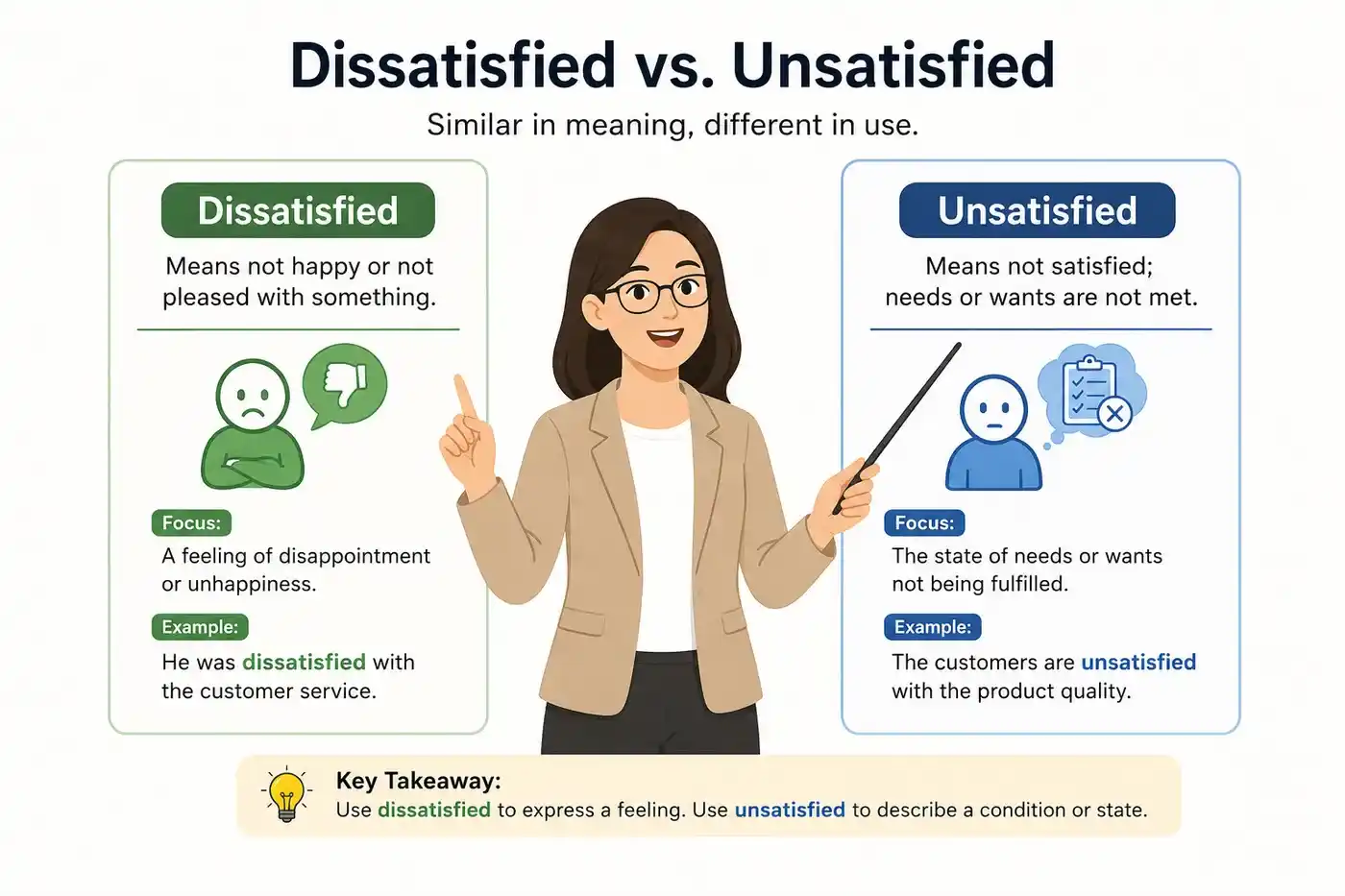
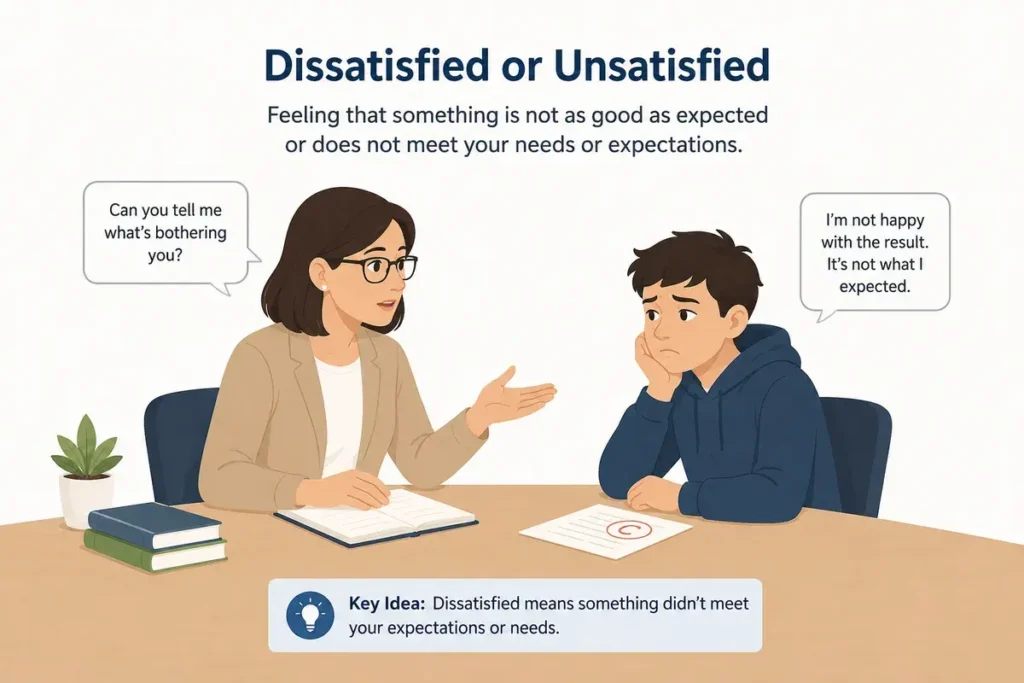
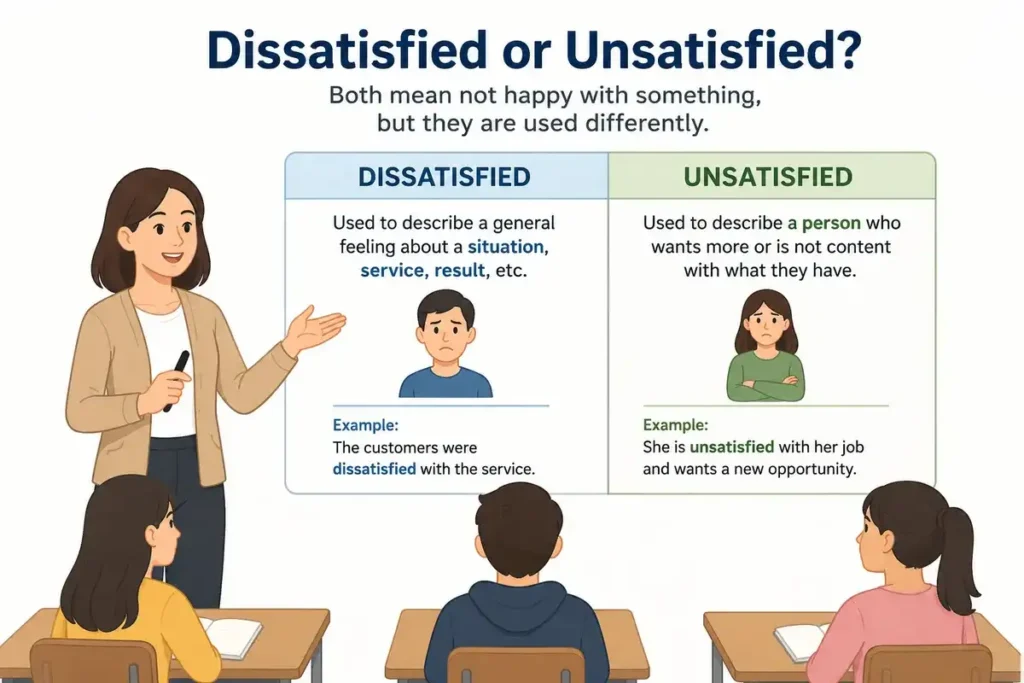
Dissatisfied means unhappy or disappointed with something.
Unsatisfied means something is not fulfilled, completed, or met.
Dissatisfied or Unsatisfied Means in Simple English
The easiest way to understand dissatisfied or unsatisfied is to look at each word separately.
Dissatisfied Mean
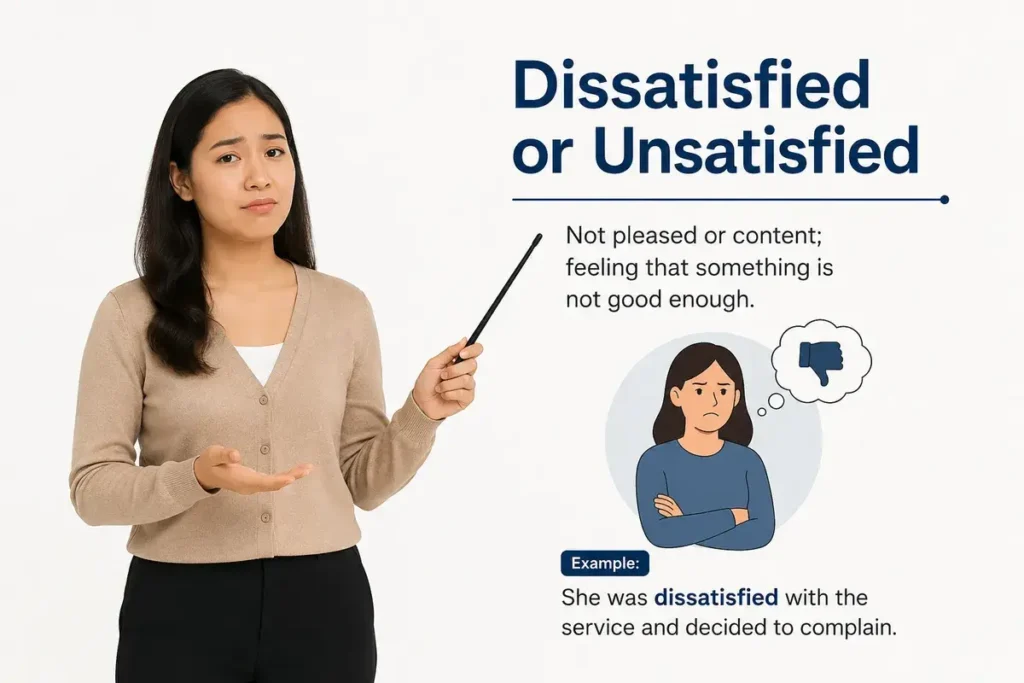
Dissatisfied means you are unhappy with the quality, result, or situation. You expected something better.
Examples:
- I am dissatisfied with the service.
- She was dissatisfied with her test score.
- The customer felt dissatisfied with the product.
In these examples, someone feels disappointed. Simple meaning;
Dissatisfied = unhappy with something.
Unsatisfied Mean
Unsatisfied means a need, desire, wish, or requirement has not been met.
Examples:
- His hunger remained unsatisfied.
- The company had many unsatisfied customers.
- Her curiosity was unsatisfied.
In these examples, something is missing or incomplete. Simple meaning;
Unsatisfied = not fulfilled or not met.
Easy Way to See the Difference Between Dissatisfied or Unsatisfied
Look at these sentences:
- I am dissatisfied with the food.
- My hunger is unsatisfied.
The first sentence focuses on disappointment. The second focuses on a need that has not been met.
Reasons of People Mix These Words Dissatisfied or Unsatisfied
Many learners confuse dissatisfied or unsatisfied because both words involve negative feelings.
Similar Meanings
Both words suggest that something is not right.
Examples:
- A dissatisfied customer.
- An unsatisfied customer.
Both sound reasonable. This creates confusion.
Both Use the Idea of “Not Enough”
In many situations, both words suggest that expectations were not fully met. Because of this, people often think the words are interchangeable.
They Appear in Similar Contexts
You may see both words in:
- Customer reviews
- Business reports
- Everyday conversations
- School writing
This makes the difference harder to notice.
Clear Difference of Dissatisfied or Unsatisfied Explained Simply
The difference becomes easier when you focus on the main idea behind each word.
Dissatisfied
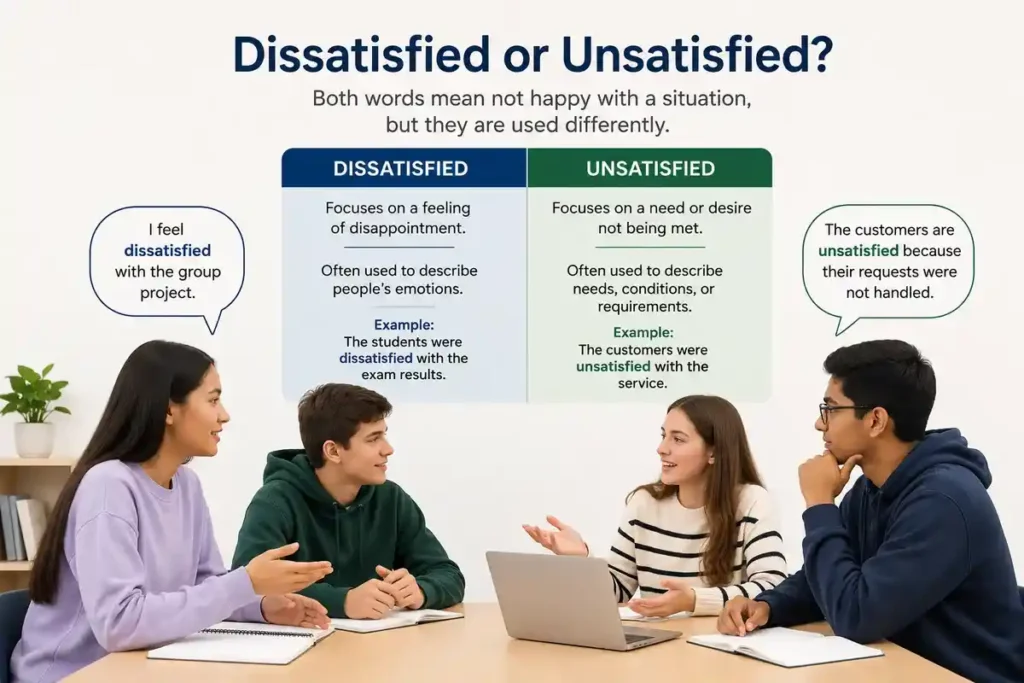
Focuses on feelings.
Think: “I am not happy with this.”
Examples:
- dissatisfied customer
- dissatisfied employee
- dissatisfied student
- dissatisfied traveler
Unsatisfied
Focuses on needs, wants, goals, or requirements.
Think: “This has not been fulfilled.”
Examples:
- unsatisfied hunger
- unsatisfied demand
- unsatisfied curiosity
- unsatisfied requirement
Quick Comparison Table Dissatisfied or Unsatisfied
| Word | Main Meaning | Example |
|---|---|---|
| Dissatisfied | Unhappy or disappointed | I am dissatisfied with the service. |
| Unsatisfied | Not fulfilled or met | My hunger is unsatisfied. |
Easy Memory Trick Dissatisfied or Unsatisfied
Think:
Dissatisfied = disappointed
Both begin with “dis.”
Think:
Unsatisfied = unfinished need
Something is still missing.
Usage of Dissatisfied or Unsatisfied
Ask yourself a simple question. What are you talking about?
If You Are Talking About Feelings
Use dissatisfied.
Examples:
- The customer was dissatisfied.
- I am dissatisfied with the results.
- She felt dissatisfied after the meeting.
If You Are Talking About Needs or Wants
Use unsatisfied.
Examples:
- His curiosity remained unsatisfied.
- The demand is still unsatisfied.
- Her need for answers was unsatisfied.
Simple Rule to Use Dissatisfied or Unsatisfied
- Feeling unhappy = dissatisfied
- Need not fulfilled = unsatisfied
This rule works in most situations.
Easy Real-Life Sentences of Dissatisfied or Unsatisfied
Here are examples with dissatisfied.
- I am dissatisfied with the service.
- She felt dissatisfied with her grade.
- The customer was dissatisfied with service.
- We were dissatisfied with the hotel.
- He became dissatisfied with the results.
- Many workers felt dissatisfied.
- The students were dissatisfied with the schedule.
- They looked dissatisfied after the event.
Now look at examples with unsatisfied.
- My hunger remained unsatisfied.
- Her curiosity was unsatisfied.
- The need was unsatisfied.
- Demand remained unsatisfied.
- His desire for success was unsatisfied.
- The requirement is still unsatisfied.
- Several requests were unsatisfied.
- Their expectations remained unsatisfied.
Sometimes Both Words Can Work Dissatisfied or Unsatisfied
In some situations, both words may appear.
Example:
- The customer was dissatisfied.
- The customer remained unsatisfied.
Both are understandable. However, the meanings are slightly different.
Dissatisfied Customer
Focuses on feelings. The customer is unhappy.
Unsatisfied Customer
Focuses on needs not being met. The customer did not get what they wanted. This small difference is why writers often choose one word over the other.
Common Situations for Dissatisfied
You will often see dissatisfied in situations involving opinions and emotions.
Customer Reviews
“The customer was dissatisfied with the product.”
School
“The student was dissatisfied with the grade.”
Work
“The employee felt dissatisfied with the promotion decision.”
Travel
“The tourists were dissatisfied with the hotel.”
Common Situations for Unsatisfied
You will often see unsatisfied when discussing needs and requirements.
Hunger
“His hunger remained unsatisfied.”
Demand
“The market has unsatisfied demand.”
Curiosity
“Her curiosity was unsatisfied.”
Requirements
“The requirements remain unsatisfied.”
Origin of The Words Dissatisfied or Unsatisfied
Learning a little history can help you remember the meanings.
Origin of Satisfied
Both words come from the word satisfied. Satisfied means happy because a need or expectation has been met.
Development of Dissatisfied
The prefix “dis-” often adds the idea of opposition or disappointment. So dissatisfied developed the meaning; “Not pleased or unhappy.”
Development of Unsatisfied
The prefix “un-” often means “not.” So unsatisfied developed the meaning; “Not fulfilled or not completed.”
Now Both Words Exist
English often creates similar words with slightly different meanings. Over time, dissatisfied became more connected to feelings. Unsatisfied became more connected to unmet needs.
Deep Meaning, Culture, and Practical Use of Dissatisfied or Unsatisfied
The words dissatisfied and unsatisfied appear in many books, movies, and everyday stories because they describe common human feelings. People often become dissatisfied when reality does not match their expectations. People become unsatisfied when something they need or want is still missing.
Dissatisfied in Stories
A character may feel dissatisfied because:
- They did not achieve a goal.
- They expected something better.
- They are unhappy with a result.
For example, a student may feel dissatisfied after receiving a lower grade than expected. The feeling is emotional.
Unsatisfied in Stories
A character may feel unsatisfied because a need remains unmet.
Examples:
- Unsatisfied curiosity.
- Unsatisfied hunger.
- Unsatisfied dreams.
- Unsatisfied goals.
The focus is on something incomplete.
Why Writers Use These Words?
Writers use these words because they help readers understand a character’s emotions and motivations.
- A dissatisfied person wants improvement.
- An unsatisfied person wants fulfillment.
Biblical and Mythological Meaning Dissatisfied or Unsatisfied
The exact words dissatisfied and unsatisfied may not appear in every religious or mythological story, but the ideas behind them are common.
Dissatisfaction in Religious Stories
Many stories describe people who are dissatisfied with their lives, choices, or circumstances. Sometimes dissatisfaction encourages positive change. Sometimes it leads to poor decisions.
Unsatisfied Desires in Religious Stories
Many teachings discuss desires that never seem fully satisfied.
Examples include:
- Desire for wealth.
- Desire for power.
- Desire for recognition.
These stories often encourage balance and wisdom.
Mythological Examples
In myths, characters frequently pursue goals that remain unsatisfied. They may search for;
- Knowledge
- Power
- Adventure
- Success
Their journey often continues because their needs have not yet been fulfilled.
Symbolism of Dissatisfied or Unsatisfied Explained in Simple Words
Words often represent larger ideas. The difference between dissatisfied or unsatisfied can also be understood through symbolism.
Representation of Dissatisfied
The word dissatisfied often symbolizes disappointment.
Frustration
Someone expected a better outcome.
Desire for Improvement
Dissatisfied people often want things to change.
Personal Feelings
The focus is usually emotional.
Example: A dissatisfied customer wants better service.
Motivation
Sometimes dissatisfaction motivates people to improve their situation.
Representation of Unsatisfied
The word unsatisfied often symbolizes incompleteness.
Unmet Needs
Something important is still missing.
Lack of Fulfillment
A goal or desire has not been achieved.
Ongoing Search
An unsatisfied person may continue looking for answers or solutions.
Incomplete Goals
The focus is often on something unfinished.
Quick Symbolism Comparison of Dissatisfied or Unsatisfied
| Word | Symbolic Meaning |
|---|---|
| Dissatisfied | Disappointment, frustration, desire for improvement |
| Unsatisfied | Unmet needs, incompleteness, lack of fulfillment |
This comparison helps make the difference easier to remember.
Related Words to Dissatisfied or Unsatisfied You Should Know
Learning related vocabulary improves your understanding of both words.
Satisfied
Happy because expectations or needs have been met.
Example: “I am satisfied with the result.”
Content
Feeling peaceful and happy.
Example: “She felt content with her decision.”
Fulfilled
Completely satisfied.
Example: “He felt fulfilled after helping others.”
Disappointed
Feeling unhappy because something was not as good as expected.
Example: “I was disappointed with the movie.”
Frustrated
Feeling upset because something is difficult or unsuccessful.
Example: “She became frustrated by the delay.”
Unfulfilled
Not completed or achieved.
Example: “He had many unfulfilled dreams.”
Desire
Something you want.
Example: “Everyone has desires and goals.”
Expectation
What you think will happen.
Example: “The results met my expectations.”
These words often appear in discussions about satisfaction and fulfillment.
Use of Dissatisfied or Unsatisfied in Daily English
Native English speakers use these words in different situations.
Examples With Dissatisfied
- Their service dissatisfied me.
- She felt dissatisfied with her score.
- The customer was dissatisfied.
- This Hotel dissatisfied us.
- He became dissatisfied with the decision.
- Employees felt dissatisfied with the changes.
- The students looked dissatisfied.
Examples With Unsatisfied
- My curiosity remains unsatisfied.
- His hunger is still unsatisfied.
- The demand remains unsatisfied.
- Her need for answers was unsatisfied.
- Several requests remain unsatisfied.
- The requirement is unsatisfied.
- Their expectations stayed unsatisfied.
Everyday Difference
Listen to these two sentences:
- “I am dissatisfied with the meal.” This means; “I am unhappy with it.”
- “My hunger is unsatisfied.” This means; “I am still hungry.”
Now The difference becomes very clear when viewed this way.
Common Mistakes People Make About Dissatisfied or Unsatisfied
Many English learners make similar mistakes when comparing dissatisfied or unsatisfied.
Mistake 1: Using Them as Exact Synonyms Dissatisfied or Unsatisfied
The meanings overlap, but they are not always identical.
Mistake 2: Ignoring the Emotional Difference
Dissatisfied often focuses on feelings and disappointment.
Mistake 3: Ignoring the Fulfillment Difference
Unsatisfied often focuses on needs, wants, and goals that remain unmet.
Mistake 4: Using Unsatisfied for Every Situation
Sometimes dissatisfied sounds much more natural.
Example:
Better: “This product dissatisfied the costumer.”
Less common: “The customer was unsatisfied.”
Mistake 5: Forgetting Context
Always ask:
“Am I talking about feelings or unmet needs?”
This simple question solves most problems.
Easy Correction Rule Dissatisfied or Unsatisfied
Feeling unhappy = dissatisfied
Need not fulfilled = unsatisfied
Quick Practice Dissatisfied or Unsatisfied
Choose the correct word.
- I am ______ with the service.
- His curiosity remained ______.
- The employee felt ______.
- The requirement is still ______.
Answers:
- unsatisfied
- dissatisfied
- unsatisfied
- dissatisfied
Dissatisfied Is Common in Reviews
You will often see dissatisfied in:
- Customer reviews
- Employee surveys
- Hotel reviews
- Product feedback
Why?
Because people are expressing feelings and opinions.
Examples:
- dissatisfied customer
- dissatisfied employee
- dissatisfied traveler
Unsatisfied Is Common in Formal Writing
You will often see unsatisfied in:
- Business reports
- Research papers
- Market analysis
- Technical writing
Examples:
- unsatisfied demand
- unsatisfied requirements
- unsatisfied needs
This is because the word focuses on fulfillment rather than emotion.
Final Teacher Explanation Dissatisfied or Unsatisfied
Imagine you are sitting in class and asking:
“Teacher, what is the difference between dissatisfied and unsatisfied?”
My answer would be very simple.
- Dissatisfied means unhappy, disappointed, or not pleased with something.
- Unsatisfied means a need, desire, goal, or expectation which is not fulfilled.
Think about these examples:
- “I am dissatisfied with the service.” This means; “I do not like the service.”
- “My hunger is unsatisfied.” This means; “I am still hungry.”
The easiest memory trick is:
Dissatisfied = disappointed.
Unsatisfied = unmet need.
If you remember that rule, then you will understand most situations correctly.
Quick Recap Dissatisfied or Unsatisfied
When comparing dissatisfied or unsatisfied, both words describe something negative, but they focus on different ideas.
- Dissatisfied means unhappy or disappointed with something.
- Unsatisfied means a need, desire, or requirement has not been fulfilled.
Remember: dissatisfied = disappointed, unsatisfied = unmet need.
Conclusion
When comparing dissatisfied or unsatisfied, the difference is mainly in meaning and usage. Dissatisfied describes feeling unhappy, disappointed, or not pleased with a result, while unsatisfied means a need, desire, expectation, or requirement has not been fulfilled. Understanding this vocabulary difference improves your word choice, communication skills, and English writing accuracy.
A simple way to remember the rule is that dissatisfied focuses on emotions, while unsatisfied focuses on unmet needs. By paying attention to context, meaning, and usage, you can choose the correct word confidently and avoid common spelling, vocabulary, and language mistakes in everyday English.
Frequently Asked Questions
What is the difference between Dissatisfied or Unsatisfied?
Dissatisfied means unhappy or disappointed. Unsatisfied means a need or desire has not been fulfilled.
Which is correct, dissatisfied or unsatisfied?
Both are correct. The right choice depends on the meaning of the sentence.
Can dissatisfied and unsatisfied mean the same thing?
Sometimes they overlap, but they usually focus on different ideas.
When should I use dissatisfied?
Use dissatisfied when talking about feelings, disappointment, or unhappiness.
When should I use unsatisfied?
Use unsatisfied when talking about unmet needs, goals, desires, or requirements.
Is an unsatisfied customer the same as a dissatisfied customer?
Not exactly. A dissatisfied customer is unhappy. An unsatisfied customer has needs that were not fully met.
How can I remember the difference Dissatisfied or Unsatisfied?
Remember: dissatisfied = disappointed, unsatisfied = unmet need.
Which word is more common in reviews Dissatisfied or Unsatisfied?
Dissatisfied is more common because reviews often describe feelings and opinions.