
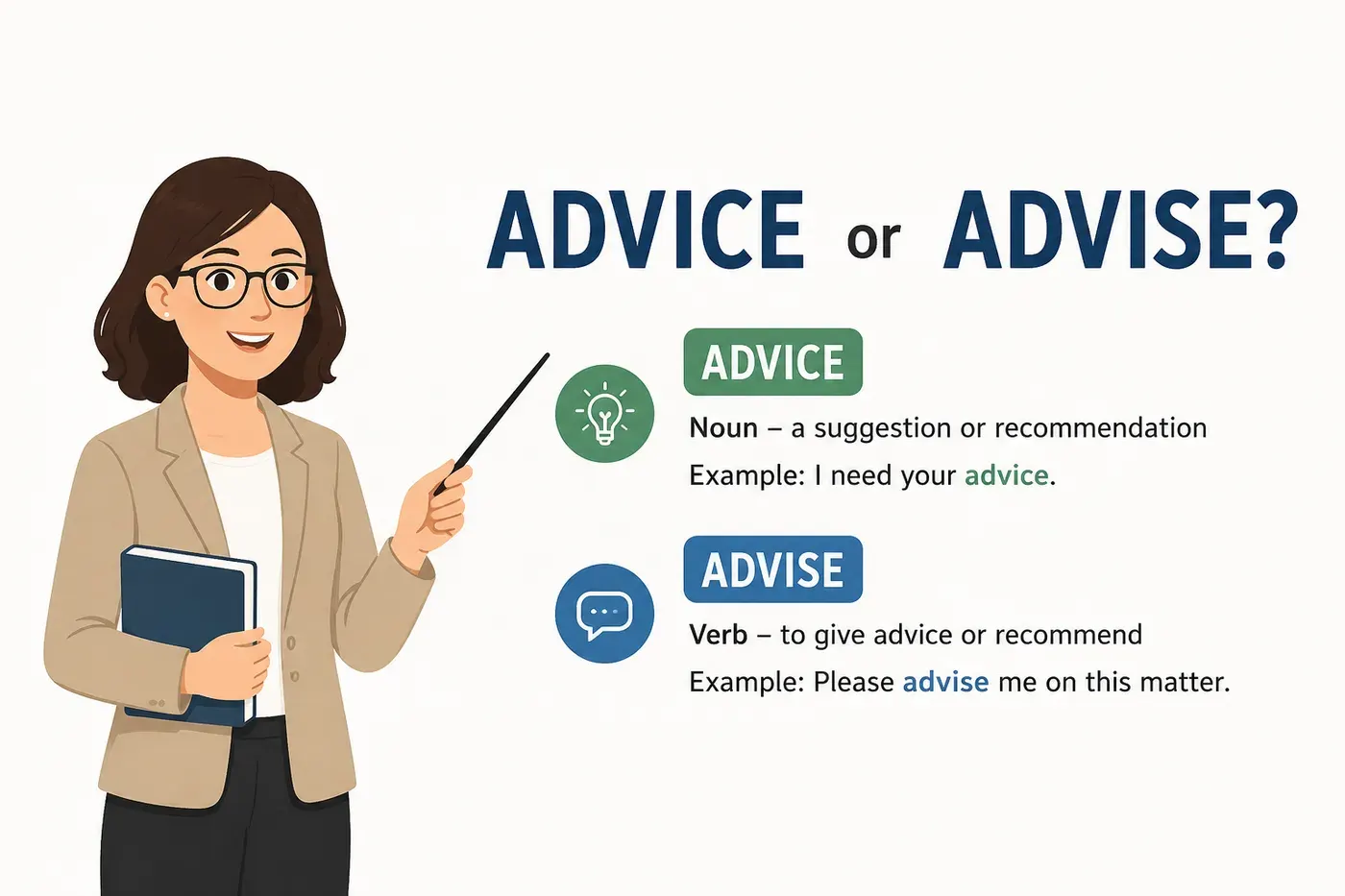
Many English learners get confused about advise or advice because the words look almost identical. They have similar meanings and are often used in the same situations. This makes many people wonder which spelling is correct and how to use each word properly.
The truth is that both advise and advice are correct English words. However, they have different jobs in a sentence. One is an action, and the other is a thing. Understanding this difference makes it much easier to choose the right word.
If you are searching for advise or advice, this simple guide will explain the meaning, spelling, usage, and difference between these commonly confused English words.
If you found this comparison useful, you might also like our guide on Fact or Cap.
Simple Answer in One Look
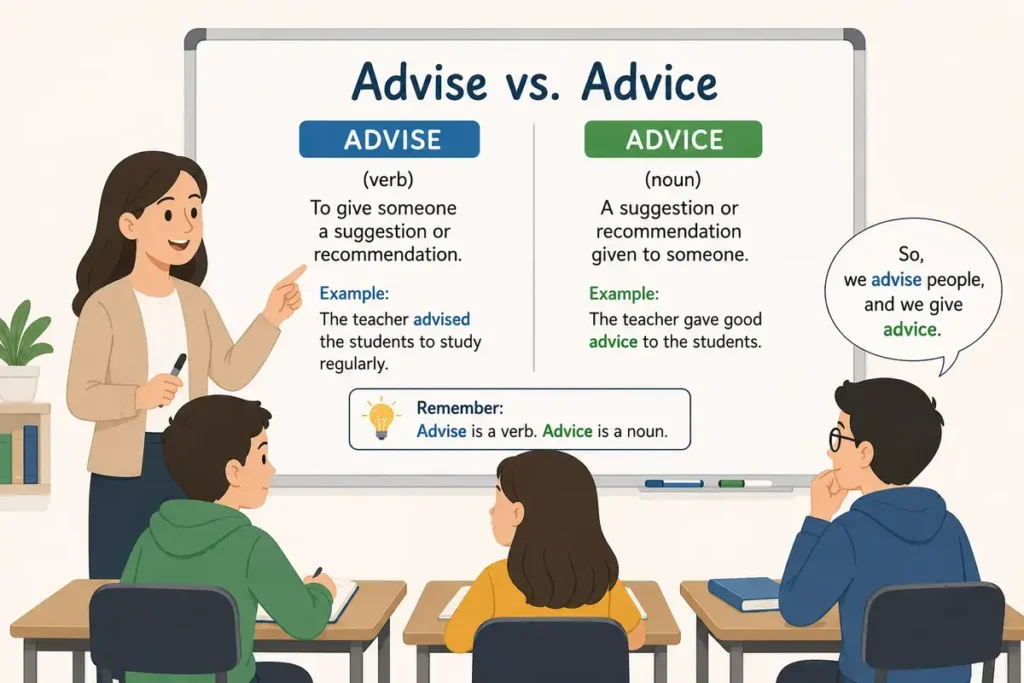
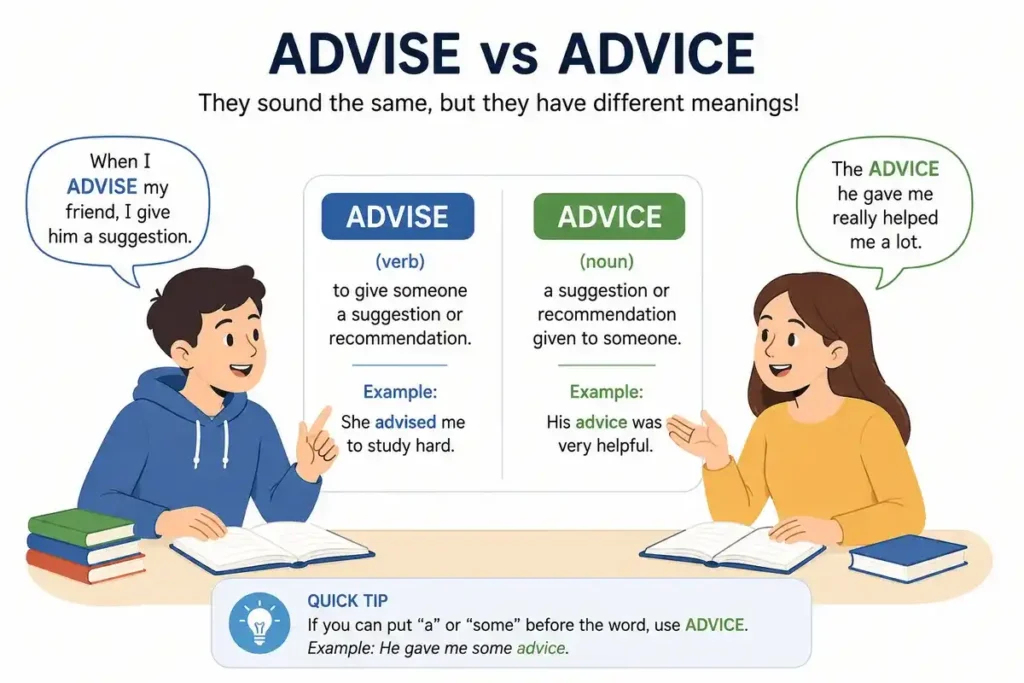
Advise means to give a suggestion or recommendation.
Advice means the suggestion or recommendation itself.
Advise = action. Advice = suggestion.
Means in Simple English Advise or Advice
The easiest way to understand advise and advice is to learn each word separately.
Meaning of Advise
Advise means to tell someone what you think they should do. It is an action.
Examples:
- I advise you to study.
- The doctor advised me to rest.
- She advised her friend to save money.
In each sentence, someone is giving guidance or recommendations.
Simple meaning:
Advise = to give a suggestion.
Meaning of Advice
Advice is the suggestion itself.
Examples:
- Thank you for your advice.
- His advice helped me.
- I need some advice.
In these examples, advice is the information or recommendation being given.
Simple meaning:
Advice = a suggestion or recommendation.
Easy Way to See the Difference Between Advise or Advice
Look at these two sentences:
- I advise you to exercise.
- My advice is to exercise.
The meaning is similar. The word choice is different. One describes the action. The other describes the suggestion.
People Mix These Words Advise or Advice
Many learners confuse in these words because the words are very similar.
Almost Identical Spelling
Compare them:
- advise
- advice
Only one letter changes. Because of this, many writers accidentally choose the wrong form.
Similar Meanings
Both words involve helping people make decisions. This makes the difference harder to notice.
Similar Pronunciation Advise or Advice
The words sound similar. Many learners hear them before they see them in writing. This can create spelling mistakes later.
They Often Appear Together
Examples:
- I advise you to follow my advice.
- The teacher advised students and gave useful advice.
Seeing both words together can be confusing at first.
Clear Difference Explained Simply About Advise or Advice
The difference between advise and advice becomes easy when you focus on their job in the sentence.
Advise
Meaning:
To give a recommendation.
Think:
Someone is doing something.
Examples:
- I advise caution.
- Doctors advise patients.
- Teachers advise students.
Advice
Meaning:
The recommendation itself.
Think:
Something is being received.
Examples:
- Good advice helps people.
- Thank you for the advice.
- Her advice was useful.
Quick Comparison Table Advise or Advice
| Word | Meaning | Example |
|---|---|---|
| Advise | To give a suggestion | I advise you to wait. |
| Advice | A suggestion | Your advice helped me. |
Easy Memory Trick
Look at the last letter.
Advise ends with S
Think:
S = Suggest
Someone is giving a suggestion.
Advice ends with C
Think:
C = Counsel or comment
The suggestion itself.
Another easy trick:
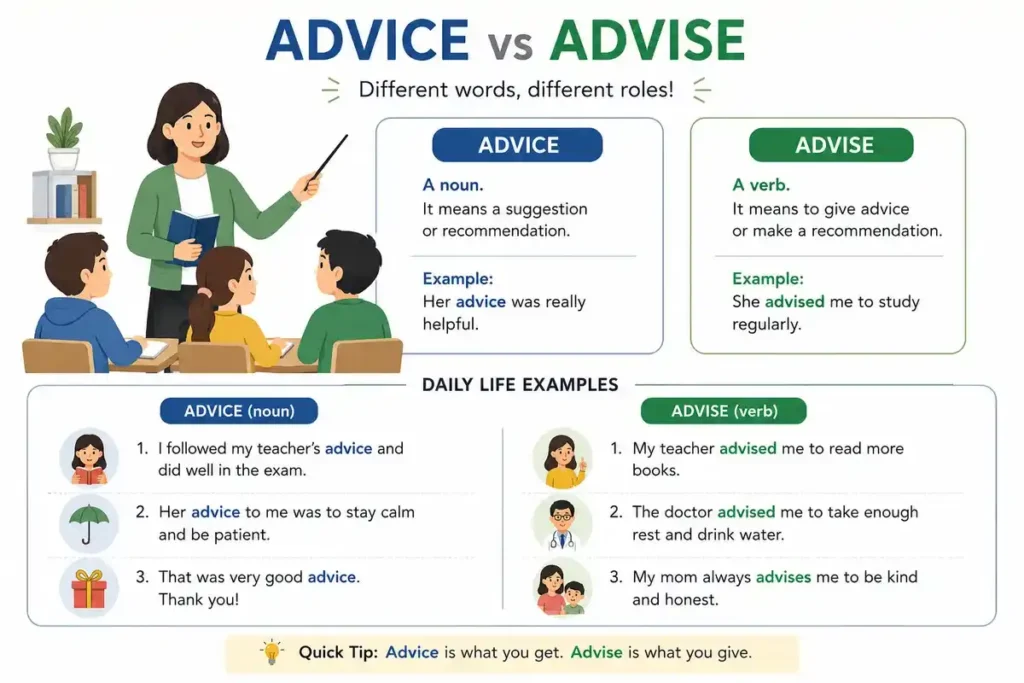
You can give advice.
You can advise someone.
Which Form We Should Use Advise or Advice?
Ask yourself a simple question.
“Am I talking about an action or a suggestion?”
Use Advise When Someone Is Giving Guidance
Examples:
- I advise you to stay calm.
- The teacher advised the students.
- Experts advise caution.
Someone is actively giving recommendations.
Use Advice When Talking About the Recommendation
Examples:
- Thank you for the advice.
- His advice was helpful.
- I need some advice.
The recommendation already exists.
Simple Rule
Giving guidance = advise
Receiving guidance = advice
This simple rule solves most mistakes.
Easy Real-Life Sentences You Can Use Advise or Advice
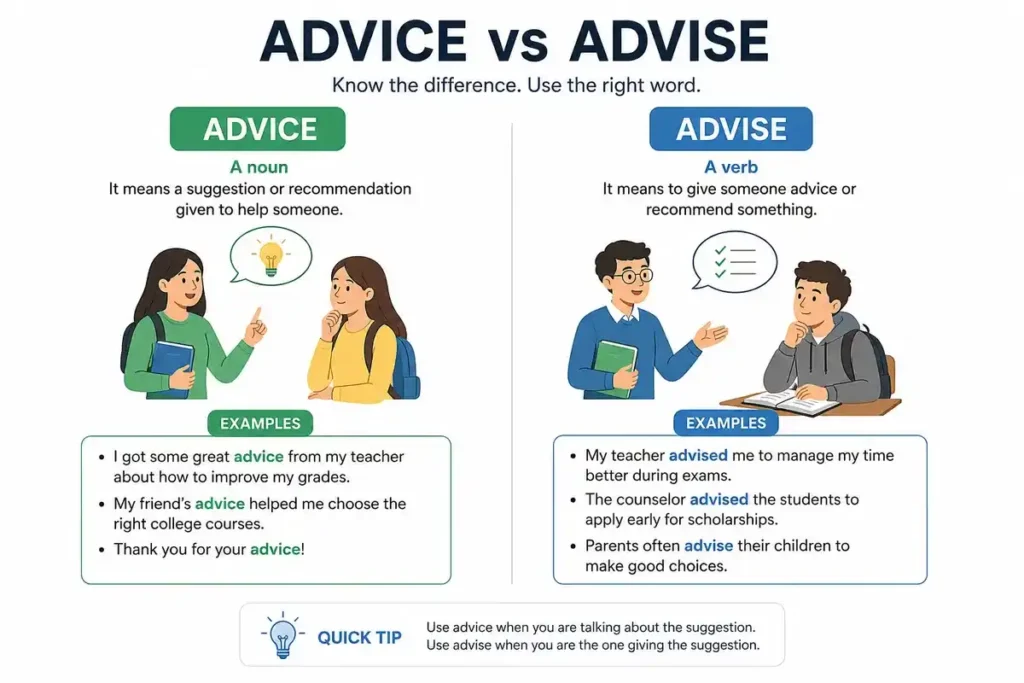
Here are simple examples using advise.
- I advise you to arrive early.
- Doctors advise regular exercise.
- She advised her friend to save money.
- The teacher advised us to study harder.
- Experts advise caution during storms.
- My parents advise me to work hard.
- The coach advised the team to practice.
- I would advise waiting a little longer.
Now look at examples using advice.
- Thank you for your advice.
- His advice was very helpful.
- I need some advice.
- She gave me good advice.
- Your advice solved my problem.
- I followed my teacher’s advice.
- That was useful advice.
- Their advice helped me succeed.
Notice the difference.
Advise shows action.
Advice is the information being given.
Common Situations Where Advise Is Used
You will often see advise in situations involving recommendations.
Medical Advice
Doctors advise patients about health.
Example:
“The doctor advised more sleep.”
Financial Guidance
Experts advise people about money.
Example:
“The advisor advised saving regularly.”
School Guidance
Teachers advise students.
Example:
“The teacher advised extra practice.”
Workplace Recommendations
Managers advise employees.
Example:
“The manager advised better planning.”
Common Situations Where Advice Is Used
The word advice appears when talking about recommendations that already exist.
Asking for Help
“I need your advice.”
Receiving Guidance
“Thank you for the advice.”
Learning From Others
“Her advice helped me improve.”
Making Decisions
“I followed his advice.”
Because people frequently ask for recommendations, advice is very common in everyday English.
Origin of These Words
Learning a little history can make the difference easier to remember.
Origin of Advise
The word advise comes from older French and Latin words connected to thinking, considering, and recommending. Over time, English speakers used it as a word meaning “to recommend” or “to guide.”
Origin of Advice
The word advice developed from the same language roots. However, it became the word for the recommendation itself rather than the act of recommending.
The Reason English Kept Both Words Advise or Advice
English often creates pairs like this. One word describes an action. Another word describes the thing connected to that action. That is exactly what happened with advise and advice.
Deep Meaning, Culture, and Practical Use of Advise or Advice
The words advise and advice are closely connected to helping people make decisions. In stories, books, movies, and daily life, characters often seek advice before making an important choice.
Think about a wise teacher in a story. The teacher may advise a student to work harder. The student may follow that advice and succeed.
This pattern appears in many stories because people often learn from guidance given by others.
Advice Is Important in Stories
Many stories include characters who need help.
Examples include:
- A king seeking advice from a counselor.
- A young hero asking for guidance.
- A student listening to a teacher.
- A friend helping another friend.
Good advice often helps a character solve a problem. Bad advice may create new problems. Because of this, advice plays an important role in storytelling.
Advice in Everyday Culture
People ask for advice every day.
Examples include:
- Career advice
- Financial advice
- Relationship advice
- Health advice
- Study advice
This shows how important guidance is in everyday life.
The act of giving that guidance is called advise.
The guidance itself is called advice.
Biblical and Mythological Meaning Advise or Advice
The idea of giving advice appears in many religious and historical stories.
Wise leaders often advise others.
People seek advice before making important decisions.
Advice in Religious Teachings
Many religious texts encourage people to seek wisdom and guidance.
Examples include:
- Learning from elders.
- Listening to wise teachers.
- Following good counsel.
The exact words advise and advice may not always appear, but the idea is common.
Mythological Examples
Many myths include wise characters who advise heroes.
Examples include:
- A wise elder giving guidance.
- A mentor advising a young warrior.
- A leader offering advice before a journey.
These characters often help others avoid mistakes. Because of this, advice is often associated with wisdom and experience.
Symbolism of Advise or Advice Explained in Simple Words
Words can sometimes represent larger ideas. Understanding these ideas helps make the difference between these words easier to remember.
Advise Represents
The word advise represents action.
Guidance
Advise means helping someone make a decision.
Example:
A teacher advises a student.
Caring
People often advise others because they care about them.
Experience
Someone giving advice often has knowledge or experience to share.
Advice Represents
The word advice represents wisdom and guidance.
Knowledge
Advice often comes from learning and experience.
Support
Advice helps people sense supported.
Direction
Advice can help someone choose the best path.
Quick Symbolism Comparison Advise or Advice
| Word | Symbolic Meaning |
|---|---|
| Advise | Action, guidance, helping |
| Advice | Wisdom, support, direction |
This simple comparison makes the difference easier to understand.
Related Words to Advise or Advice You Should Know
Learning related words helps build stronger English vocabulary.
Advisor
A person who gives guidance.
Example:
“My advisor helped me choose a career.”
Advising
The act of giving recommendations.
Example:
“She is advising new students.”
Recommendation
A suggestion about what someone should do.
Example:
“He gave a recommendation.”
Guidance
Help or direction.
Example:
“The teacher provided guidance.”
Suggestion
An idea offered for consideration.
Example:
“Thank you for the suggestion.”
Counsel
Advice or guidance.
Example:
“She offered helpful counsel.”
Wisdom
Knowledge gained from experience.
Example:
“His wisdom helped many people.”
Mentor
An experienced person who guides others.
Example:
“My mentor taught me a lot.”
These words often appear in discussions about advice and guidance.
Use of Advise or Advice in Daily English
Native speakers use advise and advice frequently.
Here are common examples.
Using Advise
- I advise you to save money.
- Doctors advise patients to exercise.
- The teacher advised us to study.
- Experts advise caution.
- My parents advise me to work hard.
Using Advice
- Thank you for your advice.
- I need some advice.
- Her advice helped me.
- That was useful advice.
- I followed his advice.
Common Everyday Situations
People often ask for advice about:
- School
- Work
- Money
- Health
- Relationships
- Travel
The person giving recommendations advises.
The recommendations themselves are advice.
Common Mistakes People Make About Advise or Advice
Many learners make similar mistakes when comparing advise and advice.
Mistake 1: Using Advice as a Verb
Incorrect:
“I advice you to wait.”
Correct:
“I advise you to wait.”
Mistake 2: Using Advise as a Noun
Incorrect:
“Thank you for your advise.”
Correct:
“Thank you for your advice.”
Mistake 3: Choosing Based on Spelling Alone
The words look similar.
Always think about the meaning first.
Mistake 4: Forgetting the Simple Rule
Remember:
Advise = action
Advice = suggestion
Mistake 5: Using Them Interchangeably Advise or Advice
The words are related, but they are not interchangeable.
Each has its own role.
Easy Correction Rule to Use Advise or Advice
Ask yourself:
“Am I giving guidance or talking about guidance?”
Giving guidance = advise
Talking about guidance = advice
This simple question prevents most mistakes.
Quick Practice
Choose the correct word.
- I ___ you to save money.
- Thank you for your ___.
- The teacher ___ us to practice.
- Her ___ was useful.
Answers:
- advice
- advise
- advice
- advised
Advice Is Seen More Often Than Advise
Many learners notice that advice appears more frequently. The reason is simple. People often talk about advice they receive.
Examples:
- career advice
- study advice
- financial advice
- medical advice
Because advice is a common topic, the word appears regularly in conversations and writing. Advise is also common, but it is used only when describing the action of giving guidance.
Final Teacher Explanation Advise or Advice
Imagine you are sitting in class and asking:
“Teacher, what is the difference between advise and advice?”
My answer would be very simple.
Advise means giving a suggestion.
Advice means the suggestion itself.
For example:
“I advise you to study.”
“My advice is to study.”
The message is similar.
The word choice is different.
The easiest memory trick is this:
Advise = action.
Advice = suggestion.
If you remember that rule, you will avoid most mistakes.
Quick Recap Advise or Advice
When comparing these words, both words are correct but have different meanings.
Advise means to give guidance or recommendations.
Advice means the guidance or recommendation itself.
Remember: advise = action, advice = suggestion.
Conclusion
When comparing advise or advice, the difference is in their meaning and usage. Advise means to give guidance or a recommendation, while advice is the recommendation itself. Understanding this common spelling and vocabulary confusion improves your word choice, communication skills, and English writing accuracy.
A simple way to remember the rule is that advise is the action and advice is the guidance. If you focus on the meaning of the sentence, choosing the correct word becomes easier and helps you write with greater confidence and clarity.
Frequently Asked Questions
What is the difference between Advise or Advice?
Advise means to give guidance. Advice is the guidance that is given.
Which is correct, advise or advice?
Both are correct. The right choice depends on the sentence.
Is advice a noun?
Yes. Advice refers to a suggestion or recommendation.
Is advise a verb?
Yes. Advise means to recommend or guide someone.
Why do people confuse advise and advice?
The words look and sound similar, which makes them easy to mix up.
How can I remember the difference?
Remember: advise = action, advice = suggestion.
Can I say “I advice you”?
No. The correct phrase is “I advise you.”
Is “thank you for your advise” correct?
No. The correct phrase is “thank you for your advice.”