
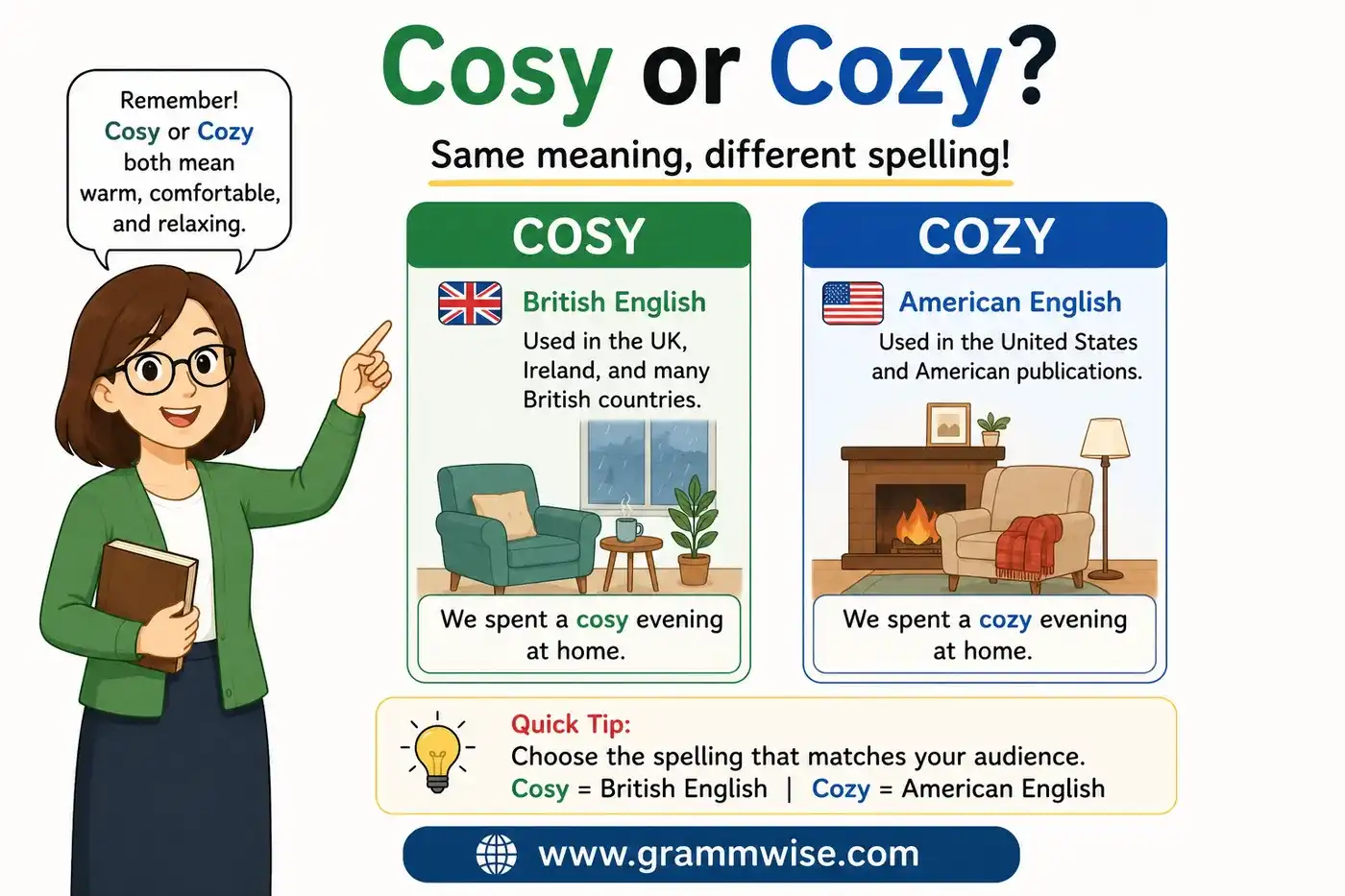
Many English learners wonder about cosy or cozy because both words look almost the same. The good news is that cosy or cozy have exactly the same meaning. The only real difference is the spelling. Once you know when each spelling is used, choosing the right one becomes very easy.
The word describes a place, feeling, or object that is warm, comfortable, and relaxing. You might hear people talk about a cozy room, a cozy blanket, or a cozy evening with family.
In this guide, you will learn the difference between cosy or cozy, where each spelling is used, and how to use both words correctly in everyday English.
Want to improve your grammar further? Explore more guides on Grammwise.
Simple Answer in One Look
Cozy is the American English spelling.
Cosy is the British English spelling.
Both words have the same meaning.
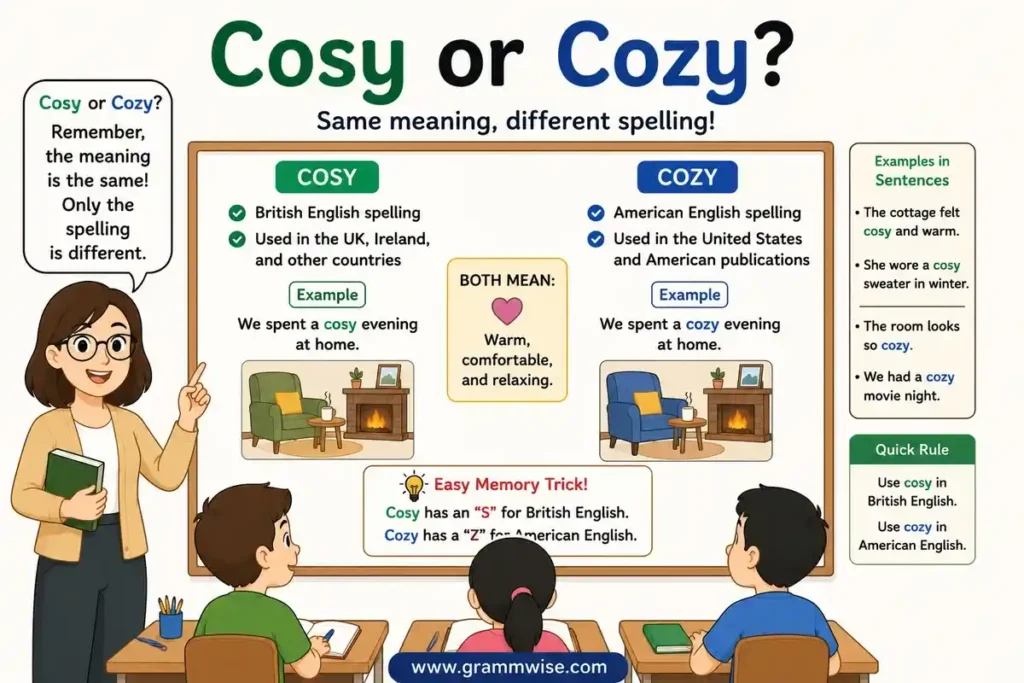
Meaning of Cosy or Cozy in Simple English
Imagine sitting on a soft couch. You have a warm blanket. A cup of hot chocolate is in your hands. Rain is falling outside. You feel warm, safe, and relaxed. That feeling is cozy or cosy.
The word can also describe places.
For example:
- A cozy bedroom
- A cozy coffee shop
- A cozy reading corner
- A cozy cabin
It can also describe moments.
For example:
- A cozy evening at home
- A cozy family dinner
- A cozy winter morning
Both spellings mean exactly the same thing.
The only difference is where people use them.
Cosy or Cozy: Why People Mix These Words?
Many people get confused about cosy or cozy because both spellings are correct.
Unlike many word pairs, these words do not have different meanings. The difference is only between American English and British English.
People in the United States usually write cozy.
People in the United Kingdom often write cosy.
If you read books, blogs, or websites from different countries, you will probably see both spellings.
For example:
An American website may say,
“This is a cozy home.”
A British website may say,
“This is a cosy home.”
Both sentences are correct.
Another reason people become confused is that many English words have different spellings in American and British English.
For example:
- Color and colour
- Favorite and favourite
- Theater and theatre
- Center and centre
Cozy and cosy follow the same idea.
Clear Difference of “Cosy or Cozy” Explained Simply
Here is the easiest way to understand cosy or cozy.
Cozy
Use cozy if you are writing American English.
Examples:
- A cozy room
- A cozy sweater
- A cozy fireplace
- A cozy evening
This spelling is common in:
- The United States
- American books
- American websites
- American schools
Cosy
Use cosy if you are writing British English.
Examples:
- A cosy cottage
- A cosy café
- A cosy blanket
- A cosy afternoon
This spelling is common in:
- The United Kingdom
- Ireland
- Many British publications
Easy Comparison “Cosy or Cozy”
| Feature | Cosy | Cozy |
| Meaning | Warm, comfortable, and relaxing | Warm, comfortable, and relaxing |
| Correct Spelling | British English | American English |
| Pronunciation | Same as cozy | Same as cosy |
| Best For | British readers | American readers |
Cosy or Cozy: Which Form Should You Use?
Ask yourself one simple question.
Who are you writing for?
If you are writing for an American audience, use cozy.
Examples:
- A cozy apartment
- A cozy living room
- A cozy hotel
If you are writing for a British audience, use cosy.
Examples:
- A cosy cottage
- A cosy pub
- A cosy home
If your school, company, or website follows one style, stay with that spelling throughout your writing. Do not switch between cozy and cosy in the same article unless you are explaining the difference. Being consistent makes your writing look more professional.
Easy Memory Trick
Here is an easy trick.
Cozy has a “z.”
Think of the Z in cozy as the American spelling.
Many American English words use the letter z.
Cosy has an “s.”
Think of the S in cosy as the British spelling.
Many British English words use s where American English uses z.
You do not need to remember long spelling rules.
Just remember:
America = Cozy
Britain = Cosy
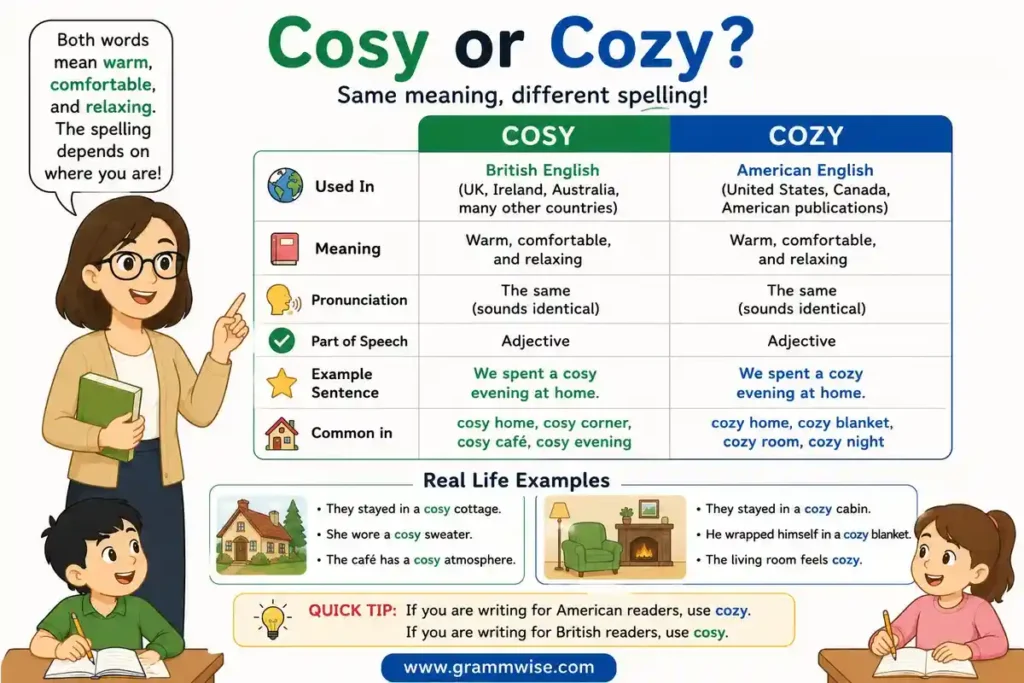
Easy Real-Life Sentences on “Cosy or Cozy”
Here are some simple examples.
- My bedroom feels cozy.
- We spent a cozy evening together.
- She bought a cozy blanket.
- This coffee shop is cozy.
- Their cabin looks cozy.
- The small cottage is cosy.
- We had a cosy family dinner.
- The room feels cosy in winter.
Each sentence is correct.
The spelling depends on the type of English you are using.
Common Mistakes Students Make About “Cosy or Cozy”
Many English learners make these mistakes.
Mistake 1
Thinking cozy and cosy have different meanings.
✅ They do not.
Both mean warm, comfortable, and relaxing.
Mistake 2
Using both spellings in the same article.
Choose one spelling and use it all the way through.
Mistake 3
Thinking one spelling is wrong.
Both spellings are correct.
The only difference is the type of English.
Mistake 4
Changing the spelling without thinking about the audience.
American readers usually expect cozy.
British readers usually expect cosy.
Cozy as an Adjective
Most of the time, cozy is an adjective.
It describes a person, place, object, or feeling.
Examples:
- A cozy chair
- A cozy house
- A cozy restaurant
- A cozy sweater
- A cozy bedroom
Every example describes comfort.
Cosy as an Adjective
The word cosy works exactly the same way.
The only difference is the spelling.
Examples:
- A cosy room
- A cosy café
- A cosy blanket
- A cosy cottage
- A cosy fireplace
The meaning stays exactly the same.
Common Phrases with “Cosy or Cozy”
These expressions are very common in American English.
Cozy Home
A home that feels warm and welcoming.
Example:
They bought a cozy home.
Cozy Corner
A small relaxing place.
Example:
She enjoys reading in her cozy corner.
Cozy Night
A quiet and relaxing evening.
Example:
We had a cozy night at home.
Cozy Blanket
A warm and soft blanket.
Example:
I wrapped myself in a cozy blanket.
Cosy Cottage
A small comfortable house.
Example:
They stayed in a cosy cottage.
Cosy Café
A warm and welcoming café.
Example:
We found a cosy café near the park.
Cosy Evening
A relaxing evening.
Example:
They enjoyed a cosy evening together.
Cosy Living Room
A comfortable family room.
Example:
The cosy living room had a fireplace.
“Cosy or Cozy” Used in Everyday Situations
Imagine these simple situations.
At Home
You sit on a sofa with a warm blanket.
The room feels cozy.
At a Coffee Shop
The lights are soft.
The chairs are comfortable.
The café feels cosy.
During Winter
Snow is falling outside.
You are drinking hot chocolate by the fireplace.
The evening feels cozy.
On Vacation
You stay in a small wooden cabin.
Everything feels warm and peaceful.
The cabin is cosy.
Cosy or Cozy: Where This Word Comes From?
The word cozy and the word cosy have been used in English for hundreds of years. People have always used the word to describe warmth, comfort, and safety. As American English and British English developed, the spelling changed.
American English began using cozy with the letter z.
British English continued using cosy with the letter s.
Even today, both spellings have exactly the same meaning. The only difference is the style of English you choose to write.
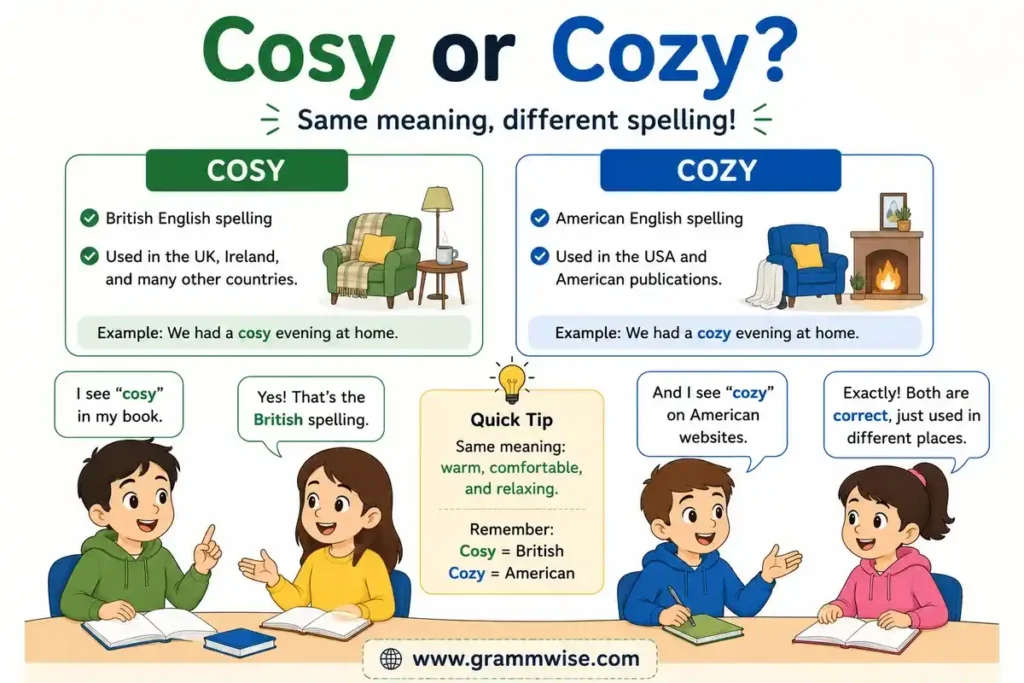
How “Cosy or Cozy” Is Understood in Culture and Stories?
The words cozy and cosy are more than just spellings. They describe a feeling that many people enjoy. When people hear the word, they often think about warmth, comfort, and happiness.
A cozy home is not always a big or expensive home. It is a place where people feel safe and relaxed.
Many books describe small houses, quiet cabins, or warm fireplaces as cozy places.
Children’s stories often use the word to help readers imagine a peaceful home.
For example, a story may describe:
- A cozy little cottage in the woods.
- A cozy bedroom with soft blankets.
- A cozy chair beside a fireplace.
Movies also use this feeling.
A family sitting together on a cold evening may enjoy a cozy night with hot chocolate and warm blankets.
The word is also common in home decorating. People like cozy colors, cozy lighting, and cozy furniture because they create a calm and welcoming space.
Whether you write cozy or cosy, the feeling is always the same. It is about comfort, peace, and feeling at home.
Biblical and Mythological Meaning of “Cosy or Cozy”
The words cozy and cosy do not have a special meaning in the Bible. You will not usually find these exact words in older Bible translations. However, the idea behind the word is easy to understand.
Many Bible stories describe homes where people find peace, safety, and rest. Those places can remind us of what we now call a cozy home.
In mythology, the words do not have a special meaning either. Still, many old stories describe warm homes, friendly villages, and safe places where heroes rest after long journeys.
Today, people use cozy and cosy to describe these comfortable places.
Symbolism of “Cosy or Cozy” Explained in Simple Words
What Cozy Represents?
The word cozy often represents:
- Comfort
- Warmth
- Safety
- Family
- Peace
- Relaxation
- Happiness
When someone says a room feels cozy, they usually mean they feel comfortable and welcome.
A cozy place helps people relax after a busy day.
What Cosy Represents?
The word cosy represents exactly the same ideas.
It also means:
- Comfort
- Warmth
- Home
- Friendship
- Calmness
- Relaxation
The only difference is the spelling.
American English uses cozy.
British English uses cosy.
The feeling never changes.
“Cosy or Cozy” Related Words You Should Know
Learning similar words helps you build your vocabulary.
Comfortable
Something that helps you relax.
Example:
This chair is comfortable.
Warm
Having pleasant heat.
Example:
The room feels warm.
Relaxing
Helping you feel calm.
Example:
The music is relaxing.
Peaceful
Quiet and calm.
Example:
The garden is peaceful.
Snug
Small, warm, and comfortable.
Example:
The cabin felt snug during winter.
Welcoming
Making people feel happy to visit.
Example:
The hotel was welcoming.
Homely (British English)
Comfortable and pleasant like home.
Example:
The cottage felt homely.
Inviting
Making people want to come inside.
Example:
The living room looked inviting.
These words have meanings that are close to cozy and cosy.
Use of “Cosy or Cozy” in Daily English
Here are examples you may hear every day.
- “My sweater feels cozy.”
- “This café is really cozy.”
- “We had a cozy movie night.”
- “The bedroom looks cozy.”
- “They rented a cosy cottage.”
- “The living room feels cosy.”
- “I love cozy blankets in winter.”
- “Our hotel was cozy and quiet.”
- “This reading corner is so cozy.”
- “Let’s stay home and enjoy a cozy evening.”
These sentences are common in daily conversations.
People use the word whenever they talk about comfort and relaxation.
Final Teacher Explanation
Imagine we are finishing today’s lesson.
I write two words on the board.
Cozy
Cosy
Then I ask one simple question.
“Do these words have different meanings?”
The answer is no.
They mean exactly the same thing.
Next, I ask another question.
“Who are you writing for?”
If you are writing American English, use cozy.
If you are writing British English, use cosy.
That is the only real difference. You do not need difficult spelling rules. Just remember this easy idea.
Cozy = American spelling.
Cosy = British spelling.
Both words describe warmth, comfort, and a relaxing feeling.
Once you remember this simple rule, you will always know which spelling to choose.
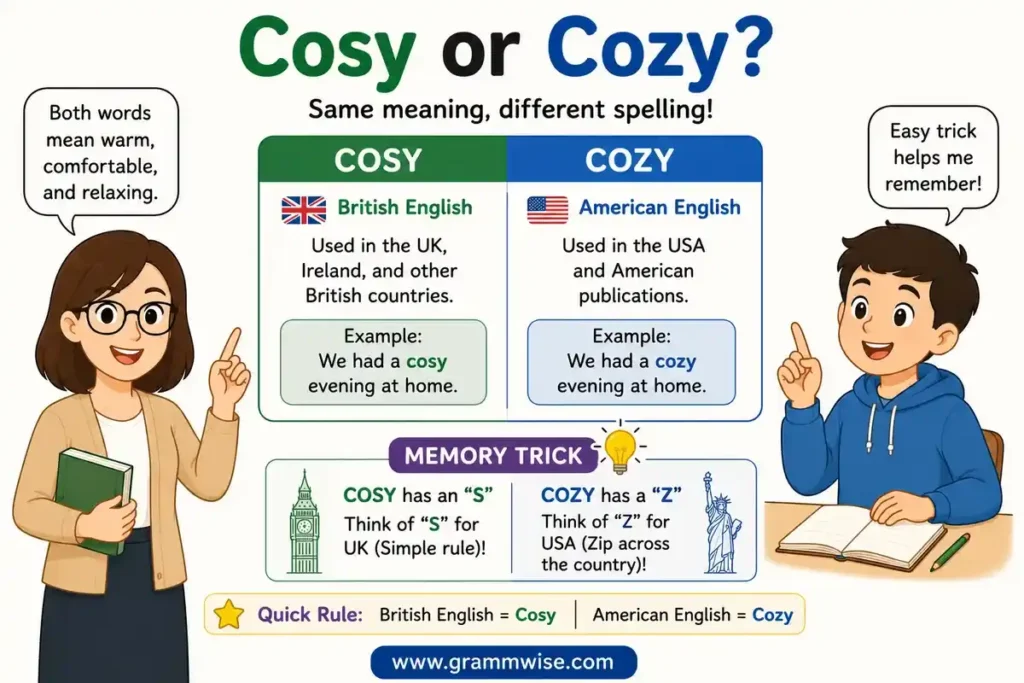
Cosy or Cozy: Quick Recap
Cozy is the American English spelling.
Cosy is the British English spelling.
Both words mean warm, comfortable, and relaxing.
Choose the spelling that matches your audience.
Conclusion
Understanding cosy or cozy is easy because both words have the same meaning. The only difference is the spelling. Use cozy for American English and cosy for British English. No matter which spelling you choose, the word always describes warmth, comfort, and a relaxing feeling.
Keep your spelling consistent throughout your writing and think about your audience before choosing a style. With a little practice, using cozy or cosy will become natural, and your English will sound more clear and confident.
Frequently Asked Questions (FAQs)
What does cozy mean in simple words?
Cozy means warm, comfortable, and relaxing.
Is cosy or cozy correct?
Both are correct. Cozy is American English, and cosy is British English.
Do cosy and cozy have different meanings?
No. They have exactly the same meaning.
When should I use cozy?
Use cozy when writing in American English.
When should I use cosy?
Use cosy when writing in British English.
Why do people get confused between cosy or cozy?
People see both spellings online and think one is wrong. In fact, both are correct in different types of English.
Can I use both spellings in one article?
It is better to choose one spelling and use it consistently throughout your writing.
How can I remember the difference between cosy or cozy?
Remember this simple rule: cozy has a z for American English, and cosy has an s for British English.