
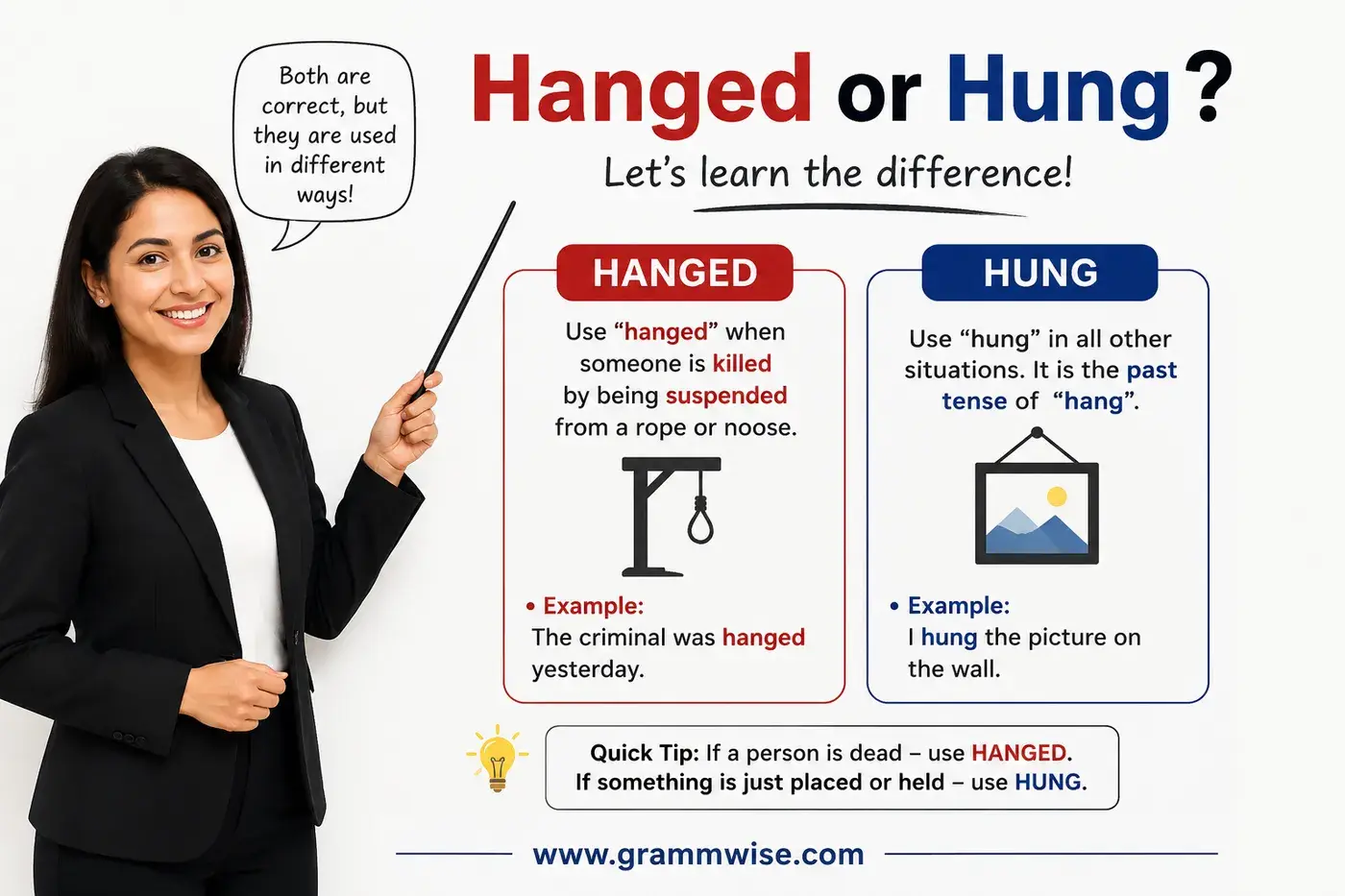
Many English learners get confused about hanged or hung because both words come from the verb hang. They look almost the same, but they are not used in the same way. The good news is that the rule is simple once you learn it.
If you have ever asked, “Should I write hanged or hung?”, this guide will help. You will learn the difference between these two words, when to use each one, and how to remember the rule with easy examples. By the end, you will know exactly which form fits your sentence.
Whether you are writing school work, emails, stories, or social media posts, knowing the difference between hanged or hung will make your English clearer and more natural.
You might also find our comparison of similar confusing word pairs useful such as quiet vs quite.
Simple Answer in One Look
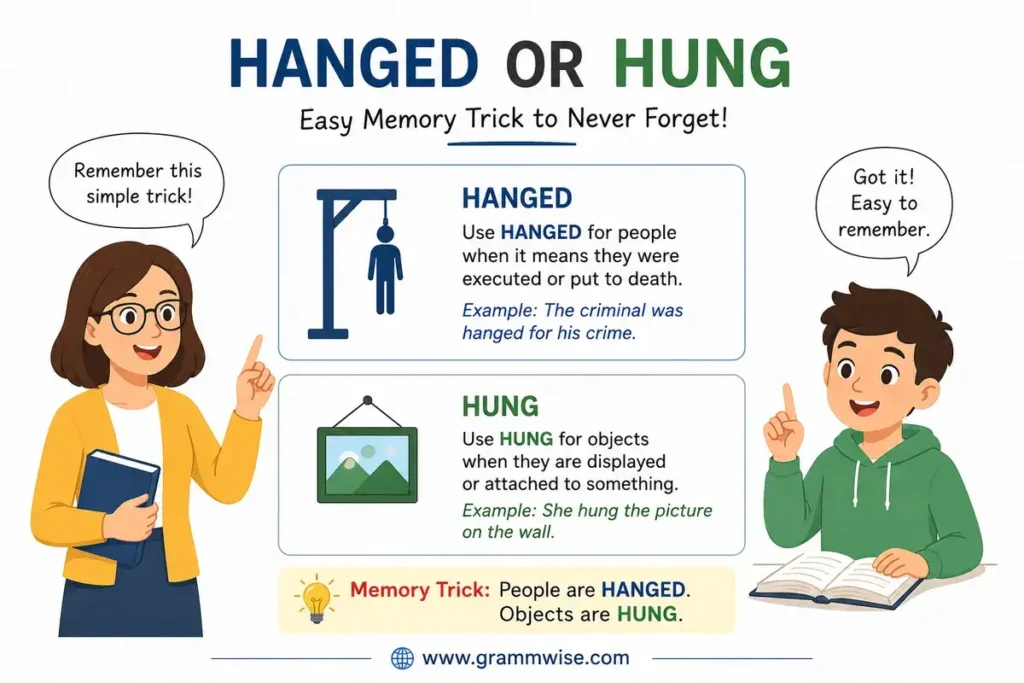
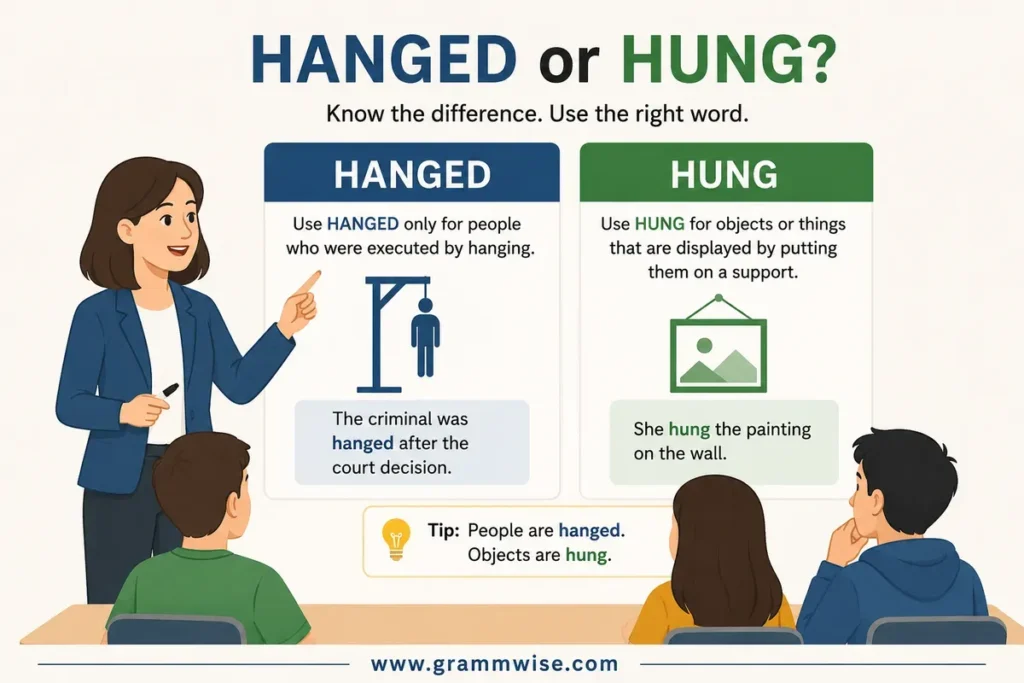
- Hung is used for objects like pictures, clothes, lights, or decorations.
- Hanged is only used when talking about a person being put to death by hanging as a legal punishment.
Quick rule:
- The picture was hung on the wall. ✅
- The criminal was hanged. ✅
Meaning of Hanged or Hung in Simple English
The verb hang means to place something so it is supported from above.
For example:
- You hang a picture on a wall.
- You hang your coat on a hook.
- You hang lights for a party.
When we talk about these everyday actions, the past form is hung.
Example:
I hung my backpack behind the door.
There is one special exception.
When hang means to kill someone by tying a rope around the neck as a legal punishment, we use hanged instead.
Example:
The prisoner was hanged many years ago.
This is why English has two different past forms.
Hanged or Hung: Why People Mix These Words?
Many people become confused because both words come from the same verb. Usually, English verbs have only one past form.
For example:
- Walk → Walked
- Jump → Jumped
- Play → Played
But hang has two past forms. That surprises many learners.
People also hear hung much more often because we use it every day.
You may hear sentences like:
- I hung my jacket.
- She hung the painting.
- We hung balloons.
Since hung is common, some people also use it by mistake when talking about execution.
That is why the confusion happens.
Clear Difference of Hanged or Hung Explained Simply
Here is the easiest way to remember it.
Use Hung for Things
Use hung when talking about objects.
Examples include:
- pictures
- mirrors
- jackets
- towels
- decorations
- lights
- bags
- signs
- curtains
Examples:
- She hung the mirror.
- Dad hung the new clock.
- We hung our coats.
- They hung colorful lights.
Use Hanged for Legal Execution
Use hanged only when someone is executed by hanging.
Examples:
- The criminal was hanged.
- He was hanged for treason.
- The prisoner was hanged many years ago.
This meaning is rare in everyday conversation.
Easy Comparison Table for Hanged or Hung
| Hung | Hanged |
|---|---|
| Used for objects | Used for legal execution |
| Very common | Very rare |
| Hang clothes | Hang a criminal |
| Hang pictures | Historical punishment |
| Used in everyday English | Mostly found in history books |
Hanged or Hung: Which Form Should You Use?
Ask yourself one simple question.
Are you talking about an object?
If the answer is yes, use hung.
Examples:
- I hung my hat.
- She hung the painting.
- They hung balloons.
Now ask another question.
Are you talking about someone being executed by hanging?
If yes, use hanged.
Examples:
- The criminal was hanged.
- The prisoner was hanged after the trial.
That is the whole rule.
You do not need to memorize long grammar lessons.
Just remember:
Objects = Hung
Execution = Hanged
Easy Real-Life Sentences on Hanged or Hung
Here are simple examples you may hear every day.
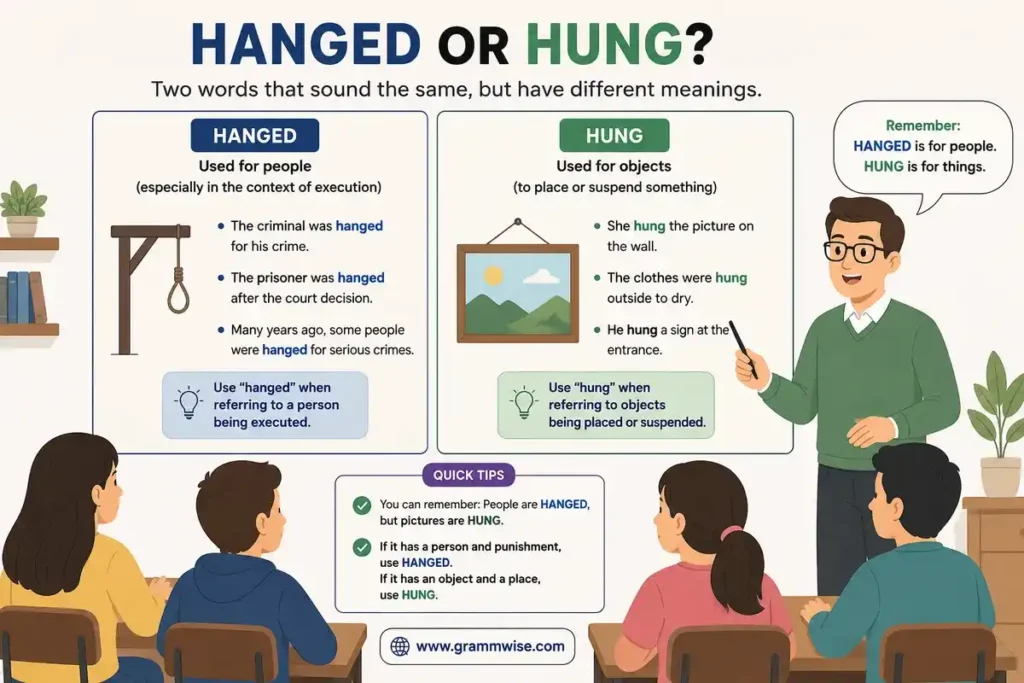
Using Hung
- I hung my jacket in the closet.
- Mom hung the family photo.
- We hung lights for Christmas.
- She hung her keys on the hook.
- Dad hung a new shelf sign.
- They hung colorful balloons.
- The teacher hung maps on the classroom wall.
- We hung our towels outside.
Using Hanged
- They hanged the criminal many years ago.
- The authorities hanged the prisoner after the court decision.
- History books say that authorities hanged some people for crimes.
These examples are mostly found in history.
Hanged or Hung: Where This Word Comes From?
Long ago, English used different past forms for some verbs. The verb hang became special because people wanted a different word when talking about legal punishment.
Over time:
- Hung stayed the normal word for everyday use.
- Hanged became the word for execution.
This difference has stayed in modern English. Today, dictionaries still teach the same rule.
How “Hanged or Hung” Understood in Culture and Stories?
The words hung and hanged can have different feelings depending on where you see them.
In everyday life, hung is a normal word. People use it when talking about putting things on a wall, hook, or hanger. You may hear someone say they hung a family picture, a coat, or holiday lights. This use is friendly and common.
The word hanged has a much more serious meaning. It is usually found in history books, old stories, or books about crime and law. It reminds people of a time when hanging was used as a legal punishment in many countries.
Because of this, most people avoid using hanged unless they are talking about history or a real legal execution.
In novels, movies, and TV shows, you may also hear the word hanged when the story takes place hundreds of years ago. Writers use it because it is the correct word for that situation.
Knowing this difference helps you choose the right word and avoid changing the meaning of your sentence.
Biblical and Mythological Meaning of Hanged or Hung
The Bible includes a few stories where people died by hanging or were described as being hanged. One well-known example is Judas Iscariot, although different Bible passages describe his death in different ways.
Older Bible translations also use the word hanged when they describe people who were punished after death or displayed on a tree These stories are about history and religious events, not everyday English.
Greek and Roman myths do not focus on the words hung and hanged in the same special way. However, many old stories describe people hanging objects like shields, gifts, or weapons in temples. In these cases, the correct word could be hung because they are talking about objects.
Today, most people only come across hanged when reading the Bible, history books, or historical stories.
Symbolism of Hanged or Hung Explained in Simple Words
What Hung Represents?
The word hung usually gives a peaceful or everyday feeling.
It can represent:
- Decorating a home
- Organizing a room
- Celebrating a holiday
- Displaying something with pride
- Keeping things neat
For example, hanging a family photo can show love and happy memories. Hanging a medal can show success. Hanging lights can make a place feel warm and welcoming.
Because of these meanings, hung often has a positive feeling.
What Hanged Represents?
The word hanged has a very different meaning.
It often represents:
- Justice
- Punishment
- Old laws
- History
- Serious events
People do not usually use this word in normal conversations because it reminds readers of legal executions from the past.
That is why using hanged by mistake can make a sentence sound much darker than you intended.
Related Words to Hanged or Hung You Should Know
Learning a few related words can help you understand hanged or hung even better.
Hang
This is the base word. It means to place something so it is supported from above.
Hung
This is the past form used for objects like pictures, clothes, signs, and decorations.
Hanged
This is the past form used only for legal execution.
Hanging
This means the act of placing something up or, in some cases, the act of execution depending on the sentence.
Hook
A curved object used for hanging coats, bags, or keys.
Hanger
A tool used to hold clothes inside a closet.
Suspend
This is another word that means to hang something from above. It is more common in formal writing.
Display
To put something where people can easily see it.
Use of Hanged or Hung in Daily English
Most people use hung almost every day.
Here are some natural examples.
- I hung my backpack by the door.
- She hung a picture in the living room.
- Dad hung new curtains yesterday.
- We hung balloons for the birthday party.
- The teacher hung student artwork on the classroom wall.
- Please hang your towel after you use it.
- They hung lights around the garden.
- He hung his keys on the hook.
- We hung our jackets before dinner.
- My sister hung a mirror in her bedroom.
Now look at the word hanged.
You will usually only see it in sentences like these.
- They hanged the criminal many years ago.
- The authorities hanged the prisoner after the court decision.
- History books say that authorities hanged some people for crimes.
As you can see, hung is part of everyday English, while hanged belongs mostly to history and law.
Common Mistakes People Make About Hanged or Hung
Many learners make the same mistakes. The good news is that they are easy to fix.
Mistake 1: Using hanged for everyday objects
❌ I hanged my jacket on the chair.
✅ I hung my jacket on the chair.
Objects always use hung.
Mistake 2: Using hung for legal execution
❌ They hung the criminal.
✅ They hanged the criminal.
Legal execution always uses hanged.
Mistake 3: Thinking both words always mean the same thing
Some people believe they can choose either word.
That is not correct.
The meaning changes depending on what you are talking about.
Mistake 4: Guessing because both words come from “hang”
Many learners remember the base word but forget the special rule.
Just remember this simple sentence:
Things hung. People hanged as a legal punishment.
Mistake 5: Copying incorrect English online
Sometimes you may find incorrect examples on social media or websites.
It is always better to follow the rule used in good dictionaries and grammar books.
Final Teacher Explanation
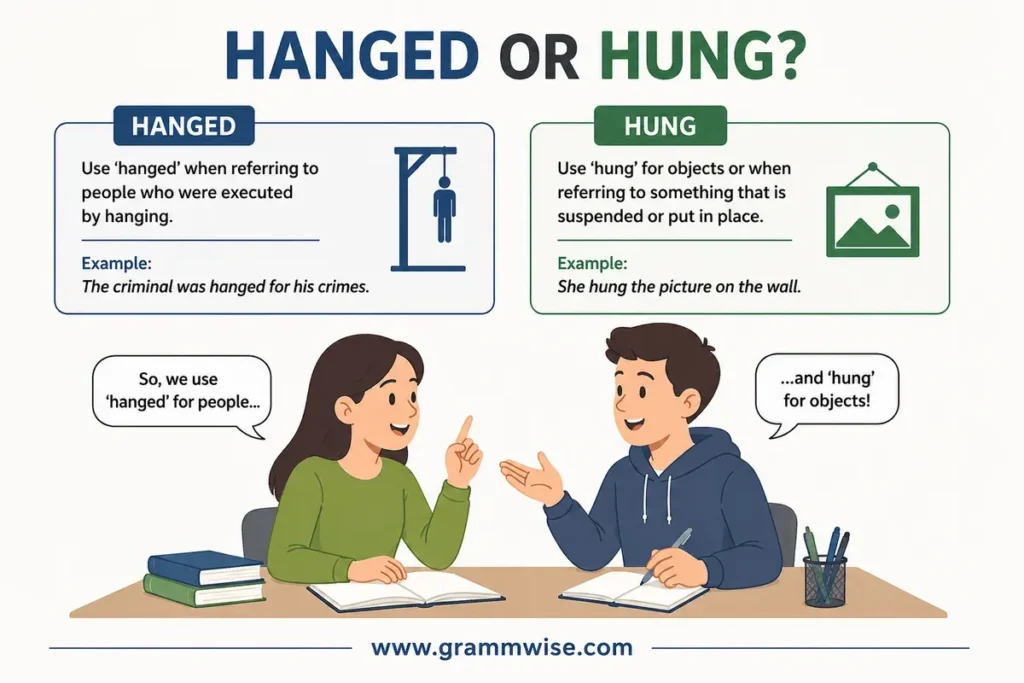
Imagine I am standing in front of a classroom with two pictures.
In one picture, a coat is hanging on a hook.
In the other picture, an old history book talks about a criminal from hundreds of years ago.
I would ask the class one question.
“Is this about an object or about a legal execution?”
If the answer is an object, we say hung.
If the answer is a legal execution, we say hanged.
That one question helps you choose the correct word almost every time. You do not need to remember long grammar rules.
Just remember:
Objects use hung.
Legal execution uses hanged.
Once you practice this rule a few times, it becomes easy and natural.
Final Thought Hanged or Hung
If you are choosing between hanged or hung, remember this simple rule.
Use hung for pictures, clothes, decorations, signs, lights, and other objects.
Use hanged only when talking about someone who was put to death by hanging as a legal punishment.
When you remember objects = hung and execution = hanged, you will almost always choose the correct word.
Conclusion
Understanding hanged or hung is easier than it first seems. Use hung when talking about objects like pictures, clothes, or decorations. Use hanged only when talking about a person who was put to death by hanging as a legal punishment. Remembering this simple rule will help you write and speak English with confidence.
The best way to master these words is through regular practice and real-life examples. The more you read and use them correctly, the more natural they will become, helping you avoid common mistakes and improve your English every day.
Frequently Asked Questions (FAQs)
Is it correct to say “hung or hanged”?
Both are correct, but these words use in different situations. Hung is for objects, while hanged is only for legal execution.
Which is correct: hanged or hung a picture?
The correct sentence is hung a picture because a picture is an object.
Why do English learners confuse hanged or hung?
Both words come from the verb hang, so they look like two past forms. The special rule makes them easy to mix up.
Can I say “the criminal was hung”?
In standard English, no. The correct form is the criminal was hanged when talking about legal execution.
Is “hung” more common than “hanged”?
Yes. Hung is much more common because people use it every day for objects.
Do modern people still use the word “hanged”?
Yes, but mostly in history books, news about old cases, legal writing, or historical fiction.
How can I remember the difference between hanged or hung?
Think of this easy rule: Objects hung. The authorities hanged people as a legal punishment.
Can both words appear in the same story?
Yes. For example, “The sheriff hung his hat before telling the story of a criminal who was hanged many years ago.” In this sentence, both words are correct because they have different meanings.